
Smiths Castle
55 Richard Smith Drive
North Kingstown, RI
One of the oldest houses in the country, a colonial trading post and plantation where Roger Williams did business, an army mustered for war, and enslaved people labored on Narragansett Bay.
Smiths Castle at Cocumscussoc is one of the oldest houses in the United States and one of the most historically layered places in Rhode Island. The site began in the 1630s as a trading post where Roger Williams, the founder of the colony, did business with the Narragansett people, and it grew into a colonial plantation on the shore of Narragansett Bay. The house standing today dates to 1678, built to replace an earlier one burned in war.
It is a place where the hard history of early New England is unusually concentrated. Here Roger Williams traded and preached, a colonial army gathered before a brutal battle of King Philip's War, and, in the century that followed, a Rhode Island plantation ran on the labor of enslaved people. The museum that occupies the house today tells all of it, including the parts that earlier generations preferred to leave out.
What Travelers Love
- Touring one of the oldest surviving houses in the United States
- A site layered with Roger Williams, King Philip's War, and colonial plantation history
- An honest telling that includes the enslaved and Native people who lived and worked here
- The quiet setting on a bay inlet with gardens and old trees
Worth Knowing
- The house is a museum with guided tours on a seasonal schedule; check hours before visiting
- The current house dates to 1678, rebuilt after the first was burned in King Philip's War
- The grounds, including a marked mass grave of colonial soldiers, are open to walk
- It sits just north of the historic village of Wickford, easy to combine in one trip
Learn about Smiths Castle
Roger Williams and the trading post
The place called Cocumscussoc lies on land long used by the Narragansett people, one of the powerful nations of the region. In the 1630s Roger Williams, recently banished from Massachusetts and the founder of the new settlement at Providence, set up a trading post here to do business with them, exchanging European goods for furs and other trade.
Williams had an unusually close relationship with the Narragansett, learned their language, and wrote a book about it, and his dealings at Cocumscussoc were part of the network of trade and diplomacy that connected the young colony to its Native neighbors. He later sold his interest in the post to Richard Smith, whose family gave the place its name.
The Smith family built a substantial house and ran the surrounding land as a plantation, making Cocumscussoc one of the important early English holdings on the west side of Narragansett Bay.
King Philip's War
In 1675 and 1676 the region was torn apart by King Philip's War, a devastating conflict between the New England colonies and an alliance of Native nations led by the Wampanoag leader Metacom, whom the English called King Philip. It was, in proportion to the population, one of the deadliest wars in American history.
Cocumscussoc played a direct part. In December 1675 a colonial army mustered at Smith's house before marching south to attack the Narragansett at the Great Swamp, in what became one of the bloodiest events of the war, a massacre of Narragansett men, women, and children in their fortified winter camp. Wounded colonial soldiers were carried back to the house afterward, and those who died were buried on the grounds, where a mass grave is still marked today.
The original house was burned during the war, and the building that stands now was raised in 1678 on the same site, so the present Smiths Castle rose directly out of that violent chapter of the region's history.
Plantation and slavery
In the eighteenth century, the west side of Narragansett Bay developed a plantation economy unusual for New England, with large landholdings raising livestock, dairy, and crops for export, including to the sugar islands of the Caribbean. These Narragansett plantations relied heavily on enslaved labor.
Cocumscussoc was among them. Enslaved people of African descent, and at times enslaved and indentured Native people, lived and worked on the plantation, and the wealth of the estate depended on their labor. This is a part of Rhode Island history long overlooked, in a state whose merchants were also deeply involved in the transatlantic slave trade.
The museum today makes a point of telling this story, researching and naming the enslaved people connected to the site and presenting the plantation not as a romantic colonial estate but as a place whose comfort rested on bondage. It is one of the reasons the site matters: it confronts a history that much of New England has been slow to acknowledge.
Visiting the house today
The 1678 house is preserved as a museum, furnished and interpreted to reflect its long life across the colonial and early American periods. Guided tours walk visitors through the rooms and the many chapters of the site's history, from the trading post through the plantation era.
The grounds are open to walk, with gardens, old trees, and views over the tidal inlet of the bay, along with the marked grave of the colonial soldiers who died after the Great Swamp fight. Interpretive signage helps place what you are seeing in its historical setting.
Because it sits just north of the well-preserved colonial village of Wickford, a visit to Smiths Castle pairs naturally with a walk through that historic waterfront district, making for a full afternoon of early Rhode Island history.
Closest Boutels
The closest Boutel™ stays, so you can turn this stop into an overnight. Each is a place we chose through independent editorial review, never a paid placement.
Details
North Kingstown, RI
Frequently asked questions
What is Smith's Castle?
Smith's Castle, in North Kingstown, Rhode Island, near Wickford, is one of the oldest plantation houses in the country, a historic seventeenth-century home on the site of an early trading post associated with Roger Williams, the founder of Rhode Island. Despite its name, it is not a castle but a historic house, preserved as a museum, that tells a long and layered story spanning early colonial trade, the founding of Rhode Island, conflict with Native peoples, and the difficult history of enslaved and indentured labor on the plantation. Its deep and complex history makes it a significant landmark. A profound window into early Rhode Island history, it educates and moves visitors. With its layered history, Smith's Castle offers a fascinating destination in Rhode Island.
What is the history of Smith's Castle?
Smith's Castle has a long and layered history: it stands on the site of an early trading post associated with Roger Williams, the founder of Rhode Island, and the present historic house dates to the seventeenth century. Its story includes early colonial trade, the founding ideals of Rhode Island, the violence of King Philip's War between colonists and Native peoples, and the difficult truth of enslaved and indentured people who labored on the plantation. The museum interprets this full and complex history honestly. Understanding this layered history, including slavery and conflict with Native peoples, deepens a visit to Smith's Castle in Rhode Island.
What can you see at Smith's Castle?
You can tour the historic seventeenth-century house with its period features, see exhibits and interpretation covering its long history, from Roger Williams and early trade to King Philip's War and the lives of the enslaved and indentured people who worked there, and explore the grounds by the bay. The historic house, the honestly told layered history, the connection to Roger Williams, and the bayside setting are the draws, offering a rich and thoughtful experience. Its story invites reflection on difficult chapters of history. With its history, Smith's Castle offers a rewarding visit in Rhode Island.
When is the best time to visit Smith's Castle?
Smith's Castle is typically open for tours on a seasonal schedule, generally in the warmer months, so late spring through early fall is the time to visit, and checking the current schedule and open days before you go is important, as its hours may be limited. The grounds by the bay are especially pleasant in the warm months. For a tour, check the current seasonal schedule and open days at Smith's Castle in Rhode Island.
What is near Smith's Castle?
Smith's Castle is in North Kingstown, Rhode Island, near Wickford on Narragansett Bay, within reach of Historic Wickford Village, the Gilbert Stuart Birthplace and Museum, and the western shore of the bay. That makes Smith's Castle a fascinating stop to combine with Historic Wickford Village and the other attractions of the North Kingstown area on a visit to Rhode Island.
Nearby

Historic Wickford Village
0.9 miles away
Wickford is the kind of place people stumble into and cannot believe is not more famous.
Gilbert Stuart Birthplace and Museum
4.4 miles away
Hardly anyone realizes the face on the dollar bill was painted by a Rhode Islander born in this quiet mill hamlet.
Rocky Point State Park
7.1 miles away
Rocky Point is a shoreline haunted, in the fondest way, by a lost amusement park.
Nathanael Greene Homestead
8.9 miles away
Plenty of people know Nathanael Greene from a statue or a county named for him, but few realize his actual house survives, quietly, in western Rhode Island.
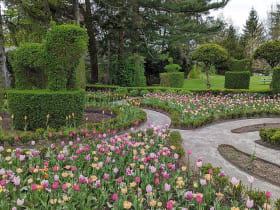
Green Animals Topiary Garden
9.3 miles away
Off the usual Newport circuit, up in Portsmouth on the bay, sits a garden that delights people who did not expect to be delighted.

Fort Adams State Park
9.6 miles away
A real fortress to explore turns a history stop into an adventure.
Beavertail State Park
9.7 miles away
Beavertail is where Conanicut Island runs out of land and drops onto open granite ledges at the very mouth of Narragansett Bay.
Touro Synagogue
9.9 miles away
Tucked on a side street off Newports colonial core is a building most visitors walk past without knowing its weight.
Narragansett Town Beach
10 miles away
This is the easy family beach in Narragansett, a broad crescent of sand right in the middle of town.

Rosecliff Mansion
10 miles away
One of the loveliest of Newport's Gilded Age summer mansions, a gleaming white palace modeled on the Grand Trianon at Versailles and designed by Stanford White for the silver heiress and society hoste...

Blithewold Mansion, Gardens and Arboretum
10 miles away
Garden people travel for this one; casual visitors are stunned to find giant sequoias on the Rhode Island shore.
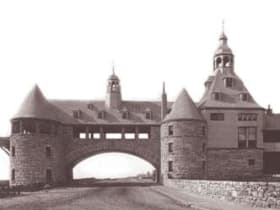
The Towers
11 miles away
This granite arch spanning Ocean Road is the last piece of an 1880s seaside casino designed by McKim, Mead & White, all that survived a fire in 1900.

The Cliff Walk
11 miles away
The Cliff Walk gives kids the best of Newport in one walk: crashing surf on one side, jaw-dropping mansions on the other, and the sense of an adventure along the edge of the sea.
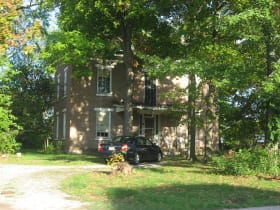
Paine House Museum
11 miles away
A small, friendly history museum where old-time daily life feels real.

Herreshoff Marine Museum
11 miles away
Sailors know it, but plenty of visitors miss that a tiny Bristol yard once ruled world yacht racing.
Colt State Park
11 miles away
This former gentlemans farm gives Bristol a broad, open front on Narragansett Bay.
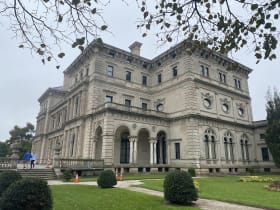
The Breakers
11 miles away
Everyone knows Newport has mansions, but standing inside the Breakers still stops people cold.
Linden Place
11 miles away
It looks like a simple grand house on the parade route, but Linden Place at 500 Hope St carries a heavier story.

Crescent Park Looff Carousel
13 miles away
This is a genuine piece of amusement-park history kids can actually ride.
East Bay Bike Path
13 miles away
This is the family bike ride in the East Bay. The East Bay Bike Path is a flat, paved rail-trail running 14 miles from Providence to Bristol, mostly away from cars, so young riders can pedal without t...

Roger Williams Park Zoo
14 miles away
This is the classic family day out in Providence. The Roger Williams Park Zoo, founded in 1872 and one of the oldest in the country, packs elephants, giraffes, zebras, red pandas, and snow leopards in...

Roger Williams Park
14 miles away
This is Providences great green lung, a 435-acre Victorian park laid out in the 1870s in the sweeping pastoral style of the era.

Point Judith Lighthouse
15 miles away
This brown-and-white 1857 lighthouse guards one of New England's most treacherous points, where Narragansett Bay meets the open Atlantic.
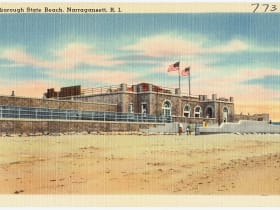
Scarborough State Beach
16 miles away
Rhode Island's most beloved ocean beach, a wide crescent of Atlantic surf on Ocean Road in Narragansett with a long boardwalk, an observation tower, and the stone ruins of a lost Gilded Age mansion ab...

Scituate Reservoir
16 miles away
The Scituate Reservoir is the biggest lake in Rhode Island, but it is a drinking-water supply, so you cannot boat, swim, or fish it, and that restriction is exactly what keeps its shoreline so wild an...

Clemence-Irons House
17 miles away
This is architecture you cannot see almost anywhere else in America.

RISD Museum
17 miles away
Visitors to Providence often walk right past it, but the RISD Museum on Benefit Street rivals museums in far bigger cities.
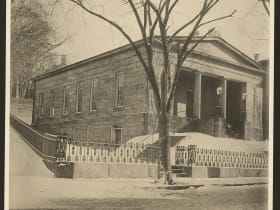
The Providence Athenaeum
17 miles away
Step off Benefit Street into the Providence Athenaeum and you step into 1838.

Rhode Island State House
17 miles away
People photograph its dome from the highway without realizing they can walk right in.

Battleship Cove
17 miles away
People drive over the Braga Bridge and spot the gray battleship without realizing they can walk right through it.
Benefit Street, the Mile of History
17 miles away
Architecture lovers make pilgrimages here, but many visitors never climb the hill to see it.
North Scituate Village Green
19 miles away
A pretty New England village green that turns into a giant fair once a year.