
Touro Synagogue
85 Touro Street
Newport, RI
The oldest synagogue building in the country, a colonial gem in Newport and the setting for George Washington's promise of a nation that gives to bigotry no sanction.
Touro Synagogue is the oldest surviving synagogue building in the United States, dedicated in 1763 and still standing, and still in use, in the historic center of Newport. An elegant Georgian colonial structure, plain outside and graceful within, it was built by a small congregation of Jewish families who had found in Rhode Island something rare in the colonial world: the freedom to worship openly.
Its importance goes beyond its age. In 1790 the congregation exchanged letters with President George Washington, and his reply became one of the founding statements of American religious liberty, declaring that the new nation would give to bigotry no sanction and to persecution no assistance. That promise, addressed to a tiny synagogue in Newport, still resonates as a definition of what the country aspired to be.
What Travelers Love
- Standing in the oldest surviving synagogue in the United States
- Its deep tie to the American story of religious freedom
- An elegant, beautifully preserved colonial interior
- The connection to George Washington's landmark 1790 letter on liberty of conscience
Worth Knowing
- It is an active house of worship as well as a historic site; visits are by tour on a set schedule
- Check tour times before visiting, and dress and behave respectfully as in any place of worship
- The adjacent visitor center provides the historical context before you enter
- It sits in walking distance of Newport's colonial harbor and historic district
Learn about Touro Synagogue
A refuge of religious freedom
Rhode Island was founded by Roger Williams in the 1630s on the principle of liberty of conscience, the radical idea that government should not dictate religious belief. That made the colony a refuge for those persecuted elsewhere, and among those who came were Jewish families seeking a place to live and worship freely.
A Jewish community took root in Newport, then a thriving colonial seaport, and prospered in trade. By the mid-eighteenth century the congregation, known as Jeshuat Israel, had grown enough to build a permanent synagogue, something that would have been impossible in many other colonies and countries of the time.
The freedom that made the synagogue possible was not universal or perfect, and Newport's prosperity, like much of colonial Rhode Island's, was entangled with the slave trade. But the openness that allowed a synagogue to be built at all set the place apart in the colonial world and gave it lasting significance.
The building
The synagogue was designed by Peter Harrison, one of the finest architects of colonial America, and dedicated in 1763. From the street it is a restrained, dignified Georgian building; inside, it opens into a serene and beautifully proportioned sanctuary lit by tall windows, with a gallery above and classical columns framing the space.
The interior reflects the Sephardic tradition of its founding families, with the reading platform set in the center and the ark holding the Torah scrolls against the far wall oriented toward Jerusalem. A trapdoor in the floor, according to long tradition, recalls the memory of times when Jews had to worship in secret, a reminder of the persecution the congregation had escaped.
The building has survived remarkably intact for more than two and a half centuries, a rare and precious example of colonial religious architecture, and it is honored today as a National Historic Site.
Washington's letter
In 1790, as the new United States was taking shape, President George Washington visited Newport, and the warden of the congregation, Moses Seixas, addressed a letter to him expressing the community's hopes for the new nation. Washington's written reply became historic.
Echoing Seixas's own words, Washington wrote that the United States government gives to bigotry no sanction, to persecution no assistance, and that all citizens possess alike liberty of conscience. It was a clear statement that religious freedom in the new republic was a right, not a favor granted by the tolerance of others.
That letter, addressed to a small synagogue in Newport, has come to be regarded as one of the great early expressions of American religious liberty. Each year it is read aloud at the synagogue, keeping alive a promise that still speaks to the country's ideals.
Visiting today
Touro Synagogue remains an active congregation as well as a historic site, so visits are made through guided tours that respect its role as a house of worship. An adjacent visitor center sets out the history of the community, the building, and the Washington letter before you step inside.
Inside the sanctuary, guides explain the architecture, the traditions embodied in the space, and the long story of the congregation, from its colonial founding through the decline and later revival of Jewish Newport.
The synagogue sits in the walkable historic heart of Newport, so a visit combines easily with the colonial harbor, the wharves, and the town's other landmarks, placing this monument of religious freedom in the setting of the seaport that made it possible.
Closest Boutels
The closest Boutel™ stays, so you can turn this stop into an overnight. Each is a place we chose through independent editorial review, never a paid placement.
Details
Newport, RI
Frequently asked questions
What is Touro Synagogue?
Touro Synagogue, in Newport, Rhode Island, is the oldest synagogue building in the United States and a treasured landmark of American religious freedom. Built in the colonial era by Newport's early Jewish community, this beautiful and historic synagogue is a masterpiece of colonial architecture and a profound symbol of the freedom of worship that Rhode Island, founded on principles of religious liberty, offered. It is famously connected to a letter from George Washington affirming the young nation's commitment to religious tolerance. A place of deep historical and spiritual significance, it moves and educates visitors. With its history and beauty, Touro Synagogue offers a meaningful destination in Rhode Island.
Why is Touro Synagogue historically important?
Touro Synagogue is historically important as the oldest surviving synagogue in the United States and as a powerful symbol of American religious freedom. Built by Newport's colonial Jewish community in a colony founded on principles of religious liberty, it embodies the young nation's ideal of freedom of worship, an ideal famously affirmed in a letter from George Washington to the congregation promising that the government would give bigotry no sanction. Its story is central to the American tradition of religious tolerance. Understanding this history deepens a visit to Touro Synagogue in Rhode Island.
Can you visit Touro Synagogue?
Yes, Touro Synagogue welcomes visitors, typically through tours that share its history, architecture, and significance to American religious freedom, and it remains an active place of worship. Because it is a functioning synagogue and a historic site, tours run on a schedule that can be seasonal, and visitors are asked to be respectful of the sacred space and its customs, so checking current visiting information and dressing respectfully before you go are wise. Visiting respectfully and checking current tour times ensure a meaningful experience at Touro Synagogue in Rhode Island.
When is the best time to visit Touro Synagogue?
Touro Synagogue offers tours on a schedule, generally with more availability in the warmer months, so late spring through early fall is often the surest time to visit, while its status as an active synagogue means visiting hours work around services. Because tour times are scheduled and can be seasonal, checking current information before you go is important. For the surest access, plan around the current tour schedule, often best in the warmer months, at Touro Synagogue in Rhode Island.
What is near Touro Synagogue?
Touro Synagogue is in Newport, Rhode Island, within reach of downtown Newport's colonial streets and harbor, the Newport mansions and the Cliff Walk, and Fort Adams State Park. That makes Touro Synagogue a meaningful stop to combine with the other historic attractions of Newport on a visit to Rhode Island.
Nearby

Rosecliff Mansion
0.8 miles away
One of the loveliest of Newport's Gilded Age summer mansions, a gleaming white palace modeled on the Grand Trianon at Versailles and designed by Stanford White for the silver heiress and society hoste...

The Cliff Walk
0.8 miles away
The Cliff Walk gives kids the best of Newport in one walk: crashing surf on one side, jaw-dropping mansions on the other, and the sense of an adventure along the edge of the sea.
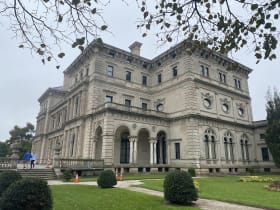
The Breakers
1.5 miles away
Everyone knows Newport has mansions, but standing inside the Breakers still stops people cold.

Fort Adams State Park
1.7 miles away
A real fortress to explore turns a history stop into an adventure.
Beavertail State Park
5.3 miles away
Beavertail is where Conanicut Island runs out of land and drops onto open granite ledges at the very mouth of Narragansett Bay.
Gilbert Stuart Birthplace and Museum
7.2 miles away
Hardly anyone realizes the face on the dollar bill was painted by a Rhode Islander born in this quiet mill hamlet.
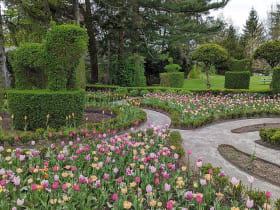
Green Animals Topiary Garden
7.9 miles away
Off the usual Newport circuit, up in Portsmouth on the bay, sits a garden that delights people who did not expect to be delighted.
Narragansett Town Beach
8.1 miles away
This is the easy family beach in Narragansett, a broad crescent of sand right in the middle of town.
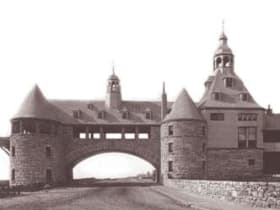
The Towers
8.5 miles away
This granite arch spanning Ocean Road is the last piece of an 1880s seaside casino designed by McKim, Mead & White, all that survived a fire in 1900.

Historic Wickford Village
9.4 miles away
Wickford is the kind of place people stumble into and cannot believe is not more famous.
Smiths Castle
9.9 miles away
People drive right past this on Post Road without realizing they are passing one of the oldest houses in America.
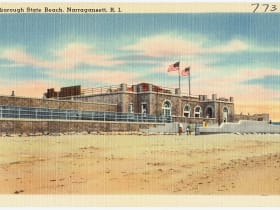
Scarborough State Beach
12 miles away
Rhode Island's most beloved ocean beach, a wide crescent of Atlantic surf on Ocean Road in Narragansett with a long boardwalk, an observation tower, and the stone ruins of a lost Gilded Age mansion ab...

Blithewold Mansion, Gardens and Arboretum
12 miles away
Garden people travel for this one; casual visitors are stunned to find giant sequoias on the Rhode Island shore.
Rocky Point State Park
12 miles away
Rocky Point is a shoreline haunted, in the fondest way, by a lost amusement park.

Point Judith Lighthouse
12 miles away
This brown-and-white 1857 lighthouse guards one of New England's most treacherous points, where Narragansett Bay meets the open Atlantic.

Herreshoff Marine Museum
13 miles away
Sailors know it, but plenty of visitors miss that a tiny Bristol yard once ruled world yacht racing.
Linden Place
13 miles away
It looks like a simple grand house on the parade route, but Linden Place at 500 Hope St carries a heavier story.
Colt State Park
14 miles away
This former gentlemans farm gives Bristol a broad, open front on Narragansett Bay.

Battleship Cove
17 miles away
People drive over the Braga Bridge and spot the gray battleship without realizing they can walk right through it.
East Bay Bike Path
17 miles away
This is the family bike ride in the East Bay. The East Bay Bike Path is a flat, paved rail-trail running 14 miles from Providence to Bristol, mostly away from cars, so young riders can pedal without t...
Nathanael Greene Homestead
19 miles away
Plenty of people know Nathanael Greene from a statue or a county named for him, but few realize his actual house survives, quietly, in western Rhode Island.

Crescent Park Looff Carousel
19 miles away
This is a genuine piece of amusement-park history kids can actually ride.