

Historic Wickford Village
Brown Street
North Kingstown, RI
A walkable colonial seaport where more eighteenth-century houses still stand in one place than almost anywhere in the Northeast, wrapped around a working harbor.
Wickford is one of those rare American places where the eighteenth century never got torn down. This small harbor village in North Kingstown holds one of the largest concentrations of original Colonial and Federal-era houses anywhere in the Northeast, block after block of them, most still serving as private homes rather than museum pieces. Walking its streets is less like visiting a restored site than like stepping into a town that simply kept its old bones.
The village grew up around a protected cove off Narragansett Bay, and the water is still its center. Fishing boats and sailboats fill the harbor, and the short commercial streets are lined with independent shops, galleries, and cafes tucked into buildings that have stood for two and three centuries. It is a place to wander slowly, read the dates over the doors, and end up at the water.
What Travelers Love
- Streets lined with original Colonial and Federal homes, many still lived in
- A snug harbor of fishing boats, sailboats, and waterfront shops
- Old Narragansett Church, one of the oldest Episcopal churches in the country
- Independent shops, galleries, and cafes filling the historic storefronts
Worth Knowing
- Most of the historic houses are private homes, so admire them from the sidewalk
- Parking is limited on summer weekends and during the annual art festival
- It is a compact village made for walking, with the harbor only steps from the main streets
- Pair it with the beaches and Gilbert Stuart Birthplace nearby for a full South County day
Learn about Historic Wickford Village
A village that kept its old houses
Wickford was laid out in the early 1700s as a port on the west side of Narragansett Bay, and it prospered through the eighteenth century as a shipping and trading center. When newer harbors and the railroad drew commerce elsewhere, Wickford was quietly passed over, and that lack of pressure to redevelop is exactly why so much survives.
Today the historic district holds dozens of eighteenth-century dwellings along with early nineteenth-century Federal homes, a density that has earned it a place on the National Register of Historic Places. Because these are lived-in houses, the village feels continuous rather than frozen, a working neighborhood that happens to be almost entirely antique.
Old Narragansett Church
Among the village's treasures is Old Narragansett Church, an Episcopal congregation whose surviving building dates to 1707, making it one of the oldest Episcopal church structures in the United States. Its simple colonial interior, box pews, and early organ have been carefully preserved.
The parish is tied to the painter Gilbert Stuart, whose family worshiped in the area and who was baptized in the congregation. Stuart, born a few miles away, went on to paint the portrait of George Washington that appears on the one dollar bill, so a village this quiet has an outsized place in the nation's visual memory.
The harbor and the shops
Wickford Harbor is a genuine working and pleasure port, sheltered enough to have drawn boats for three hundred years. The waterfront mixes lobster and fishing craft with sailboats, and small parks and docks give easy access to the water's edge.
The main streets, Brown and Main, hold an unusually good run of independent businesses for so small a place: bookshops, art galleries, antique dealers, clothing stores, and cafes, all in historic storefronts. Each July the village hosts the Wickford Art Festival, one of the oldest outdoor art shows in the country, when the streets fill with artists and crowds.
The land and its earlier people
This shore of Narragansett Bay is the homeland of the Narragansett people, who lived along these waters long before the colonial village took shape and whose tribal nation continues in Rhode Island today. The very name Narragansett, carried by the bay, the town nearby, and the tribe, keeps that presence in everyday use.
The colonial-era estate of the Smith and Updike families, at nearby Smith's Castle, and the broader plantation economy of colonial South County were bound up with Native land and with enslaved labor, a harder history that sits alongside the picturesque streets. Understanding both makes a walk through Wickford richer than the postcard alone.
Closest Boutels
The closest Boutel™ stays, so you can turn this stop into an overnight. Each is a place we chose through independent editorial review, never a paid placement.
Details
North Kingstown, RI
Frequently asked questions
What is Historic Wickford Village?
Historic Wickford Village, in North Kingstown, Rhode Island, is a beautifully preserved colonial village on Narragansett Bay, celebrated for its charming streets lined with one of the finest collections of eighteenth-century homes in the country. This picturesque waterfront village enchants visitors with its well-preserved colonial and early American houses, quaint shops, art galleries, a lovely harbor, and small-town New England charm. Strolling its historic streets and browsing its shops is a delightful step back in time. A gorgeous and atmospheric colonial village, it delights visitors. With its historic charm, Wickford offers a rewarding destination in Rhode Island.
What can you do in Historic Wickford Village?
You can stroll the charming streets lined with preserved colonial homes, browse the village's shops and art galleries, enjoy the picturesque harbor and waterfront, visit historic sites, and soak in the small-town New England atmosphere. The beautiful colonial architecture, the quaint shops and galleries, the lovely harbor, and the historic charm are the draws, making it a delightful place to wander. The concentration of early homes is remarkable. With its charm, Wickford offers a rewarding experience in North Kingstown, Rhode Island.
Why is Wickford Village historically notable?
Wickford Village is historically notable for its exceptional collection of preserved eighteenth-century homes, one of the finest concentrations of colonial architecture in the country, reflecting its long history as a colonial-era port and community on Narragansett Bay. The village's well-preserved streets offer a rare and vivid picture of early American life and building. Its harbor setting adds to its historic maritime character. Understanding this heritage enriches a visit to Historic Wickford Village in Rhode Island.
When is the best time to visit Historic Wickford Village?
The mild months of spring through fall are the loveliest for strolling the village, enjoying the harbor, and browsing the shops, with the weather pleasant and the village lively, and special events like the well-known art festival adding appeal at times. Because some shops and events are seasonal, checking current information before you go is wise. For the loveliest strolling and liveliest village, aim for spring through fall at Historic Wickford Village in Rhode Island.
What is near Historic Wickford Village?
Historic Wickford Village is in North Kingstown, Rhode Island, on Narragansett Bay, within reach of Smith's Castle, the Gilbert Stuart Birthplace and Museum, and the western shore of the bay. That makes Wickford a rewarding stop to combine with Smith's Castle and the other attractions of the North Kingstown area on a visit to Rhode Island.
Nearby
Smiths Castle
0.9 miles away
People drive right past this on Post Road without realizing they are passing one of the oldest houses in America.
Gilbert Stuart Birthplace and Museum
3.5 miles away
Hardly anyone realizes the face on the dollar bill was painted by a Rhode Islander born in this quiet mill hamlet.
Rocky Point State Park
7.8 miles away
Rocky Point is a shoreline haunted, in the fondest way, by a lost amusement park.
Beavertail State Park
8.9 miles away
Beavertail is where Conanicut Island runs out of land and drops onto open granite ledges at the very mouth of Narragansett Bay.

Fort Adams State Park
9.0 miles away
A real fortress to explore turns a history stop into an adventure.
Narragansett Town Beach
9.2 miles away
This is the easy family beach in Narragansett, a broad crescent of sand right in the middle of town.
Touro Synagogue
9.4 miles away
Tucked on a side street off Newports colonial core is a building most visitors walk past without knowing its weight.
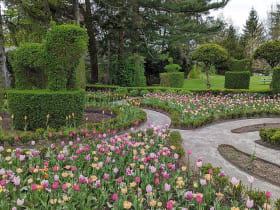
Green Animals Topiary Garden
9.6 miles away
Off the usual Newport circuit, up in Portsmouth on the bay, sits a garden that delights people who did not expect to be delighted.
Nathanael Greene Homestead
9.6 miles away
Plenty of people know Nathanael Greene from a statue or a county named for him, but few realize his actual house survives, quietly, in western Rhode Island.
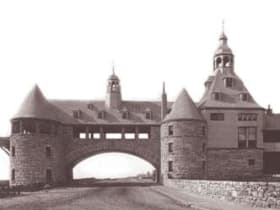
The Towers
9.7 miles away
This granite arch spanning Ocean Road is the last piece of an 1880s seaside casino designed by McKim, Mead & White, all that survived a fire in 1900.

Rosecliff Mansion
10 miles away
One of the loveliest of Newport's Gilded Age summer mansions, a gleaming white palace modeled on the Grand Trianon at Versailles and designed by Stanford White for the silver heiress and society hoste...

The Cliff Walk
10 miles away
The Cliff Walk gives kids the best of Newport in one walk: crashing surf on one side, jaw-dropping mansions on the other, and the sense of an adventure along the edge of the sea.
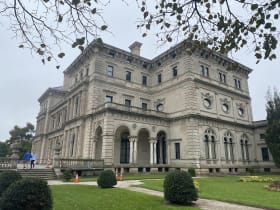
The Breakers
11 miles away
Everyone knows Newport has mansions, but standing inside the Breakers still stops people cold.

Blithewold Mansion, Gardens and Arboretum
11 miles away
Garden people travel for this one; casual visitors are stunned to find giant sequoias on the Rhode Island shore.
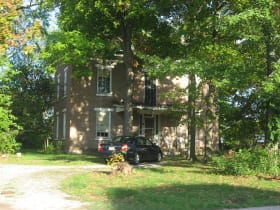
Paine House Museum
12 miles away
A small, friendly history museum where old-time daily life feels real.

Herreshoff Marine Museum
12 miles away
Sailors know it, but plenty of visitors miss that a tiny Bristol yard once ruled world yacht racing.
Colt State Park
12 miles away
This former gentlemans farm gives Bristol a broad, open front on Narragansett Bay.
Linden Place
12 miles away
It looks like a simple grand house on the parade route, but Linden Place at 500 Hope St carries a heavier story.
East Bay Bike Path
14 miles away
This is the family bike ride in the East Bay. The East Bay Bike Path is a flat, paved rail-trail running 14 miles from Providence to Bristol, mostly away from cars, so young riders can pedal without t...

Crescent Park Looff Carousel
14 miles away
This is a genuine piece of amusement-park history kids can actually ride.

Point Judith Lighthouse
15 miles away
This brown-and-white 1857 lighthouse guards one of New England's most treacherous points, where Narragansett Bay meets the open Atlantic.

Roger Williams Park Zoo
15 miles away
This is the classic family day out in Providence. The Roger Williams Park Zoo, founded in 1872 and one of the oldest in the country, packs elephants, giraffes, zebras, red pandas, and snow leopards in...
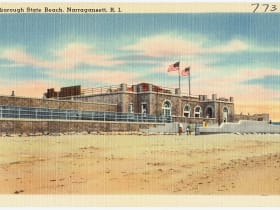
Scarborough State Beach
15 miles away
Rhode Island's most beloved ocean beach, a wide crescent of Atlantic surf on Ocean Road in Narragansett with a long boardwalk, an observation tower, and the stone ruins of a lost Gilded Age mansion ab...

Roger Williams Park
15 miles away
This is Providences great green lung, a 435-acre Victorian park laid out in the 1870s in the sweeping pastoral style of the era.

Scituate Reservoir
17 miles away
The Scituate Reservoir is the biggest lake in Rhode Island, but it is a drinking-water supply, so you cannot boat, swim, or fish it, and that restriction is exactly what keeps its shoreline so wild an...

Clemence-Irons House
18 miles away
This is architecture you cannot see almost anywhere else in America.

RISD Museum
18 miles away
Visitors to Providence often walk right past it, but the RISD Museum on Benefit Street rivals museums in far bigger cities.

Battleship Cove
18 miles away
People drive over the Braga Bridge and spot the gray battleship without realizing they can walk right through it.
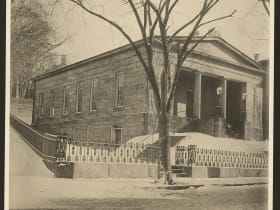
The Providence Athenaeum
18 miles away
Step off Benefit Street into the Providence Athenaeum and you step into 1838.

Rhode Island State House
18 miles away
People photograph its dome from the highway without realizing they can walk right in.
Benefit Street, the Mile of History
18 miles away
Architecture lovers make pilgrimages here, but many visitors never climb the hill to see it.
North Scituate Village Green
19 miles away
A pretty New England village green that turns into a giant fair once a year.