

The Providence Athenaeum
251 Benefit Street
Providence, RI
One of the oldest membership libraries in the country, a Greek Revival temple of books on College Hill where Edgar Allan Poe once courted a poet among the stacks.
The Providence Athenaeum is one of the oldest membership libraries in the United States, a small Greek Revival temple of a building on Benefit Street that has served readers since the 1830s. Behind its columned front is an intimate world of book-lined alcoves, marble busts, paintings, and a hushed, scholarly atmosphere that has scarcely changed in nearly two centuries.
It is also a place with a famous literary romance. In the 1840s Edgar Allan Poe, then near the height of his fame, courted the Providence poet Sarah Helen Whitman, and the Athenaeum was one of the settings of their brief, doomed relationship. That story, along with the library's remarkable state of preservation, gives the little building a resonance far larger than its size.
What Travelers Love
- A jewel-box Greek Revival library little changed in nearly two centuries
- The literary ghost of Edgar Allan Poe, who courted a poet here
- Alcoves of old books, busts, and art in an intimate historic setting
- Its place on Benefit Street's Mile of History, among the finest colonial streetscapes in America
Worth Knowing
- It is a working membership library, but visitors are welcome to look around during open hours
- The building is small and quiet; it is a place to browse and absorb, not a large museum
- Check hours before visiting, as they vary and the library hosts events
- It pairs naturally with a walk along Benefit Street and up to Brown and RISD
Learn about The Providence Athenaeum
What a membership library is
Before free public libraries were common, Americans who wanted access to books often formed subscription or membership libraries, private associations whose members pooled funds to buy and share a collection. These athenaeums, named for the goddess Athena, were centers of learning and culture in their cities.
The Providence Athenaeum grew out of this tradition, formed by the merger of earlier local library societies, and it built the handsome Benefit Street building to house its collection in 1838. It has operated continuously ever since, one of a small number of such libraries in the country still functioning in their original form.
Unlike a museum, it remains a living institution with members who borrow books and use the space, which is part of its charm: it is not a re-creation of a nineteenth-century library but an actual one that never stopped.
The building
The Athenaeum's home is a compact Greek Revival building designed by the architect William Strickland, one of the leading practitioners of the style, which was then at the height of fashion for temples of culture and civic life. Its columned facade gives it the look of a small classical temple set into the hillside street.
Inside, the main library room rises through the building with tiers of alcoves lined in books, lit from above, and filled with the accumulated art, busts, and objects of nearly two centuries of collecting. The atmosphere is intimate and layered, more like a private study than a modern library.
Because it has been so little altered, stepping inside is a genuine encounter with the reading world of the nineteenth century, from the smell of old bindings to the scale of the rooms, a rare thing to experience in a building still doing its original job.
Poe and Sarah Helen Whitman
The Athenaeum's most famous chapter belongs to Edgar Allan Poe. In 1848, a widower and by then a celebrated and troubled literary figure, Poe came to Providence to court the poet and Athenaeum member Sarah Helen Whitman, herself a writer of note and a striking, spiritually minded woman.
Their courtship unfolded in part within the library's walls, and it became briefly an engagement before collapsing, undone by Poe's instability and drinking. He died the following year. Whitman later defended his memory in print against those who blackened it, remaining loyal to him after his death.
The library preserves the association, and the story has drawn admirers of Poe to Benefit Street ever since, giving the little Athenaeum a place in American literary legend far out of proportion to its size.
Benefit Street and College Hill
The Athenaeum sits on Benefit Street, known as the Mile of History, one of the most intact concentrations of colonial and early American architecture in the country. Walking the street is like moving through the eighteenth and early nineteenth centuries, past house after preserved house.
The surrounding College Hill neighborhood climbs above the river and holds Brown University and the Rhode Island School of Design, whose RISD Museum is one of the finest art museums in New England, a short walk from the library door.
That setting makes the Athenaeum a natural anchor for a day on College Hill, combining a look inside the historic library with a stroll along Benefit Street and a visit to the nearby museums and campuses.
Closest Boutels
The closest Boutel™ stays, so you can turn this stop into an overnight. Each is a place we chose through independent editorial review, never a paid placement.
Details
Providence, RI
Frequently asked questions
What is the Providence Athenaeum?
The Providence Athenaeum, on Benefit Street in Providence, Rhode Island, is one of the oldest libraries in the country, a beautiful and historic membership library housed in a striking early nineteenth-century building. This atmospheric library, with its handsome architecture, art, and shelves of old books, is a treasured cultural landmark, famous for its literary history and its connection to notable writers, including Edgar Allan Poe, who is said to have courted a poet here. It welcomes visitors to admire its historic reading rooms and collections. A charming and evocative literary treasure, it delights book and history lovers. With its historic beauty, the Providence Athenaeum offers a fascinating destination in Rhode Island.
What can you see at the Providence Athenaeum?
You can admire the historic reading rooms with their handsome architecture, shelves of old books, art, and busts, soak in the atmospheric literary setting, and learn about the library's rich history and famous literary connections. The beautiful historic interior, the old books and art, the literary atmosphere, and the connections to writers like Edgar Allan Poe are the draws, making it a memorable stop for book lovers. Its old-world charm is enchanting. With its historic library setting, the Providence Athenaeum offers a rewarding visit in Providence, Rhode Island.
Can you visit the Providence Athenaeum?
Yes, the Providence Athenaeum, though a membership library, has long welcomed visitors to admire its historic reading rooms and learn its history, typically during open hours. Because it is a working library with its own schedule, checking current visiting information and hours before you go is wise, and visiting quietly and respectfully honors the space and its members. Checking current hours and visiting respectfully ensure a rewarding experience at the Providence Athenaeum in Rhode Island.
When is the best time to visit the Providence Athenaeum?
As an indoor historic library, the Providence Athenaeum can be enjoyed year-round in any weather, during its open hours, making it a lovely stop any season, and it pairs naturally with a stroll along historic Benefit Street. Because it keeps its own schedule, checking current hours before you go is wise. Because it is indoors, the Providence Athenaeum makes a rewarding stop any time of year in Providence, Rhode Island.
What is near the Providence Athenaeum?
The Providence Athenaeum is on Benefit Street in Providence, Rhode Island, within reach of the historic Mile of History, the RISD Museum, Brown University, and downtown Providence. That makes the Providence Athenaeum a fascinating stop to combine with Benefit Street and the other attractions of Providence on a visit to Rhode Island.
Nearby

RISD Museum
0.1 miles away
Visitors to Providence often walk right past it, but the RISD Museum on Benefit Street rivals museums in far bigger cities.
Benefit Street, the Mile of History
0.3 miles away
Architecture lovers make pilgrimages here, but many visitors never climb the hill to see it.

Rhode Island State House
0.5 miles away
People photograph its dome from the highway without realizing they can walk right in.

Roger Williams Park
2.7 miles away
This is Providences great green lung, a 435-acre Victorian park laid out in the 1870s in the sweeping pastoral style of the era.

Roger Williams Park Zoo
3.0 miles away
This is the classic family day out in Providence. The Roger Williams Park Zoo, founded in 1872 and one of the oldest in the country, packs elephants, giraffes, zebras, red pandas, and snow leopards in...
Slater Mill
3.8 miles away
This is the actual birthplace of the American factory, and it is easy to walk past without grasping the weight of it.

Slater Park Looff Carousel
4.5 miles away
Most people driving past Slater Park have no idea one of the great early carousels in the country is turning inside it.

Slater Memorial Park
4.6 miles away
An easy family park with a hundred things to do and room to run.

Crescent Park Looff Carousel
5.2 miles away
This is a genuine piece of amusement-park history kids can actually ride.

Clemence-Irons House
5.6 miles away
This is architecture you cannot see almost anywhere else in America.
Hearthside House
5.7 miles away
A stone mansion with a jilted-lover legend, hiding on an old country road most travelers never find.

Lincoln Woods State Park
6.3 miles away
This is the green lung just north of Providence, a rocky, wooded park of oak and glacial boulders wrapped around Olney Pond.
East Bay Bike Path
7.7 miles away
This is the family bike ride in the East Bay. The East Bay Bike Path is a flat, paved rail-trail running 14 miles from Providence to Bristol, mostly away from cars, so young riders can pedal without t...
North Scituate Village Green
9.3 miles away
A pretty New England village green that turns into a giant fair once a year.

Scituate Reservoir
11 miles away
The Scituate Reservoir is the biggest lake in Rhode Island, but it is a drinking-water supply, so you cannot boat, swim, or fish it, and that restriction is exactly what keeps its shoreline so wild an...
Rocky Point State Park
12 miles away
Rocky Point is a shoreline haunted, in the fondest way, by a lost amusement park.
Colt State Park
12 miles away
This former gentlemans farm gives Bristol a broad, open front on Narragansett Bay.
Nathanael Greene Homestead
12 miles away
Plenty of people know Nathanael Greene from a statue or a county named for him, but few realize his actual house survives, quietly, in western Rhode Island.
Diamond Hill Park
12 miles away
For a quick leg-stretch with a view, pull off at Diamond Hill Park at 4097 Diamond Hill Rd in Cumberland.
Linden Place
12 miles away
It looks like a simple grand house on the parade route, but Linden Place at 500 Hope St carries a heavier story.

Herreshoff Marine Museum
13 miles away
Sailors know it, but plenty of visitors miss that a tiny Bristol yard once ruled world yacht racing.

Blithewold Mansion, Gardens and Arboretum
13 miles away
Garden people travel for this one; casual visitors are stunned to find giant sequoias on the Rhode Island shore.
Museum of Work and Culture
13 miles away
A history museum that works because you walk right through it.
Paine House Museum
14 miles away
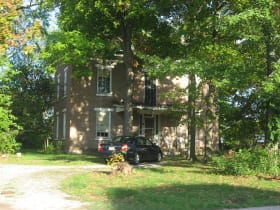
A small, friendly history museum where old-time daily life feels real.

Battleship Cove
15 miles away
People drive over the Braga Bridge and spot the gray battleship without realizing they can walk right through it.
Smiths Castle
17 miles away
People drive right past this on Post Road without realizing they are passing one of the oldest houses in America.
Green Animals Topiary Garden
17 miles away
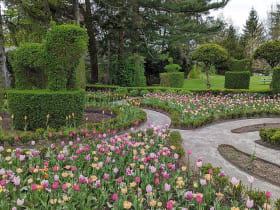
Off the usual Newport circuit, up in Portsmouth on the bay, sits a garden that delights people who did not expect to be delighted.

Swamp Meadow Covered Bridge
17 miles away
Rhode Island is not covered-bridge country, which is exactly why this one is a find.

Historic Wickford Village
18 miles away
Wickford is the kind of place people stumble into and cannot believe is not more famous.