
Slater Mill
67 Roosevelt Avenue
Pawtucket, RI
The 1793 cotton mill on the Blackstone River where a smuggled British secret launched American industry, widely called the birthplace of the Industrial Revolution in the United States.
Slater Mill is where the American Industrial Revolution began. In 1793, on the falls of the Blackstone River in Pawtucket, Samuel Slater built the first successful water-powered cotton-spinning mill in the United States, and with it he transferred the factory system from Britain to America. The modest wooden building still stands over the river, and inside it reproductions of the early spinning frames turn as they did more than two centuries ago.
The story behind it is one of memory and theft. Britain guarded its textile technology fiercely and forbade its skilled workers from leaving the country. Slater, who had trained in an English mill, memorized the designs of the machines, disguised himself, and slipped across the Atlantic carrying the plans in his head. What he rebuilt in Pawtucket launched an industry, transformed the Blackstone Valley into a corridor of mills, and set in motion the factory age in America, along with all of its costs.
What Travelers Love
- Standing in the actual building where American industry began
- Seeing working reproductions of the early water-powered spinning machines
- The dramatic setting on the falls of the Blackstone River
- A story that is equal parts ingenuity, industrial espionage, and hard human cost
Worth Knowing
- The site is part of the Blackstone River Valley National Historical Park; tours and hours are seasonal
- The most vivid experience is a guided tour that runs the machinery, so check the schedule
- The mill complex includes the 1810 Wilkinson Mill and the earlier Sylvanus Brown House
- It sits within walking distance of downtown Pawtucket and along the Blackstone heritage corridor
Learn about Slater Mill
The story of Slater Mill
In eighteenth-century Britain, water-powered spinning machinery had revolutionized the making of cloth, and the country treated that technology as a state secret. Exporting the machines or their plans was illegal, and skilled textile workers were barred from emigrating, precisely to keep other nations from catching up.
Samuel Slater had apprenticed in an English cotton mill and learned the machinery inside and out. In 1789, drawn by American bounties offered to anyone who could reproduce British textile technology, he left England in disguise, telling no one his real trade, and carried the detailed knowledge of the machines in his memory rather than on paper that could be seized.
In Pawtucket he partnered with the merchant Moses Brown and the mechanic Sylvanus Brown, and by 1793 they had built a mill on the Blackstone River driven by a water wheel, spinning cotton yarn on machines Slater had recreated from memory. It was the first factory of its kind to succeed in the United States, and it worked.
From that single mill, the system spread. Water-powered mills multiplied along the Blackstone and its tributaries, then across New England, drawing workers off farms and into factory towns and reshaping the American economy and landscape. Slater became wealthy, and Pawtucket became one of the birthplaces of American manufacturing.
The human cost of the mill system
The factory system Slater introduced also imported a hard labor model. His early mills relied heavily on the work of children, whole families put to work at the machines, with young children tending the spinning frames for long hours at low pay, a pattern that became known as the Rhode Island System.
The mills ran on strict discipline and long days, and the mill villages that grew around them tied workers' housing, wages, and daily lives to the factory owner. The prosperity the mills generated was built in significant part on the labor of the poor and the very young.
Telling that side honestly is part of what the historic site does. The birthplace of American industry is also the birthplace of the American factory worker's struggle, and the mill's story includes both the ingenuity that started an industry and the human toll that came with it.
What you will see
The historic complex centers on the 1793 Slater Mill itself, the yellow wooden building over the river, where guided tours run working reproductions of the early carding and spinning machines so visitors can watch and hear how cotton became yarn.
Alongside it stand the 1810 Wilkinson Mill, a stone building housing a machine shop powered by a great water wheel, and the Sylvanus Brown House, an eighteenth-century home that shows the domestic hand-spinning the factories replaced. Together they trace the shift from home craft to industrial production.
The setting is part of the exhibit. The mills sit directly on the falls of the Blackstone River, the source of the power that ran them, and the rushing water makes plain why this spot was chosen and how the whole enterprise depended on the river.
The Blackstone River
The Blackstone River drops sharply through Pawtucket, and it was that fall of water, converted to power by wheels and later turbines, that made the site valuable. The same river runs the length of the valley from Worcester to Providence, and mills rose all along it, turning the Blackstone into the hardest-working river of early America.
That industrial history left the river heavily polluted for generations, and its slow recovery is part of the valley's more recent story. Today the corridor is protected as a national historical park, and the river is far cleaner, with herons, waterfowl, and returning fish where once there was industrial waste.
Standing at the falls, you can take in the whole arc at once: the power that built an industry, the toll it took on the water and the people, and the long work of restoring both.
Closest Boutels
The closest Boutel™ stays, so you can turn this stop into an overnight. Each is a place we chose through independent editorial review, never a paid placement.
Details
Pawtucket, RI
Frequently asked questions
What is Slater Mill?
Slater Mill, in Pawtucket, Rhode Island, is a historic cotton mill widely regarded as the birthplace of the American Industrial Revolution, where water-powered textile manufacturing first took hold in the United States. Built in the late eighteenth century along the Blackstone River, the mill was the first successful water-powered cotton-spinning mill in the country, launching the American factory system and transforming the nation's economy and way of life. Today the historic site preserves the mill and related buildings, with exhibits and demonstrations on early industry. A landmark of American history, it educates and fascinates visitors. With its industrial heritage, Slater Mill offers a compelling destination in Rhode Island.
Why is Slater Mill important?
Slater Mill is important as the birthplace of the American Industrial Revolution, the site of the first successful water-powered cotton-spinning mill in the United States, which launched the factory system and transformed America from an agricultural to an industrial nation. Its success along the Blackstone River sparked the growth of textile manufacturing across New England. The mill's story includes both the ingenuity that drove industrialization and the hard realities of early factory labor, including the work of women and children. Understanding this full history enriches a visit to Slater Mill in Rhode Island.
What can you see at Slater Mill?
You can tour the historic mill and related buildings, see early textile machinery and water-power systems, watch demonstrations of spinning and weaving, and learn about the birth of American industry and the lives of the workers, including women and children, who labored in the early mills. The historic mill, the working machinery, the demonstrations, and the honest history of early factory life are the draws, offering a rich and thoughtful experience. The water-powered machinery is fascinating to see in action. With its history, Slater Mill offers a rewarding visit in Pawtucket, Rhode Island.
When is the best time to visit Slater Mill?
Slater Mill generally operates with more programming and tours in the warmer months, so late spring through early fall is often the best time to visit for the fullest experience, including demonstrations and access to the historic buildings along the river. Because hours and tours can be seasonal, checking the current schedule before you go is wise. For the fullest experience, aim for the warmer months and check current hours at Slater Mill in Rhode Island.
What is near Slater Mill?
Slater Mill is in Pawtucket, Rhode Island, along the Blackstone River, within reach of Slater Memorial Park and its historic carousel, downtown Pawtucket, and Providence nearby to the south. That makes Slater Mill a compelling stop to combine with Slater Memorial Park and the other attractions of the Pawtucket and Providence area on a visit to Rhode Island.
Nearby

Slater Park Looff Carousel
1.2 miles away
Most people driving past Slater Park have no idea one of the great early carousels in the country is turning inside it.

Slater Memorial Park
1.3 miles away
An easy family park with a hundred things to do and room to run.
Hearthside House
3.1 miles away
A stone mansion with a jilted-lover legend, hiding on an old country road most travelers never find.

Lincoln Woods State Park
3.2 miles away
This is the green lung just north of Providence, a rocky, wooded park of oak and glacial boulders wrapped around Olney Pond.
Benefit Street, the Mile of History
3.5 miles away
Architecture lovers make pilgrimages here, but many visitors never climb the hill to see it.

Rhode Island State House
3.7 miles away
People photograph its dome from the highway without realizing they can walk right in.
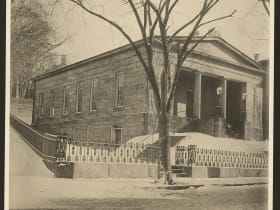
The Providence Athenaeum
3.8 miles away
Step off Benefit Street into the Providence Athenaeum and you step into 1838.

RISD Museum
3.8 miles away
Visitors to Providence often walk right past it, but the RISD Museum on Benefit Street rivals museums in far bigger cities.

Roger Williams Park
6.4 miles away
This is Providences great green lung, a 435-acre Victorian park laid out in the 1870s in the sweeping pastoral style of the era.

Roger Williams Park Zoo
6.8 miles away
This is the classic family day out in Providence. The Roger Williams Park Zoo, founded in 1872 and one of the oldest in the country, packs elephants, giraffes, zebras, red pandas, and snow leopards in...

Clemence-Irons House
7.8 miles away
This is architecture you cannot see almost anywhere else in America.

Crescent Park Looff Carousel
8.3 miles away
This is a genuine piece of amusement-park history kids can actually ride.
Diamond Hill Park
8.8 miles away
For a quick leg-stretch with a view, pull off at Diamond Hill Park at 4097 Diamond Hill Rd in Cumberland.
East Bay Bike Path
10 miles away
This is the family bike ride in the East Bay. The East Bay Bike Path is a flat, paved rail-trail running 14 miles from Providence to Bristol, mostly away from cars, so young riders can pedal without t...
Museum of Work and Culture
11 miles away
A history museum that works because you walk right through it.
North Scituate Village Green
11 miles away
A pretty New England village green that turns into a giant fair once a year.

Scituate Reservoir
13 miles away
The Scituate Reservoir is the biggest lake in Rhode Island, but it is a drinking-water supply, so you cannot boat, swim, or fish it, and that restriction is exactly what keeps its shoreline so wild an...
Colt State Park
14 miles away
This former gentlemans farm gives Bristol a broad, open front on Narragansett Bay.
Rocky Point State Park
15 miles away
Rocky Point is a shoreline haunted, in the fondest way, by a lost amusement park.
Linden Place
15 miles away
It looks like a simple grand house on the parade route, but Linden Place at 500 Hope St carries a heavier story.
Nathanael Greene Homestead
15 miles away
Plenty of people know Nathanael Greene from a statue or a county named for him, but few realize his actual house survives, quietly, in western Rhode Island.

Herreshoff Marine Museum
15 miles away
Sailors know it, but plenty of visitors miss that a tiny Bristol yard once ruled world yacht racing.

Blithewold Mansion, Gardens and Arboretum
16 miles away
Garden people travel for this one; casual visitors are stunned to find giant sequoias on the Rhode Island shore.

Battleship Cove
16 miles away
People drive over the Braga Bridge and spot the gray battleship without realizing they can walk right through it.
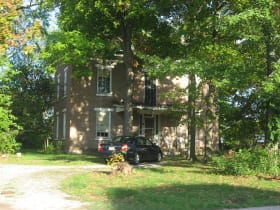
Paine House Museum
18 miles away
A small, friendly history museum where old-time daily life feels real.

Swamp Meadow Covered Bridge
19 miles away
Rhode Island is not covered-bridge country, which is exactly why this one is a find.
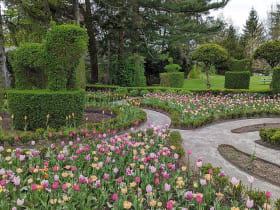
Green Animals Topiary Garden
20 miles away
Off the usual Newport circuit, up in Portsmouth on the bay, sits a garden that delights people who did not expect to be delighted.