
Museum of Work and Culture
42 South Main Street
Woonsocket, RI
An immersive museum about the immigrant families who ran the looms, told from the mill floor, the tenement, the church, and the union hall.
The Museum of Work and Culture tells a story that most history books skip: the lives of the immigrant families who actually ran the textile mills that made New England rich. Set in a former mill building in downtown Woonsocket, it follows the French-Canadian workers who poured into the Blackstone Valley in the late nineteenth and early twentieth centuries, and it tells their story from the ground up, through the mill floor, the tenement, the parish church, and the union hall.
Rather than glass cases, the museum uses recreated spaces you walk through, so you move from a farm in Quebec to the shop floor of a spinning mill to the crowded rooms of a three-decker tenement. It is a museum about labor, faith, family, and the hard bargain of the American factory town, and it treats the people who lived it as the main characters.
What Travelers Love
- Walking through recreated settings: a mill floor, a triple-decker tenement, a church, and a union hall
- The focus on ordinary working families rather than owners and inventors
- The rich story of French-Canadian immigration to New England's mill towns
- An honest look at child labor, strikes, and the fight for fair conditions
Worth Knowing
- The museum is run by the Rhode Island Historical Society, with regular open hours
- It is designed as a walk-through experience, engaging for families and students
- Downtown Woonsocket and the Blackstone River are steps away
- It pairs well with other Blackstone Valley industrial-heritage sites like Slater Mill
Learn about Museum of Work and Culture
Leaving Quebec for the mills
Between roughly 1870 and 1930, hundreds of thousands of French Canadians left the farms of Quebec for the textile cities of New England, drawn by wages the countryside could not offer. Woonsocket became one of the most heavily French-Canadian cities in the United States, so much so that French was spoken in its shops, churches, and streets for generations.
The museum begins with this migration, recreating the rural Quebec that families left behind and the journey south to the mills. It captures both the hope that drew people and the losses that came with leaving home, a story shared by immigrant groups across America's industrial cities.
Inside the mill and the tenement
At the center of the experience are the recreated workplaces and homes. Visitors step onto a mill floor to sense the noise, danger, and relentless pace of textile work, where entire families, including children, tended machines for long hours at low pay.
The museum also recreates the triple-decker tenement, the wooden three-story apartment house that housed mill families, showing the cramped domestic world where workers ate, slept, and raised children between shifts. Together these spaces make plain the distance between the wealth the mills produced and the conditions of the people who produced it.
Church, union, and community
For French-Canadian mill families, the Catholic parish was the center of community life, and the museum includes a recreated church interior to reflect how faith, language, and national identity were bound together. The parish school, the mutual-aid society, and the neighborhood knit immigrants into a community that could sustain itself.
The story turns as well to organized labor. A recreated union hall marks the struggle for better wages and conditions, including the major textile strikes that swept the industry. Woonsocket's Independent Textile Union became one of the most powerful in the country, and the museum honors the workers who risked their jobs to demand a fairer share.
The Blackstone Valley's industrial legacy
Woonsocket is part of the Blackstone River Valley, often called the birthplace of the American Industrial Revolution because the first successful water-powered cotton mill in the country ran at nearby Pawtucket in 1793. The river's steady drop powered a chain of mill villages that transformed the region.
The Museum of Work and Culture completes the picture that the mills themselves cannot. Where restored factories show the machines, this museum restores the human story around them, and it stands as a fitting anchor for exploring the wider valley, now recognized as a national historical park.
Closest Boutels
The closest Boutel™ stays, so you can turn this stop into an overnight. Each is a place we chose through independent editorial review, never a paid placement.
Details
Woonsocket, RI
Frequently asked questions
What is the Museum of Work and Culture?
The Museum of Work and Culture, in Woonsocket, Rhode Island, is a moving and immersive museum that tells the story of the immigrants and workers who powered the textile mills of the Blackstone River Valley. Through recreated settings, exhibits, and personal stories, the museum brings to life the experiences of the French-Canadian and other immigrant families who came to work in the mills, their labor, their communities, their struggles, and their triumphs, including the rise of organized labor. It honors the working people who shaped the industrial region. A powerful and human window into industrial history, it educates and moves visitors. With its immersive exhibits, the Museum of Work and Culture offers a compelling destination in Rhode Island.
What can you see at the Museum of Work and Culture?
You can explore immersive recreated settings, including a mill floor, a triple-decker home, a church, and a union hall, along with exhibits and personal stories that bring to life the immigrant mill workers of the Blackstone Valley, their daily lives, labor, and communities. The recreated environments, the personal stories, the exhibits on labor and immigration, and the honest portrayal of working-class life are the draws, offering a deeply human experience. Walking through the recreated settings is memorable. With its exhibits, the Museum of Work and Culture offers a rewarding visit in Woonsocket, Rhode Island.
Why is the Museum of Work and Culture significant?
The Museum of Work and Culture is significant because it honors the immigrant workers, especially French-Canadian families, whose labor powered the textile mills that made the Blackstone Valley a cradle of American industry. By telling their stories of migration, hard work, community, and the struggle for workers' rights, the museum gives voice to the ordinary people often left out of history, offering an honest and moving portrait of industrial life. It preserves a vital chapter of the region's heritage. Understanding this history deepens a visit to the Museum of Work and Culture in Rhode Island.
When is the best time to visit the Museum of Work and Culture?
As a mostly indoor museum, the Museum of Work and Culture is enjoyable year-round in any weather, making it a great stop in any season. Because hours can vary, checking the current schedule before you go is wise. Because it is indoors, the Museum of Work and Culture makes a rewarding stop any time of year in Woonsocket, Rhode Island.
What is near the Museum of Work and Culture?
The Museum of Work and Culture is in Woonsocket, Rhode Island, in the Blackstone River Valley, within reach of downtown Woonsocket, the Blackstone River corridor, and the mill towns of northern Rhode Island. That makes the Museum of Work and Culture a compelling stop to combine with the other industrial-heritage attractions of the Blackstone Valley on a visit to Rhode Island.
Nearby
Diamond Hill Park
5.0 miles away
For a quick leg-stretch with a view, pull off at Diamond Hill Park at 4097 Diamond Hill Rd in Cumberland.

Lincoln Woods State Park
7.5 miles away
This is the green lung just north of Providence, a rocky, wooded park of oak and glacial boulders wrapped around Olney Pond.
Hearthside House
7.7 miles away
A stone mansion with a jilted-lover legend, hiding on an old country road most travelers never find.
Slater Mill
11 miles away
This is the actual birthplace of the American factory, and it is easy to walk past without grasping the weight of it.

Slater Park Looff Carousel
11 miles away
Most people driving past Slater Park have no idea one of the great early carousels in the country is turning inside it.

Slater Memorial Park
11 miles away
An easy family park with a hundred things to do and room to run.
North Scituate Village Green
12 miles away
A pretty New England village green that turns into a giant fair once a year.

Clemence-Irons House
12 miles away
This is architecture you cannot see almost anywhere else in America.

Rhode Island State House
13 miles away
People photograph its dome from the highway without realizing they can walk right in.
Benefit Street, the Mile of History
13 miles away
Architecture lovers make pilgrimages here, but many visitors never climb the hill to see it.
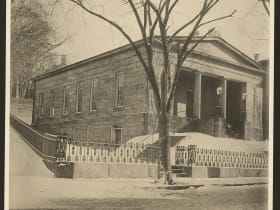
The Providence Athenaeum
13 miles away
Step off Benefit Street into the Providence Athenaeum and you step into 1838.

RISD Museum
13 miles away
Visitors to Providence often walk right past it, but the RISD Museum on Benefit Street rivals museums in far bigger cities.

Roger Williams Park
15 miles away
This is Providences great green lung, a 435-acre Victorian park laid out in the 1870s in the sweeping pastoral style of the era.

Scituate Reservoir
15 miles away
The Scituate Reservoir is the biggest lake in Rhode Island, but it is a drinking-water supply, so you cannot boat, swim, or fish it, and that restriction is exactly what keeps its shoreline so wild an...

Swamp Meadow Covered Bridge
16 miles away
Rhode Island is not covered-bridge country, which is exactly why this one is a find.

Roger Williams Park Zoo
16 miles away
This is the classic family day out in Providence. The Roger Williams Park Zoo, founded in 1872 and one of the oldest in the country, packs elephants, giraffes, zebras, red pandas, and snow leopards in...

Crescent Park Looff Carousel
18 miles away
This is a genuine piece of amusement-park history kids can actually ride.