

Rhode Island State House
82 Smith Street
Providence, RI
A white marble capitol crowned by one of the largest self-supporting domes in the world, holding a royal charter that made Rhode Island the birthplace of religious freedom.
The Rhode Island State House is the grand civic landmark of Providence, a white marble capitol completed in 1904 and set on a rise where it commands the city skyline. Designed by the eminent firm of McKim, Mead and White, it is crowned by a dome that ranks among the largest self-supporting marble domes in the world, a feat of engineering that puts it in company with only a handful of great buildings anywhere.
Atop that dome stands the Independent Man, a gilded bronze figure that has become the symbol of the state and its fiercely independent streak. Inside, the building safeguards a document that gives Rhode Island a claim on the conscience of the nation: the 1663 royal charter that first guaranteed freedom of religion, a principle the colony pioneered and the country later adopted.
What Travelers Love
- A gleaming white Georgia-marble capitol visible across the city
- One of the largest self-supporting marble domes in the world
- The gilded Independent Man statue standing atop the dome
- The original 1663 royal charter that guaranteed religious liberty
Worth Knowing
- The building is open to the public on weekdays, and guided tours can be arranged
- Bring identification, as it is a working government building with security
- The grounds and hilltop offer fine views of downtown Providence
- Check ahead, as public access can change around legislative sessions and events
Learn about Rhode Island State House
The great marble dome
Built between 1895 and 1904 of white Georgia marble, the State House was designed by McKim, Mead and White, the most prominent American architectural firm of its day. Its centerpiece is the dome, an enormous span of self-supporting marble that is often ranked among the largest of its kind in the world, along with such structures as St. Peter's Basilica in Rome.
The scale is deliberate. A small state built a capitol grand enough to announce its importance, and the result dominates the Providence skyline, visible from the highways, the river, and the neighboring hills. The bright marble makes it seem to glow, especially when lit at night.
The Independent Man
Standing eleven feet tall atop the dome is the Independent Man, a gilded bronze statue of a figure leaning on a spear with an anchor at his feet. Installed in 1899, he embodies the anchor and the motto Hope that appear on the state's flag and seal, and the independent spirit for which Rhode Island prides itself.
Rhode Island earned that reputation early. It was founded by Roger Williams and others who left Massachusetts seeking freedom of conscience, it was the first colony to renounce allegiance to the British Crown in 1776, and it held out as the last of the thirteen states to ratify the federal Constitution, insisting on protections for individual liberty. The figure on the dome is the state's self-image made solid.
The 1663 charter
Among the treasures kept in the building is the original Royal Charter of 1663, granted by King Charles II. It was extraordinary for its time because it explicitly guaranteed liberty of conscience, promising that no one would be punished for differences of religious opinion, a radical idea in the seventeenth century.
That principle, championed by Roger Williams, made Rhode Island a refuge for those persecuted elsewhere, including Baptists, Quakers, and one of the earliest Jewish communities in North America. The charter served as the colony's and then the state's governing document for an astonishing 180 years, and it stands as a founding document of American religious freedom.
A capitol to explore
Inside, the State House holds grand public spaces, a full-length portrait of George Washington by Rhode Island's own Gilbert Stuart, historic battle flags, and the chambers where the legislature meets. It functions as a working seat of government and, on weekdays, as a place the public can walk through and tour.
The hilltop setting rewards a visit in itself, with sweeping views over downtown Providence, the river, and the surrounding neighborhoods. Combined with the nearby RISD Museum, Benefit Street, and Federal Hill, the State House anchors a compact, walkable capital city full of history and art.
Closest Boutels
The closest Boutel™ stays, so you can turn this stop into an overnight. Each is a place we chose through independent editorial review, never a paid placement.
Details
Providence, RI
Frequently asked questions
What is the Rhode Island State House?
The Rhode Island State House, in Providence, is the state's beautiful capitol building, crowned by one of the largest self-supporting marble domes in the world and rising majestically above the city. This elegant white marble building, a masterpiece of architecture, houses the offices of state government and is renowned for its stunning dome, grand interior, historic artworks and artifacts, and a famous statue known as the Independent Man atop the dome. Visitors can tour its magnificent halls and admire treasures of Rhode Island history. A grand and inspiring landmark, it delights architecture and history lovers. With its splendid dome and halls, the Rhode Island State House offers a rewarding destination in Rhode Island.
What can you see at the Rhode Island State House?
You can admire the magnificent self-supporting marble dome, tour the grand interior with its rotunda, chambers, and historic artworks, see treasures of Rhode Island history including a famous portrait and a colonial charter, and view the Independent Man statue atop the dome. The stunning dome, the grand halls, the historic artifacts, and the architecture are the draws, offering a rich blend of history and grandeur. The scale and beauty of the building are impressive. With its architecture and treasures, the Rhode Island State House offers a rewarding visit in Providence, Rhode Island.
Can you tour the Rhode Island State House?
Yes, the Rhode Island State House welcomes visitors and has offered guided and self-guided tours of its grand halls, chambers, and historic treasures, generally on weekdays when government offices are open. Because it is a working seat of government, access and tour availability can depend on the day and current operations, so checking current visiting information before you go is wise. Confirming current tour details ahead ensures a rewarding visit to the Rhode Island State House in Rhode Island.
When is the best time to visit the Rhode Island State House?
As an indoor landmark, the Rhode Island State House is enjoyable year-round in any weather, with weekdays generally the time when tours and the fullest access to the working building are available. Because hours and tour availability can vary, checking the current schedule before you go is wise. Because it is indoors, the Rhode Island State House makes a rewarding stop any time of year in Providence, Rhode Island.
What is near the Rhode Island State House?
The Rhode Island State House is in Providence, Rhode Island, within reach of downtown Providence, Benefit Street and College Hill, the RISD Museum, and Roger Williams Park across the city. That makes the Rhode Island State House a rewarding stop to combine with Benefit Street and the other attractions of Providence on a visit to Rhode Island.
Nearby

RISD Museum
0.5 miles away
Visitors to Providence often walk right past it, but the RISD Museum on Benefit Street rivals museums in far bigger cities.
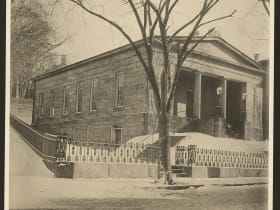
The Providence Athenaeum
0.5 miles away
Step off Benefit Street into the Providence Athenaeum and you step into 1838.
Benefit Street, the Mile of History
0.6 miles away
Architecture lovers make pilgrimages here, but many visitors never climb the hill to see it.

Roger Williams Park
2.9 miles away
This is Providences great green lung, a 435-acre Victorian park laid out in the 1870s in the sweeping pastoral style of the era.

Roger Williams Park Zoo
3.2 miles away
This is the classic family day out in Providence. The Roger Williams Park Zoo, founded in 1872 and one of the oldest in the country, packs elephants, giraffes, zebras, red pandas, and snow leopards in...
Slater Mill
3.7 miles away
This is the actual birthplace of the American factory, and it is easy to walk past without grasping the weight of it.

Slater Park Looff Carousel
4.6 miles away
Most people driving past Slater Park have no idea one of the great early carousels in the country is turning inside it.

Slater Memorial Park
4.6 miles away
An easy family park with a hundred things to do and room to run.

Clemence-Irons House
5.1 miles away
This is architecture you cannot see almost anywhere else in America.
Hearthside House
5.3 miles away
A stone mansion with a jilted-lover legend, hiding on an old country road most travelers never find.

Crescent Park Looff Carousel
5.6 miles away
This is a genuine piece of amusement-park history kids can actually ride.

Lincoln Woods State Park
5.9 miles away
This is the green lung just north of Providence, a rocky, wooded park of oak and glacial boulders wrapped around Olney Pond.
East Bay Bike Path
8.2 miles away
This is the family bike ride in the East Bay. The East Bay Bike Path is a flat, paved rail-trail running 14 miles from Providence to Bristol, mostly away from cars, so young riders can pedal without t...
North Scituate Village Green
8.9 miles away
A pretty New England village green that turns into a giant fair once a year.

Scituate Reservoir
10 miles away
The Scituate Reservoir is the biggest lake in Rhode Island, but it is a drinking-water supply, so you cannot boat, swim, or fish it, and that restriction is exactly what keeps its shoreline so wild an...
Nathanael Greene Homestead
12 miles away
Plenty of people know Nathanael Greene from a statue or a county named for him, but few realize his actual house survives, quietly, in western Rhode Island.
Rocky Point State Park
12 miles away
Rocky Point is a shoreline haunted, in the fondest way, by a lost amusement park.
Diamond Hill Park
12 miles away
For a quick leg-stretch with a view, pull off at Diamond Hill Park at 4097 Diamond Hill Rd in Cumberland.
Colt State Park
12 miles away
This former gentlemans farm gives Bristol a broad, open front on Narragansett Bay.
Museum of Work and Culture
13 miles away
A history museum that works because you walk right through it.
Linden Place
13 miles away
It looks like a simple grand house on the parade route, but Linden Place at 500 Hope St carries a heavier story.

Herreshoff Marine Museum
13 miles away
Sailors know it, but plenty of visitors miss that a tiny Bristol yard once ruled world yacht racing.

Blithewold Mansion, Gardens and Arboretum
14 miles away
Garden people travel for this one; casual visitors are stunned to find giant sequoias on the Rhode Island shore.
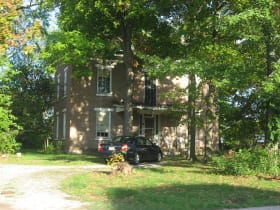
Paine House Museum
14 miles away
A small, friendly history museum where old-time daily life feels real.

Battleship Cove
16 miles away
People drive over the Braga Bridge and spot the gray battleship without realizing they can walk right through it.

Swamp Meadow Covered Bridge
17 miles away
Rhode Island is not covered-bridge country, which is exactly why this one is a find.
Smiths Castle
17 miles away
People drive right past this on Post Road without realizing they are passing one of the oldest houses in America.
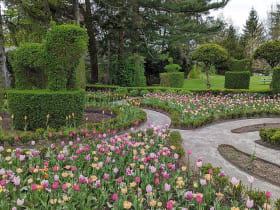
Green Animals Topiary Garden
18 miles away
Off the usual Newport circuit, up in Portsmouth on the bay, sits a garden that delights people who did not expect to be delighted.

Historic Wickford Village
18 miles away
Wickford is the kind of place people stumble into and cannot believe is not more famous.