
Nathanael Greene Homestead
50 Taft Street
Coventry, RI
The house a Quaker foundry owner built beside his ironworks, before he left to become the general who won the war in the South.
The Nathanael Greene Homestead preserves the home of the man many historians rank as the finest general of the American Revolution after George Washington himself. Greene built this house, which he called Spell Hall, in 1770 beside the family ironworks in Coventry, and from here he left to join the fight for independence, rising from a militia private to the commander who broke British power in the South.
His story is remarkable because he began with none of the usual advantages. A Quaker raised in a faith that opposed war, largely self-educated, and walking with a limp, Greene taught himself the art of command by reading every military book he could find. That a general of his stature came from this quiet Rhode Island forge village is exactly what makes the modest house worth the visit.
What Travelers Love
- The preserved home of one of the Revolution's most important generals
- The story of a self-taught Quaker who became Washington's right hand
- A handsome 1770 house furnished to its eighteenth-century period
- A quiet riverside setting tied to Rhode Island's early iron industry
Worth Knowing
- The house is open on limited seasonal days and by appointment, so check ahead
- Visits are by guided tour, which brings the history to life
- It is a modest, authentic historic house rather than a large attraction
- The surrounding village and river add a pleasant sense of place
Learn about Nathanael Greene Homestead
From Quaker foundry to Continental Army
Nathanael Greene was born in 1742 into a prosperous Rhode Island Quaker family in the iron business. He ran the family forge at Coventry and built Spell Hall nearby, but he chafed against the limits of his upbringing, teaching himself law, history, and above all military science from books, an unusual passion for a young Quaker.
When war came, his faith community disowned him for taking up arms, but Greene helped organize a Rhode Island militia and, despite having no combat experience, was appointed a brigadier general when the Continental Army formed in 1775. Washington quickly recognized his talent, and Greene became one of the small circle of officers the commander trusted most.
The general who won the South
Greene served throughout the war in roles from field commander to quartermaster general, the demanding job of keeping the army supplied. His greatest achievement came in 1780 when Washington sent him to take over the collapsing American effort in the Southern colonies.
There Greene ran a brilliant campaign of maneuver against a stronger British army, wearing it down through a series of engagements even as he lost individual battles. His strategy is captured in his own famous line about fighting, getting beaten, rising, and fighting again. Within about a year he had maneuvered the British out of most of the Carolinas and Georgia, setting up the final victory at Yorktown.
Spell Hall
The house Greene built in 1770 is a substantial two-and-a-half-story frame dwelling, well made for its time, reflecting the standing of a successful ironmaster. It sits near the Pawtuxet River, whose water powered the Greene family forge that gave the village its early prosperity.
Preserved and furnished to the eighteenth century, the homestead is maintained as a museum by a nonprofit association. Rooms and objects interpret both the domestic life of the Greene family and the extraordinary career of the general, connecting the everyday setting to the sweep of the Revolution.
After the war
In gratitude for saving the South, the state of Georgia granted Greene a plantation there, and he moved his family south after the war. He died in 1786 at only 43, his life cut short just as the new nation he helped create was taking shape.
His name endures across the country in the many places called Greene or Greeneville, and in Rhode Island the homestead keeps his memory close to home. For a figure of such national importance, this unassuming house offers an unusually direct connection to the person behind the reputation.
Closest Boutels
The closest Boutel™ stays, so you can turn this stop into an overnight. Each is a place we chose through independent editorial review, never a paid placement.
Details
Coventry, RI
Frequently asked questions
What is the Nathanael Greene Homestead?
The Nathanael Greene Homestead, in Coventry, Rhode Island, is the historic eighteenth-century home of Nathanael Greene, one of the most important generals of the American Revolution and a trusted commander under George Washington. This handsome colonial house, which Greene built and lived in before the war, is preserved as a house museum with period furnishings and exhibits that tell the story of Greene's life, his crucial role in winning American independence, and the era in which he lived. It honors a Rhode Island hero of the Revolution. A meaningful window into Revolutionary history, it educates and inspires visitors. With its Revolutionary heritage, the Nathanael Greene Homestead offers a fascinating destination in Rhode Island.
Who was Nathanael Greene?
Nathanael Greene was one of the greatest generals of the American Revolution, a Rhode Islander who rose to become one of George Washington's most trusted and capable commanders, playing a crucial role in the fight for American independence, especially in the campaigns of the southern colonies. Widely regarded as one of the ablest generals of the war, Greene helped turn the tide toward American victory. His homestead in Coventry honors his life and legacy. Learning about Greene enriches a visit to the Nathanael Greene Homestead in Rhode Island.
What can you see at the Nathanael Greene Homestead?
You can tour Nathanael Greene's historic colonial home with its period furnishings, see exhibits and artifacts relating to his life and his role in the American Revolution, and learn the story of this Rhode Island hero and the Revolutionary era. The historic house, the period furnishings, the exhibits on Greene and the Revolution, and the connection to a great general are the draws, offering a meaningful historical experience. Standing in the home of a Revolutionary hero is memorable. With its history, the Nathanael Greene Homestead offers a rewarding visit in Coventry, Rhode Island.
When is the best time to visit the Nathanael Greene Homestead?
The homestead is typically open for tours on a seasonal schedule, generally in the warmer months, so late spring through early fall is the time to visit, and checking the current schedule and open days before you go is important, as its hours may be limited. Special events tied to Revolutionary history add interest at times. For a tour, check the current seasonal schedule and open days at the Nathanael Greene Homestead in Rhode Island.
What is near the Nathanael Greene Homestead?
The Nathanael Greene Homestead is in Coventry, Rhode Island, within reach of the Paine House Museum, the rural villages and countryside of western Rhode Island, and the routes toward Providence to the northeast. That makes the Nathanael Greene Homestead a fascinating stop to combine with the Paine House Museum and the other attractions of rural western Rhode Island on a visit to the state.
Nearby
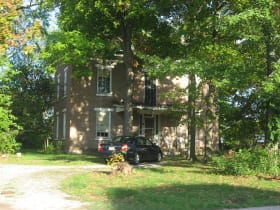
Paine House Museum
3.5 miles away
A small, friendly history museum where old-time daily life feels real.

Scituate Reservoir
7.5 miles away
The Scituate Reservoir is the biggest lake in Rhode Island, but it is a drinking-water supply, so you cannot boat, swim, or fish it, and that restriction is exactly what keeps its shoreline so wild an...

Roger Williams Park Zoo
8.9 miles away
This is the classic family day out in Providence. The Roger Williams Park Zoo, founded in 1872 and one of the oldest in the country, packs elephants, giraffes, zebras, red pandas, and snow leopards in...
Smiths Castle
8.9 miles away
People drive right past this on Post Road without realizing they are passing one of the oldest houses in America.

Clemence-Irons House
9.1 miles away
This is architecture you cannot see almost anywhere else in America.

Roger Williams Park
9.1 miles away
This is Providences great green lung, a 435-acre Victorian park laid out in the 1870s in the sweeping pastoral style of the era.
Rocky Point State Park
9.4 miles away
Rocky Point is a shoreline haunted, in the fondest way, by a lost amusement park.

Historic Wickford Village
9.6 miles away
Wickford is the kind of place people stumble into and cannot believe is not more famous.
North Scituate Village Green
10 miles away
A pretty New England village green that turns into a giant fair once a year.

Crescent Park Looff Carousel
10 miles away
This is a genuine piece of amusement-park history kids can actually ride.

RISD Museum
12 miles away
Visitors to Providence often walk right past it, but the RISD Museum on Benefit Street rivals museums in far bigger cities.

Rhode Island State House
12 miles away
People photograph its dome from the highway without realizing they can walk right in.
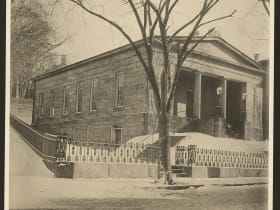
The Providence Athenaeum
12 miles away
Step off Benefit Street into the Providence Athenaeum and you step into 1838.
Benefit Street, the Mile of History
12 miles away
Architecture lovers make pilgrimages here, but many visitors never climb the hill to see it.
East Bay Bike Path
12 miles away
This is the family bike ride in the East Bay. The East Bay Bike Path is a flat, paved rail-trail running 14 miles from Providence to Bristol, mostly away from cars, so young riders can pedal without t...
Gilbert Stuart Birthplace and Museum
13 miles away
Hardly anyone realizes the face on the dollar bill was painted by a Rhode Islander born in this quiet mill hamlet.
Colt State Park
13 miles away
This former gentlemans farm gives Bristol a broad, open front on Narragansett Bay.

Blithewold Mansion, Gardens and Arboretum
14 miles away
Garden people travel for this one; casual visitors are stunned to find giant sequoias on the Rhode Island shore.

Herreshoff Marine Museum
14 miles away
Sailors know it, but plenty of visitors miss that a tiny Bristol yard once ruled world yacht racing.
Linden Place
14 miles away
It looks like a simple grand house on the parade route, but Linden Place at 500 Hope St carries a heavier story.

Swamp Meadow Covered Bridge
15 miles away
Rhode Island is not covered-bridge country, which is exactly why this one is a find.
Slater Mill
15 miles away
This is the actual birthplace of the American factory, and it is easy to walk past without grasping the weight of it.
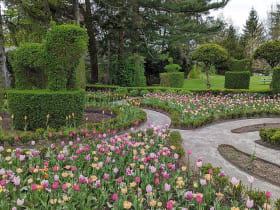
Green Animals Topiary Garden
15 miles away
Off the usual Newport circuit, up in Portsmouth on the bay, sits a garden that delights people who did not expect to be delighted.
Hearthside House
16 miles away
A stone mansion with a jilted-lover legend, hiding on an old country road most travelers never find.

Slater Park Looff Carousel
16 miles away
Most people driving past Slater Park have no idea one of the great early carousels in the country is turning inside it.

Slater Memorial Park
16 miles away
An easy family park with a hundred things to do and room to run.

Lincoln Woods State Park
17 miles away
This is the green lung just north of Providence, a rocky, wooded park of oak and glacial boulders wrapped around Olney Pond.
Narragansett Town Beach
18 miles away
This is the easy family beach in Narragansett, a broad crescent of sand right in the middle of town.
Beavertail State Park
18 miles away
Beavertail is where Conanicut Island runs out of land and drops onto open granite ledges at the very mouth of Narragansett Bay.

Fort Adams State Park
18 miles away
A real fortress to explore turns a history stop into an adventure.
Touro Synagogue
19 miles away
Tucked on a side street off Newports colonial core is a building most visitors walk past without knowing its weight.
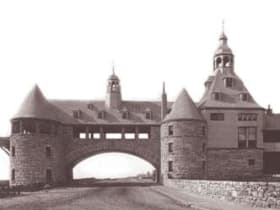
The Towers
19 miles away
This granite arch spanning Ocean Road is the last piece of an 1880s seaside casino designed by McKim, Mead & White, all that survived a fire in 1900.

Rosecliff Mansion
19 miles away
One of the loveliest of Newport's Gilded Age summer mansions, a gleaming white palace modeled on the Grand Trianon at Versailles and designed by Stanford White for the silver heiress and society hoste...

The Cliff Walk
19 miles away
The Cliff Walk gives kids the best of Newport in one walk: crashing surf on one side, jaw-dropping mansions on the other, and the sense of an adventure along the edge of the sea.

Battleship Cove
20 miles away
People drive over the Braga Bridge and spot the gray battleship without realizing they can walk right through it.