
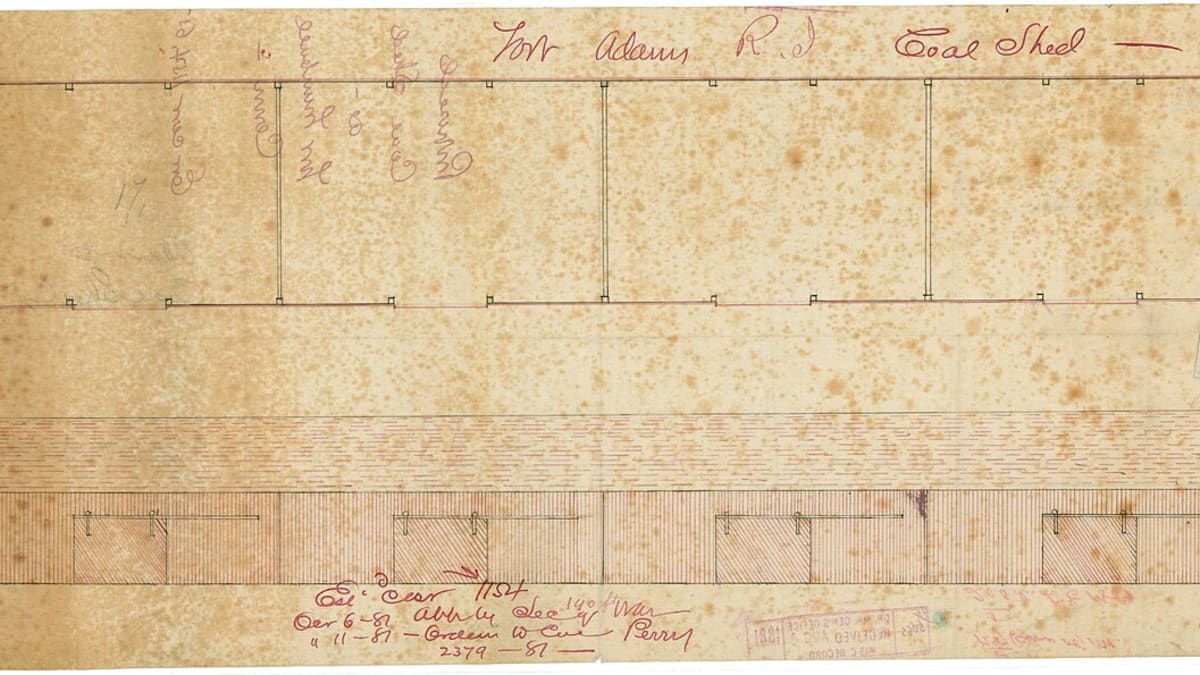
Fort Adams State Park
90 Fort Adams Drive
Newport, RI
One of the largest coastal fortifications in the United States, a granite stronghold guarding Newport Harbor and the summer home of legendary music festivals.
Fort Adams is a colossus of granite guarding the entrance to Newport Harbor, one of the largest coastal fortifications ever built in the United States. Its walls, bastions, and hidden tunnels were designed to command the mouth of Narragansett Bay, and walking its ramparts today rewards you with some of the finest harbor and bay views in New England, alive with sailboats against the Newport skyline.
The fort has found a remarkable second life as a stage. Its grassy grounds beside the water host the legendary Newport Jazz Festival and Newport Folk Festival, events that helped shape American music and that have drawn the greatest performers of their eras to this waterfront. A visit combines serious military history with one of the country's most storied concert settings.
What Travelers Love
- Touring the massive granite fort, one of the largest in the country
- Sweeping views of Newport Harbor, the bay, and the sailboats from the ramparts
- The site of the famous Newport Jazz and Folk Festivals
- Waterfront lawns, a small beach, and the adjacent sailing museum
Worth Knowing
- The interior of the fort is seen on guided tours, which run on a seasonal schedule
- The grounds and park areas are open year round and free to enter, with fees for tours and events
- Festival days bring large crowds and road closures, so plan ahead if visiting then
- The fort's tunnels and ramparts involve uneven surfaces and stairs, so wear sturdy shoes
Learn about Fort Adams State Park
The story of the fort
The waters of Narragansett Bay were the homeland of the Narragansett people, whose tribe endures in Rhode Island today, and Newport grew up on the shore as a colonial seaport and one of the busiest trading towns in early America. Its harbor was strategically vital, which is why it came to be so heavily fortified.
An early fort stood on this point during the Revolution, but the great fortress visitors see today was built over decades in the nineteenth century, begun in 1824 as part of a national system of coastal defenses. Constructed of granite and brick and ringed with tunnels and gun positions, it was designed to hold hundreds of cannon and thousands of soldiers.
Fort Adams remained an active military post into the twentieth century, garrisoned through the Civil War and both World Wars, when it helped guard the important naval facilities of Narragansett Bay. Soldiers lived and drilled within its walls for well over a century.
After the military left, the fort and its grounds became a state park. Preservation efforts have stabilized and opened much of the enormous structure, and today its history is interpreted through tours that lead visitors along the ramparts and down into the labyrinth of tunnels and chambers below.
Exploring the fortress
The scale of Fort Adams is its most impressive feature. The walls enclose a vast parade ground, and the defenses are layered with bastions, gun galleries, and a system of underground listening tunnels and countermines built to detect and repel attackers, an elaborate feat of military engineering.
Guided tours take visitors into areas otherwise closed, explaining how the fort was built, how it was meant to fight, and what daily life was like for the soldiers stationed here. Climbing to the top of the walls opens up panoramic views over the harbor and bay.
The setting, on a peninsula surrounded on three sides by water, means the views are constant and spectacular, taking in the yachts of Newport, the bridges spanning the bay, and the open water beyond. The park grounds also include a small beach and broad lawns for picnicking.
A stage for American music
Since the mid twentieth century the grounds of Fort Adams have hosted the Newport Jazz Festival and the Newport Folk Festival, two of the most influential music events in American history. The waterfront stages have seen countless legendary performances that helped define entire genres.
The folk festival in particular became famous as a crucible of American music, a place where traditions were honored and boundaries were pushed before enormous crowds seated on the grass with the bay glittering behind the stage. The setting itself, a historic fort on the water, is part of the magic.
The festivals continue today, drawing music lovers from around the world each summer. Even outside festival season, the grounds carry the aura of those performances, and the same lawns that filled with soldiers now fill with music fans.
Season by season
Spring opens the touring season, with mild weather and the harbor coming back to life with boats, a fine time to explore before the summer rush.
Summer is the peak, bringing the famous festivals, the busy sailing season, and warm days ideal for touring the fort and picnicking on the grounds, though the festivals draw large crowds.
Fall offers crisp air, thinning crowds, and beautiful light over the harbor, one of the most pleasant times to walk the ramparts.
Winter closes the tours and quiets the park, but the grounds remain open for bracing walks with dramatic views across the wind swept bay.
Closest Boutels
The closest Boutel™ stays, so you can turn this stop into an overnight. Each is a place we chose through independent editorial review, never a paid placement.
Details
Newport, RI
Frequently asked questions
What is Fort Adams State Park?
Fort Adams State Park, in Newport, Rhode Island, is a beautiful waterfront park centered on Fort Adams, one of the largest coastal fortifications in the country, set on a peninsula guarding the entrance to Newport Harbor. The massive historic stone fort, built to defend the harbor, can be explored on tours, while the surrounding park offers stunning views of the harbor and Narragansett Bay, sailing, picnicking, and event grounds famous for hosting renowned music festivals. Its blend of military history, water views, and recreation makes it a Newport favorite. A grand and scenic destination, it delights visitors. With its historic fort and bay views, Fort Adams State Park offers a rewarding destination in Rhode Island.
What can you do at Fort Adams State Park?
You can tour the massive historic fort and learn its military history, take in sweeping views of Newport Harbor and Narragansett Bay, picnic, walk the grounds, watch sailboats, and enjoy the park that famously hosts major music festivals. The huge stone fort, the harbor and bay views, the tours, and the waterfront recreation are the draws, making it a rich destination for history and scenery alike. The scale of the fort is impressive. With its fort and setting, Fort Adams State Park offers a rewarding experience in Newport, Rhode Island.
Can you tour the fort at Fort Adams State Park?
Yes, guided tours of the historic fort are offered, taking visitors through the massive fortification and explaining its role in coastal defense and its history, a highlight of a visit. Because the fort tours run on a schedule and are generally seasonal, checking current tour times and availability before you go is wise, and wearing sturdy shoes for the historic structure helps. The surrounding park and views can be enjoyed even outside tour times. For the fort tour, check current availability at Fort Adams State Park in Rhode Island.
When is the best time to visit Fort Adams State Park?
The warmer months of late spring through early fall are the best time to visit, when the fort tours are running, the weather is pleasant for the grounds and harbor views, and the park is at its liveliest, including its famous music festivals, while the grounds and views can be enjoyed in the shoulder seasons too. Because tours and events are seasonal, checking current information before you go is wise. For fort tours and the fullest experience, aim for late spring through early fall at Fort Adams State Park in Rhode Island.
What is near Fort Adams State Park?
Fort Adams State Park is in Newport, Rhode Island, on the harbor, within reach of downtown Newport, the Newport mansions and the Cliff Walk, the harbor and sailing scene, and Narragansett Bay. That makes Fort Adams State Park a rewarding stop to combine with the Cliff Walk and the other attractions of Newport on a visit to Rhode Island.
Outside the Park

Rosecliff Mansion
1.5 miles away
One of the loveliest of Newport's Gilded Age summer mansions, a gleaming white palace modeled on the Grand Trianon at Versailles and designed by Stanford White for the silver heiress and society hoste...
Touro Synagogue
1.7 miles away
Tucked on a side street off Newports colonial core is a building most visitors walk past without knowing its weight.
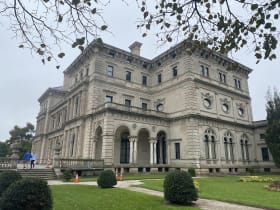
The Breakers
2.1 miles away
Everyone knows Newport has mansions, but standing inside the Breakers still stops people cold.

The Cliff Walk
2.2 miles away
The Cliff Walk gives kids the best of Newport in one walk: crashing surf on one side, jaw-dropping mansions on the other, and the sense of an adventure along the edge of the sea.
Beavertail State Park
3.6 miles away
Beavertail is where Conanicut Island runs out of land and drops onto open granite ledges at the very mouth of Narragansett Bay.
Gilbert Stuart Birthplace and Museum
6.3 miles away
Hardly anyone realizes the face on the dollar bill was painted by a Rhode Islander born in this quiet mill hamlet.
Narragansett Town Beach
6.5 miles away
This is the easy family beach in Narragansett, a broad crescent of sand right in the middle of town.
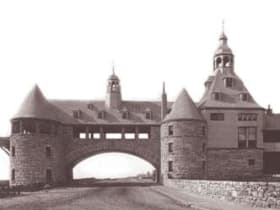
The Towers
6.8 miles away
This granite arch spanning Ocean Road is the last piece of an 1880s seaside casino designed by McKim, Mead & White, all that survived a fire in 1900.

Historic Wickford Village
9.0 miles away
Wickford is the kind of place people stumble into and cannot believe is not more famous.
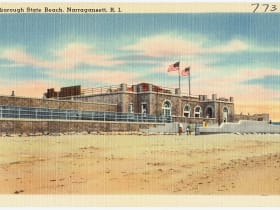
Scarborough State Beach
9.2 miles away
Rhode Island's most beloved ocean beach, a wide crescent of Atlantic surf on Ocean Road in Narragansett with a long boardwalk, an observation tower, and the stone ruins of a lost Gilded Age mansion ab...
Green Animals Topiary Garden
9.3 miles away
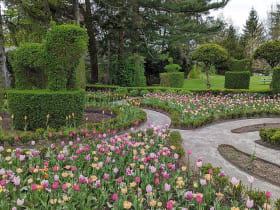
Off the usual Newport circuit, up in Portsmouth on the bay, sits a garden that delights people who did not expect to be delighted.
Smiths Castle
9.6 miles away
People drive right past this on Post Road without realizing they are passing one of the oldest houses in America.

Point Judith Lighthouse
11 miles away
This brown-and-white 1857 lighthouse guards one of New England's most treacherous points, where Narragansett Bay meets the open Atlantic.

Blithewold Mansion, Gardens and Arboretum
13 miles away
Garden people travel for this one; casual visitors are stunned to find giant sequoias on the Rhode Island shore.

Herreshoff Marine Museum
14 miles away
Sailors know it, but plenty of visitors miss that a tiny Bristol yard once ruled world yacht racing.
Linden Place
14 miles away
It looks like a simple grand house on the parade route, but Linden Place at 500 Hope St carries a heavier story.
Colt State Park
15 miles away
This former gentlemans farm gives Bristol a broad, open front on Narragansett Bay.
Rocky Point State Park
15 miles away
Rocky Point is a shoreline haunted, in the fondest way, by a lost amusement park.

Battleship Cove
18 miles away
People drive over the Braga Bridge and spot the gray battleship without realizing they can walk right through it.
East Bay Bike Path
18 miles away
This is the family bike ride in the East Bay. The East Bay Bike Path is a flat, paved rail-trail running 14 miles from Providence to Bristol, mostly away from cars, so young riders can pedal without t...
Nathanael Greene Homestead
18 miles away
Plenty of people know Nathanael Greene from a statue or a county named for him, but few realize his actual house survives, quietly, in western Rhode Island.
Paine House Museum
19 miles away
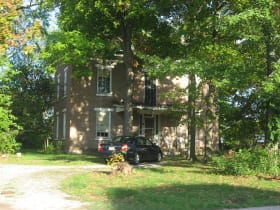
A small, friendly history museum where old-time daily life feels real.

Crescent Park Looff Carousel
20 miles away
This is a genuine piece of amusement-park history kids can actually ride.