
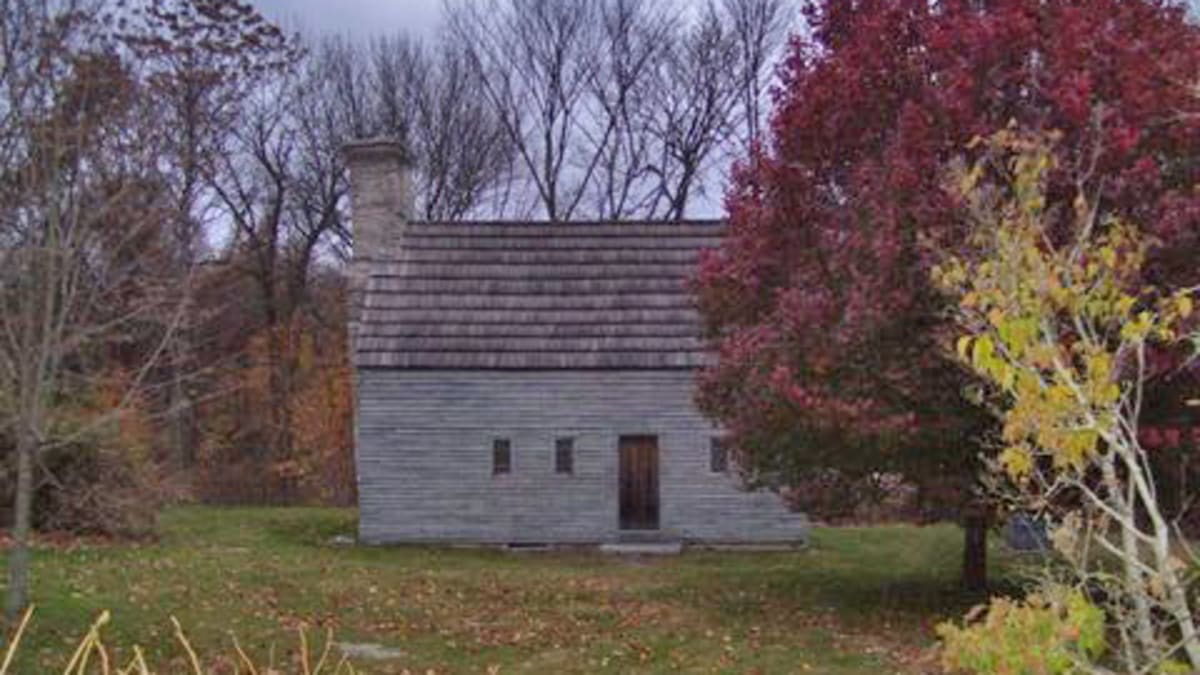
Clemence-Irons House
38 George Waterman Road
Johnston, RI
One of the last stone-enders in America, a 1691 farmhouse built with an entire end wall of stone framing a great hearth.
The Clemence-Irons House is a rare survivor from the earliest years of English settlement in Rhode Island, a small farmhouse raised in 1691 in a style known as a stone-ender. In this distinctive form, one whole end of the house is built as a solid wall of stone, embracing a huge fireplace and chimney, while the rest of the structure is timber framed. Once common in colonial Rhode Island, these houses have almost entirely vanished, which makes this one a genuine treasure.
What you are looking at is essentially a piece of the seventeenth century preserved into the present. Restored in the early 1900s to its early appearance, the house shows how the first generations of settlers in this region adapted building traditions from the west of England to the stone rich land they found here, creating an architecture found almost nowhere else in America.
What Travelers Love
- Seeing an authentic seventeenth century stone-ender, a form now nearly extinct
- The massive stone chimney wall that forms one entire end of the house
- The steep, plain lines of a genuine colonial New England farmhouse
- A quiet, human scaled glimpse of how early Rhode Islanders lived
Worth Knowing
- The house is a small historic site with limited seasonal open hours, so check the schedule before visiting
- It is operated as a museum property, so interior access is by tour rather than a walk in visit
- The building is modest in size, so a visit pairs well with other historic stops in the Providence area
- Respect the surrounding residential neighborhood when parking and visiting
Learn about Clemence-Irons House
The stone-ender tradition
When English settlers arrived in the Providence area in the seventeenth century, many came from the western counties of England, where building with stone and lime was common. They found in Rhode Island an abundance of fieldstone and the raw material for lime, and they carried their building habits across the ocean.
The result was the stone-ender, a house whose entire gable end is a massive stone construction wrapped around a walk in fireplace and a broad chimney. This great stone wall anchored the home, retained heat, and provided the hearth that was the center of colonial domestic life. The rest of the house was framed in wood and often sheathed in clapboard.
This land was the homeland of the Narragansett people, whose tribe remains part of Rhode Island today, and the early farms rose on ground that had long been theirs. The Clemence family who built this house were among the settlers farming the countryside west of Providence in the decades after the town's founding.
Stone-enders were once a signature of colonial Rhode Island, but changing tastes, fires, and the passage of centuries destroyed nearly all of them. Only a small handful survive, and the Clemence-Irons House is among the best preserved, which is why it is protected as a museum today.
Reading the house
The house is a compact, steep roofed structure of a single main room over a cellar, with a loft above, the plain and practical layout of a working farm home. The commanding feature is the stone end, where the great chimney rises and the deep fireplace once served for heating, cooking, and light.
Inside, the exposed timber framing, wide floorboards, and simple finishes reflect the unadorned life of an early farming family. There was no ornament to spare in a home built for survival and work rather than display.
The building was carefully restored in the early twentieth century to return it to its seventeenth century form, and it is preserved today by a regional historic preservation organization that maintains it as a window into colonial life.
A survivor worth seeking out
Part of the appeal of the Clemence-Irons House is simply its rarity. To stand before a genuine stone-ender is to see something almost no one else has, a form of building that flourished briefly in one small corner of America and then all but disappeared.
The house rewards visitors who appreciate architecture and early history over spectacle. It is modest, quiet, and honest, telling its story through its stones and timbers rather than through grand rooms or fine furnishings.
Because it is small, a stop here fits neatly into a day exploring the history of the Providence area, paired with the colonial streets and museums of the city nearby.
Life around the hearth
In a seventeenth century home like this one, the great fireplace was the center of everything. It was where the family cooked their meals over the fire and in the coals, where they gathered for warmth through the long New England winters, and where much of the light came from after dark. The whole house was organized around that single source of heat and flame.
The stone end that gives the house its name existed precisely to hold and protect this hearth, its mass storing warmth and its solid construction guarding against the ever present danger of fire. Understanding that lets you read the house as its builders did, a shelter arranged around the necessity of the fire.
Visiting on a cold day, when the old rooms feel the chill, brings home just how central that hearth was to survival, and how much of colonial domestic life unfolded within a few feet of its warmth.
Closest Boutels
The closest Boutel™ stays, so you can turn this stop into an overnight. Each is a place we chose through independent editorial review, never a paid placement.
Details
Johnston, RI
Frequently asked questions
What is the Clemence-Irons House?
The Clemence-Irons House, in Johnston, Rhode Island, is a rare and remarkably preserved seventeenth-century stone-ender house, one of the oldest homes in the state and a wonderful example of early colonial architecture. This historic house is famous as a stone-ender, a distinctive early New England building style featuring a massive stone chimney wall forming one entire end of the house, a form once common in early Rhode Island but now very rare. Preserved as a historic house museum, it offers a vivid glimpse of colonial life. A precious survivor of early America, it fascinates history lovers. With its rare architecture, the Clemence-Irons House offers a fascinating destination in Rhode Island.
What is a stone-ender?
A stone-ender is a distinctive early New England style of house, once common in colonial Rhode Island, in which one entire end wall of the house is built of stone and dominated by a massive stone chimney, while the rest of the house is of wood. This building form, brought by early settlers, was well suited to the region, but very few authentic stone-enders survive today, making the Clemence-Irons House a rare and precious example. Its stone end and great chimney are its defining feature. Learning about the stone-ender style enriches a visit to the Clemence-Irons House in Rhode Island.
What can you see at the Clemence-Irons House?
You can see the rare seventeenth-century stone-ender house with its massive stone chimney end, tour the preserved interior with its period furnishings and features, and learn about early colonial life and building in Rhode Island. The rare stone-ender architecture, the great stone chimney, the historic interior, and the glimpse of colonial life are the draws, offering a vivid connection to early America. The house is a remarkable survivor of its era. With its history and architecture, the Clemence-Irons House offers a rewarding visit in Johnston, Rhode Island.
When is the best time to visit the Clemence-Irons House?
The historic house is typically open for tours on a limited, seasonal schedule, generally in the warmer months, so late spring through early fall is the time to visit, and checking the current schedule and open days before you go is important, as its hours are limited. Its rarity makes catching it open well worth planning for. For a tour, check the current seasonal schedule and open days at the Clemence-Irons House in Rhode Island.
What is near the Clemence-Irons House?
The Clemence-Irons House is in Johnston, Rhode Island, near Providence, within reach of Providence and its historic attractions, and the towns of central Rhode Island. That makes the Clemence-Irons House a fascinating stop to combine with the other historic attractions of the Providence area on a visit to Rhode Island.
Nearby
North Scituate Village Green
3.8 miles away
A pretty New England village green that turns into a giant fair once a year.

Rhode Island State House
5.1 miles away
People photograph its dome from the highway without realizing they can walk right in.

Roger Williams Park
5.3 miles away
This is Providences great green lung, a 435-acre Victorian park laid out in the 1870s in the sweeping pastoral style of the era.

Scituate Reservoir
5.4 miles away
The Scituate Reservoir is the biggest lake in Rhode Island, but it is a drinking-water supply, so you cannot boat, swim, or fish it, and that restriction is exactly what keeps its shoreline so wild an...

RISD Museum
5.5 miles away
Visitors to Providence often walk right past it, but the RISD Museum on Benefit Street rivals museums in far bigger cities.

Roger Williams Park Zoo
5.6 miles away
This is the classic family day out in Providence. The Roger Williams Park Zoo, founded in 1872 and one of the oldest in the country, packs elephants, giraffes, zebras, red pandas, and snow leopards in...
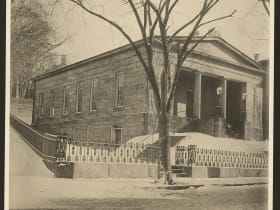
The Providence Athenaeum
5.6 miles away
Step off Benefit Street into the Providence Athenaeum and you step into 1838.
Benefit Street, the Mile of History
5.7 miles away
Architecture lovers make pilgrimages here, but many visitors never climb the hill to see it.
Hearthside House
7.2 miles away
A stone mansion with a jilted-lover legend, hiding on an old country road most travelers never find.
Slater Mill
7.8 miles away
This is the actual birthplace of the American factory, and it is easy to walk past without grasping the weight of it.

Lincoln Woods State Park
8.1 miles away
This is the green lung just north of Providence, a rocky, wooded park of oak and glacial boulders wrapped around Olney Pond.

Slater Park Looff Carousel
9.0 miles away
Most people driving past Slater Park have no idea one of the great early carousels in the country is turning inside it.

Slater Memorial Park
9.0 miles away
An easy family park with a hundred things to do and room to run.
Nathanael Greene Homestead
9.1 miles away
Plenty of people know Nathanael Greene from a statue or a county named for him, but few realize his actual house survives, quietly, in western Rhode Island.

Crescent Park Looff Carousel
9.1 miles away
This is a genuine piece of amusement-park history kids can actually ride.
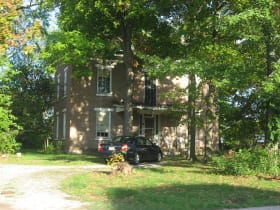
Paine House Museum
10 miles away
A small, friendly history museum where old-time daily life feels real.
East Bay Bike Path
12 miles away
This is the family bike ride in the East Bay. The East Bay Bike Path is a flat, paved rail-trail running 14 miles from Providence to Bristol, mostly away from cars, so young riders can pedal without t...

Swamp Meadow Covered Bridge
12 miles away
Rhode Island is not covered-bridge country, which is exactly why this one is a find.
Museum of Work and Culture
12 miles away
A history museum that works because you walk right through it.
Diamond Hill Park
13 miles away
For a quick leg-stretch with a view, pull off at Diamond Hill Park at 4097 Diamond Hill Rd in Cumberland.
Rocky Point State Park
13 miles away
Rocky Point is a shoreline haunted, in the fondest way, by a lost amusement park.
Colt State Park
15 miles away
This former gentlemans farm gives Bristol a broad, open front on Narragansett Bay.
Linden Place
16 miles away
It looks like a simple grand house on the parade route, but Linden Place at 500 Hope St carries a heavier story.

Herreshoff Marine Museum
16 miles away
Sailors know it, but plenty of visitors miss that a tiny Bristol yard once ruled world yacht racing.

Blithewold Mansion, Gardens and Arboretum
16 miles away
Garden people travel for this one; casual visitors are stunned to find giant sequoias on the Rhode Island shore.
Smiths Castle
17 miles away
People drive right past this on Post Road without realizing they are passing one of the oldest houses in America.

Historic Wickford Village
18 miles away
Wickford is the kind of place people stumble into and cannot believe is not more famous.
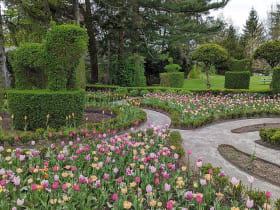
Green Animals Topiary Garden
20 miles away
Off the usual Newport circuit, up in Portsmouth on the bay, sits a garden that delights people who did not expect to be delighted.

Battleship Cove
20 miles away
People drive over the Braga Bridge and spot the gray battleship without realizing they can walk right through it.