
Slide Rock State Park
6871 N State Rte 89A
Sedona, AZ
A chute of slick red sandstone where Oak Creek turns into a natural water slide through the heart of a canyon.
Slide Rock State Park is built around one of the most beloved swimming holes in Arizona, a place where Oak Creek runs down a natural chute of slick red sandstone and turns it into a water slide worn smooth over thousands of years. Swimmers scoot down the rock on the current and splash into cold pools below, framed by the towering red-and-buff walls of Oak Creek Canyon. On a hot summer day it is pure joy, and it has been a favorite of Arizona families for generations.
What sets Slide Rock apart from an ordinary swimming hole is its history. The park sits on the old Pendley homestead, a working apple farm founded in the early twentieth century, and the orchards, farm buildings, and irrigation ditches are still here. So while the water slide is the star, you are also walking through one of the best-preserved historic farmsteads in the canyon, where pioneer families made a life along the creek.
What Travelers Love
- Sliding down a natural chute of water-polished sandstone straight into Oak Creek
- Cooling off in clear red-rock swimming holes on a hot Arizona day
- Walking through the historic Pendley apple orchard that gave the park its start
- Red canyon walls and shady creekside trees, a green refuge above the desert
Worth Knowing
- The rock is slick and the creek runs cold, so wear old sturdy shoes and expect scrapes
- It is one of the most popular spots in the state, so summer weekends fill early in the day
- Creek water quality is monitored and swimming can be closed after storms, so check conditions before you go
- Bring water shoes, a towel, and sun protection, and pack out everything you bring in
Learn about Slide Rock State Park
The Pendley homestead and the apple years
In 1907 Frank Pendley filed a homestead claim on this stretch of Oak Creek and set about the hard work of turning a canyon bottom into a farm. He built an ingenious irrigation system that carried creek water to his fields, and in 1912 he planted an apple orchard that became the heart of the place. The Pendley family farmed here for decades, selling apples and, over time, welcoming travelers who came for the swimming and the scenery.
The farm survived because the family adapted, adding tourist cabins as the road through the canyon brought more visitors. When Arizona bought the property in the 1980s and opened it as a state park in 1987, it kept the orchard, the historic buildings, and the old apple-packing shed intact. Today the trees still bear fruit in the fall, and the homestead stands as a rare living record of how people once made a living in this canyon.
How the water slide was made
The slide itself is a lesson in patient erosion. Oak Creek runs over a layer of sandstone tilted just enough to send the water downhill in a long, narrow chute. Over countless years the creek, carrying sand and grit, has ground and polished that channel smooth, until the rock became slick enough to slide on. Potholes and pools have been scoured out along the way, some deep enough to swim in.
The red and cream colors of the rock come from ancient sand dunes and river deposits that hardened into stone and were later stained by iron. Oak Creek Canyon as a whole was carved where the creek cut down along a great fracture in the Colorado Plateau, and the canyon has been slowly deepening ever since, which is why its walls rise so steeply on both sides of the little farm.
A green ribbon in the desert
Oak Creek is one of the few permanent streams in this dry country, and its water supports a lush ribbon of life that feels worlds away from the surrounding desert. Cottonwoods, sycamores, willows, and box elders shade the banks, and in autumn they turn the canyon gold. The park's orchard adds its own bloom in spring and its fruit in fall, and wild grape and blackberry tangle along the water.
The creek and its greenery draw abundant wildlife. Great blue herons and belted kingfishers work the pools, and songbirds fill the trees. The clear water holds native and stocked fish, and mule deer, javelina, and the occasional black bear come down to drink. Watching the light move across the red walls while the creek murmurs below is a big part of the park's appeal, even for those who never get in the water.
Season by season
Summer is the busy season, when the cold creek is a welcome relief from the heat and the swimming holes fill with families. It is also the most crowded time, so early arrivals get the best of it before the afternoon rush and the monsoon storms that can send water levels up.
Spring brings apple blossoms in the orchard, running water from snowmelt above, and mild days ideal for walking the farm and the creek. Fall is many people's favorite, when the orchard fruits, the canyon trees blaze gold, and the crowds thin. Winter is quiet and cold, sometimes snowy, and the swimming stops, but the red walls dusted with white and the bare orchard have a stark beauty of their own.
Closest Boutels
The closest Boutel™ stays, so you can turn this stop into an overnight. Each is a place we chose through independent editorial review, never a paid placement.
The Iron Horse Inn
Boutel1034 N Main St, Cottonwood, AZ 86326, Cottonwood, AZ
20 miles away|Learn More ›
Details
Sedona, AZ
Frequently asked questions
What is Slide Rock State Park?
Slide Rock State Park, in the heart of Oak Creek Canyon near Sedona, is famous for its natural water slide, where the slick, sloping sandstone bed of Oak Creek lets visitors slide through a chute of cool, flowing water amid stunning red-rock scenery. Set on a historic apple farm homestead, the park combines swimming and sliding in the creek with orchards, hiking, and beautiful canyon views. A beloved Arizona summer destination, Slide Rock offers a refreshing, playful way to enjoy the region's red rocks and water.
What can you do at Slide Rock State Park?
The main attraction is sliding down the natural sandstone water chute and swimming in Oak Creek's pools, but you can also wade, sunbathe on the rocks, explore the historic apple orchard and homestead, walk short trails, and enjoy the gorgeous canyon scenery. In fall, apple-related activities add seasonal charm. Bring water shoes, a towel, and sun protection. The combination of the famous water slide, swimming, history, and red-rock beauty makes it a fun and scenic outing, especially on a hot day.
What safety precautions should I take at Slide Rock?
The rocks are extremely slippery, which is the point of the slide but also a hazard, so move carefully, wear water shoes or old sneakers for grip, and never dive, since water depth varies and hidden rocks can cause serious injury. The water is cold and currents can be strong, especially after rain, and flash floods are possible, so heed weather warnings. Supervise children closely, and check for any posted water-quality advisories before swimming. Respecting these cautions keeps the fun safe.
When is the best time to visit Slide Rock State Park?
Summer is the classic time for sliding and swimming to beat the heat, but it is extremely popular and the park often fills to capacity early, sometimes closing entry, so arrive early in the morning. Spring and fall are lovely and less crowded, with cooler water, and fall adds apple-picking charm and foliage. Weekdays are quieter than weekends. Whenever you go in the warm season, arriving early is key, and checking current conditions and any advisories before you go is wise.
What is near Slide Rock State Park?
The park is in Oak Creek Canyon between Flagstaff and Sedona, near the scenic canyon drive, the West Fork Trail, and the Oak Creek Canyon Overlook, with Sedona's red-rock landmarks like Cathedral Rock, Bell Rock, and the Chapel of the Holy Cross a short drive south. Flagstaff's attractions lie to the north. That makes Slide Rock State Park a refreshing and scenic stop to combine with the drive through Oak Creek Canyon and the many natural wonders of the Sedona area.
Outside the Park
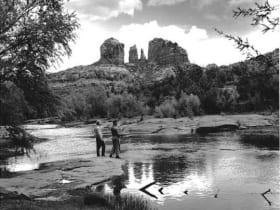
Oak Creek Canyon
2.0 miles away
Oak Creek Canyon runs from Sedona north to the Mogollon Rim, dropping 3,400 feet in 16 miles.
Oak Creek Canyon Overlook
2.5 miles away
The first overlook on US-89A heading south from Flagstaff into Oak Creek Canyon appears after the switchbacks at 6,400 feet and gives a full view into the canyon before the road descends.
Boynton Canyon
7.2 miles away
Boynton Canyon is one of Sedona's premier day hikes - 6 miles round-trip through a lush canyon that ends in a box with high red walls. The Enchantment Resort sits midway through the canyon.
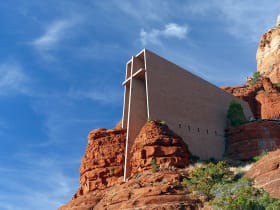
Chapel of the Holy Cross
7.5 miles away
A modernist chapel built straight into the red rock buttes just south of Sedona, with a ninety-foot cross for a spine and a glass wall framing the Verde Valley.
Red Rock Scenic Byway
8.0 miles away
Red Rock Scenic Byway follows AZ-179 for about seven miles between the Village of Oak Creek and Sedona, threading past some of the most photographed red rock in the Southwest.

Cathedral Rock
8.5 miles away
Cathedral Rock is the most-photographed rock formation in Arizona. The classic shot is from the Red Rock Crossing area of Oak Creek, with the twin spires reflected in the water.

Bell Rock
8.9 miles away
Bell Rock is one of Sedona's most iconic butte formations, and one of the few where scrambling on the rock itself is allowed and common.

Red Rock State Park
9.6 miles away
Red Rock State Park is a quieter alternative to Slide Rock, with guided creek hikes, ranger programs, and a riparian cottonwood corridor along Oak Creek.
The Arboretum at Flagstaff
16 miles away
The Arboretum at Flagstaff is a 200-acre botanical garden at 7,150 feet with a focus on plants native to the Colorado Plateau.

Riordan Mansion State Historic Park
18 miles away
Riordan Mansion is a 40-room Arts and Crafts home built in 1904 for two Riordan brothers who ran Flagstaff's lumber empire, connected as a single duplex by a central common room.

Sycamore Canyon Wilderness
19 miles away
Sycamore Canyon is a 21-mile wilderness canyon with a perennial creek, sycamore-cottonwood gallery forest, and red rock walls.

Lowell Observatory
19 miles away
Lowell Observatory was founded in 1894 by Percival Lowell and is where Clyde Tombaugh discovered Pluto on February 18, 1930. Daytime tours cover the historic dome and 24-inch telescope.

Tuzigoot National Monument
20 miles away
Tuzigoot is a hilltop pueblo of 110 rooms occupied by the Sinagua people for nearly 300 years.
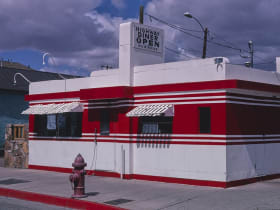
Historic Route 66, Flagstaff to Winslow
39 miles away
The Route 66 alignment east of Flagstaff passes through Winona (you need to know it) and ends at the famous Standin' on the Corner park in Winslow.