

Minute Man National Historical Park
250 North Great Rd, Lincoln, MA
Concord, MA
The road and the bridge where the first shots of the American Revolution were fired, walkable today through fields and woods much as they looked in 1775.
Minute Man National Historical Park preserves the ground where the American Revolution began. On April 19, 1775, British troops marched out from Boston to seize colonial weapons stored at Concord, and along this road they met the colonial militia, the citizen soldiers called minute men. At the North Bridge in Concord, and then all along the road back toward Boston, the two sides fought the opening battle of a war that would create a new nation.
Today the park lets you walk that story. The Battle Road Trail follows the historic route through fields, wetlands, and woods, past restored farmhouses and stone walls, and the reconstructed North Bridge spans the quiet river where the poet Ralph Waldo Emerson later placed the shot heard round the world. It is one of the most evocative historic landscapes in the country, and it sits inside towns famous for far more than one day in 1775.
What Travelers Love
- Walking the Battle Road Trail through the same fields and woods where the fighting unfolded
- Standing at the North Bridge, where colonists first fired on British troops
- The rich mix of Revolutionary history and the literary heritage of nearby Concord
- A landscape of stone walls, old farms, and forest preserved much as it was in 1775
Worth Knowing
- The park stretches for miles between Lexington and Concord, so pick a section or plan to drive between sites
- The North Bridge and the visitor centers are the natural starting points for first-time visitors
- It gets busy around the April anniversary of the battle and during fall foliage
- Concord itself holds several separate author homes worth their own time
Learn about Minute Man National Historical Park
The day the war began
Tensions between Britain and its American colonies had been building for years when, in the spring of 1775, British commanders in Boston sent troops to Concord to seize a stockpile of colonial arms. Warned by riders including Paul Revere, the colonial militias mustered on the town green at Lexington and along the road ahead. At Lexington a confused exchange left several militiamen dead, and the British column pushed on to Concord.
There, at the North Bridge, colonial minute men advanced on British soldiers guarding the crossing, and in the volley that followed the colonists fired on the King's troops for the first time. As the British marched back toward Boston, militia from surrounding towns poured in and fired from behind walls and trees the whole way, turning the retreat into a running battle. By nightfall the Revolution had begun.
The Battle Road and the North Bridge
The centerpiece of the park is the Battle Road Trail, a walking and cycling path of several miles that follows the old road between Lexington and Concord. It passes restored 18th-century farmhouses, the sites where fighting flared, and stretches of preserved countryside, with markers and interpretive stops that let you trace the day's events on foot across the actual ground.
At the Concord end stands the reconstructed North Bridge, arching over the Concord River, with the Minute Man statue on one bank and a memorial to the British soldiers who fell nearby. It is a quiet, beautiful spot that belies its importance, and standing on the bridge is the closest thing to standing where the Revolution's first offensive shots were fired.
A landscape kept as it was
Much of the park's power comes from how little the setting has changed. Stone walls, hayfields, wetlands, and second-growth forest line the old road, and the National Park Service has worked to restore the openness of the 1775 landscape, clearing later development so the terrain reads as it did to the soldiers who fought across it.
This is also older ground still. The Concord and Lexington country is part of the homeland of the Massachusett and Nipmuc peoples, who lived and farmed along these rivers long before the colonial towns were laid out. The land the militia and the British crossed that April had been home to Native communities for thousands of years.
Concord's literary legacy
The towns around the park are as famous for their writers as for the battle. In the decades after the Revolution, Concord became a center of American letters, home to Ralph Waldo Emerson, Henry David Thoreau, Nathaniel Hawthorne, and Louisa May Alcott, whose houses can be visited nearby. Thoreau's Walden Pond, a short drive away, drew from and shaped the American idea of nature and simple living.
That layering of history is part of what makes a visit here rich. In a single day you can walk the road where a war began and then step into the parlors where a nation's literature was written. Spring brings the battle anniversary and green fields, while fall lights the surrounding woods, making both seasons memorable times to walk the Battle Road.
Closest Boutels
The closest Boutel™ stays, so you can turn this stop into an overnight. Each is a place we chose through independent editorial review, never a paid placement.
Details
Concord, MA
Frequently asked questions
What is Minute Man National Historical Park?
It is a National Park Service site spanning the towns of Lexington, Concord, and Lincoln that commemorates the first battles of the American Revolution on April 19, 1775. The park preserves the fields, roads, historic buildings, and monuments where colonial militia and British troops clashed at the war's outset, including the famous North Bridge. Walking this landscape offers a powerful, tangible connection to the day the Revolution began.
What is the North Bridge at Minute Man Park?
The North Bridge, spanning the Concord River, is where colonial minutemen returned fire against British soldiers in the clash immortalized as the shot heard round the world, sparking the Revolutionary War. Today you can walk across a reconstruction of the bridge and see the iconic Minute Man statue standing guard, along with the grave of British soldiers who fell there. It is one of the most storied and moving spots in American history.
What is the Battle Road Trail?
The Battle Road Trail is a roughly five-mile path, open to both walkers and cyclists, that follows the route British troops took as they retreated under fire, with about forty percent of it tracing the original road. The scenic gravel trail passes through fields, wetlands, and woods, linking many of the sites made famous that April day. It is a wonderful way to experience the history on foot or by bike, at whatever length suits you.
What should I know before visiting Minute Man Park?
Admission is free, and there are parking lots at all the major sites, generally within a short, easy walk that works well for young children, strollers, and those with mobility needs. Visitor centers offer exhibits and orientation, including a multimedia presentation on the events of 1775. Wear comfortable shoes if you plan to walk the trail, bring water, and allow at least a half day to see the highlights at a relaxed pace.
When is the best time to visit Minute Man Park?
Spring through fall is ideal for walking or biking the Battle Road Trail and exploring the outdoor sites, with autumn foliage especially beautiful. The anniversary of the battles in mid-April, around Patriots' Day, brings stirring commemorations and reenactments but also large crowds. For a quieter visit, a weekday in the milder months is perfect, and it pairs well with Concord's other historic and literary sites.
Nearby

Walden Pond
3.8 miles away
The water is the surprise: Walden is a glacial kettle pond, over a hundred feet deep and startlingly clear, formed when a buried block of ice melted after the last ice age.
Harvard Museum of Natural History Glass Flowers
9.5 miles away
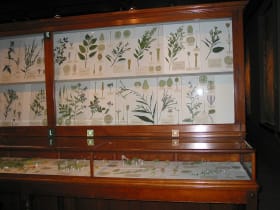
People walk right past this in Cambridge, but it is one of a kind on earth.
Isabella Stewart Gardner Museum
12 miles away
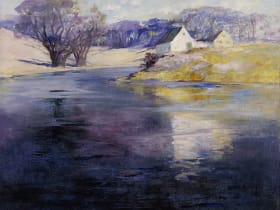
Most Boston visitors make it to the Museum of Fine Arts and never walk the extra block to this one, which is a mistake.
Museum of Fine Arts, Boston
12 miles away
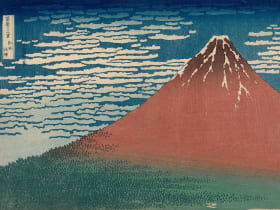
One of the world's great encyclopedic art museums, with the largest Monet collection outside France, a legendary ancient Egyptian hall, and top American art.

USS Constitution
12 miles away
Kids get to climb aboard a real fighting ship more than two centuries old.
Boston Common and Public Garden
13 miles away
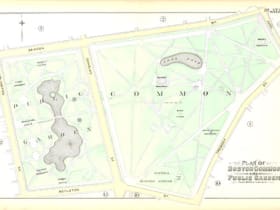
America's oldest public park beside the country's first public botanical garden, with pedal-powered swan boats, seasonal flower beds, and monuments at the heart of Boston.

Fruitlands Museum
17 miles away
Louisa May Alcotts father tried to build a perfect society on this Harvard hilltop, and it collapsed in seven months.

Adams National Historical Park
19 miles away
Two modest saltbox birthplaces and the graceful Old House at Peace field make up this Quincy site, home to four generations of the Adams family.