

Walden Pond
915 Walden St, Concord, MA
Concord, MA
The deep, clear glacial pond where Henry David Thoreau built a cabin, lived simply, and wrote one of the most influential books in American literature.
Walden Pond is a deep, clear kettle pond in the woods near Concord, and it is one of the most famous small bodies of water in the world, not for its size but for what happened on its shore. In 1845 the writer and thinker Henry David Thoreau built a small one-room cabin here and lived beside the pond for two years, an experiment in simple living that produced Walden, a book that has shaped American ideas about nature, self-reliance, and the good life ever since.
The pond itself is a beautiful thing on its own terms, formed by a melting block of glacial ice tens of thousands of years ago, unusually deep and fed by groundwater so its water runs cold and clear. Today it is protected as a state reservation, a place where people come to swim in the same water Thoreau swam in, walk the wooded path around the shore, and visit the site of his cabin, following in the footsteps of one of America's great writers.
What Travelers Love
- Standing at the site of Thoreau's cabin, marked among the trees above the water
- Swimming in the clear, deep, cold water of the glacial pond in summer
- The peaceful walking path that circles the whole shoreline through the woods
- The sense of connection to a book that helped shape American ideas about nature and simplicity
Worth Knowing
- This is a beloved and popular pond, so parking fills fast on warm days; arriving early helps
- To protect the pond, dogs, flotation devices, and glass are not allowed on the reservation
- The cabin site is a short walk from the main beach and marked with a marker and stone cairn
- The water is clear because it is a deep kettle pond fed by groundwater, so it stays cold
Learn about Walden Pond
Thoreau's experiment on the shore
In the summer of 1845, Henry David Thoreau, then in his late twenties, moved into a small cabin he had built himself on the north shore of Walden Pond, on land owned by his friend and fellow writer Ralph Waldo Emerson. He wanted, as he later put it, to live deliberately, to front only the essential facts of life, and to see what he could learn by stripping his existence down to its basics. He grew beans, watched the pond and its creatures through the seasons, read, wrote, and thought.
He stayed for two years, two months, and two days, and out of the experience came Walden, published in 1854, a book that is part nature writing, part social criticism, and part spiritual reflection. Its call to simplify, to value time and nature over money and possessions, and to question the way most people live has echoed through American culture for more than a century and a half, influencing everyone from conservationists to figures of nonviolent protest.
The cabin site and the pond today
Thoreau's original cabin is long gone, but its site on the wooded slope above the water is marked, and a stone cairn has grown there over the years as visitors add rocks in tribute, a tradition begun long ago. Nearby stands a full-size replica of the tiny cabin, showing just how spare his quarters were, a single room with a bed, a desk, a stove, and little else. Standing on the spot, looking down through the trees to the pond, it is easy to feel the pull of the place he chose.
The pond is now a state reservation and remains beloved by the people of the region, who come to swim off its beaches in summer, walk the path that rings the entire shore, and simply sit by the water. Because it is a deep kettle pond fed from below, the water stays remarkably clear and cold, and the reservation works to keep it that way, which is why some restrictions apply to protect it from erosion and pollution.
Concord, a town of revolution and letters
Walden Pond sits on the edge of Concord, a town extraordinarily rich in American history. It was here, at the North Bridge in 1775, that colonial militia first stood and fired on British regulars, the shot heard round the world that helped begin the Revolutionary War, now commemorated at Minute Man National Historical Park.
In the nineteenth century, Concord became a center of American literature and thought, home at various times to Thoreau, Emerson, the novelist Nathaniel Hawthorne, and Louisa May Alcott, who wrote Little Women in the town. Many of their houses can still be visited, and a number of these writers lie buried on Authors' Ridge in the town cemetery. Few small towns have contributed so much to both the nation's founding and its imagination.
Through the seasons
Summer is when the pond is busiest and best for swimming, the water cool and clear under the sun, and the beaches lively; parking fills early on hot days, so coming in the morning is wise. It is the season most visitors picture, and it captures the pond much as Thoreau enjoyed it in the warm months.
Autumn draws walkers to the shore path when the surrounding woods turn gold and red and reflect in the still water, arguably the loveliest time to circle the pond. Winter transforms it into a quiet, sometimes frozen scene of bare trees and snow, and Thoreau himself famously wrote about the pond's ice. Spring greens the woods again and stirs the returning birds. In every season the walk around the shore is a fine, contemplative outing.
Closest Boutels
The closest Boutel™ stays, so you can turn this stop into an overnight. Each is a place we chose through independent editorial review, never a paid placement.
Details
Concord, MA
Frequently asked questions
What is Walden Pond?
Walden Pond is a clear, deep glacial pond at the center of a 335-acre state reservation in Concord, forever famous as the place where Henry David Thoreau lived simply in a cabin from 1845 and wrote his classic book Walden. Today it is both a beloved swimming and hiking spot and a literary pilgrimage site, drawing visitors who come to enjoy the beautiful, tranquil water and to connect with Thoreau's enduring ideas about nature and simplicity.
Can you swim at Walden Pond?
Yes, swimming in the clean, clear pond is one of its biggest draws, with a main beach area and lifeguards during the summer season. Swim in the designated areas, and remember it is a genuinely deep pond, so keep a close eye on children and know your limits, especially away from the main beach. The water is refreshing but can be cool, and you swim at your own risk outside guarded areas and hours.
Can you see Thoreau's cabin site at Walden Pond?
Yes. Stones near the north shore, marked by a cairn, indicate the spot where Thoreau built his famous cabin in 1845, and a full-size replica of the tiny cabin stands near the parking area along the path to the pond, giving a vivid sense of how spare his life there was. Walking the roughly mile-and-a-half trail around the pond, past the cabin site, is a moving way to experience the place that inspired his writing.
How does parking and capacity work at Walden Pond?
This is important to plan for: to protect the pond, daily attendance is capped at around a thousand people, and the paid parking lot fills and closes on hot days and summer weekends. Arrive early, ideally by mid-morning, and check the lot's current status before you go to avoid being turned away. There is a parking fee, higher for out-of-state vehicles, and note that pets are not permitted at the reservation.
When is the best time to visit Walden Pond?
Summer is prime for swimming, but arrive early to beat the crowds and the capacity limit, while spring and fall are quieter and lovely for hiking the trails and reflecting by the water, with autumn foliage especially beautiful. Winter brings peaceful walks and cross-country skiing. For the classic Thoreau experience of solitude and nature, an early morning or an off-season visit is hard to beat.
Nearby

Minute Man National Historical Park
3.3 miles away
This is where kids can actually stand on the spot the Revolution started.
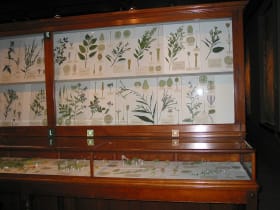
Harvard Museum of Natural History Glass Flowers
12 miles away
People walk right past this in Cambridge, but it is one of a kind on earth.
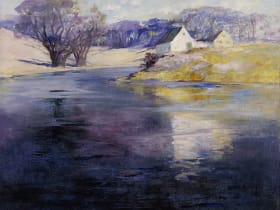
Isabella Stewart Gardner Museum
14 miles away
Most Boston visitors make it to the Museum of Fine Arts and never walk the extra block to this one, which is a mistake.
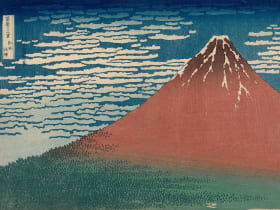
Museum of Fine Arts, Boston
14 miles away
One of the world's great encyclopedic art museums, with the largest Monet collection outside France, a legendary ancient Egyptian hall, and top American art.

USS Constitution
15 miles away
Kids get to climb aboard a real fighting ship more than two centuries old.

Fruitlands Museum
15 miles away
Louisa May Alcotts father tried to build a perfect society on this Harvard hilltop, and it collapsed in seven months.
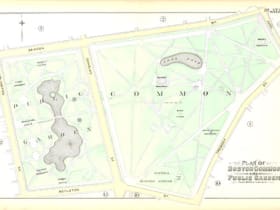
Boston Common and Public Garden
15 miles away
America's oldest public park beside the country's first public botanical garden, with pedal-powered swan boats, seasonal flower beds, and monuments at the heart of Boston.