

Isabella Stewart Gardner Museum
25 Evans Way, Boston, MA
Boston, MA
A Venetian palace hidden in Boston, its galleries wrapped around a flowering glass courtyard, its walls still bearing empty frames from the greatest art heist ever pulled.
The Isabella Stewart Gardner Museum hides a Venetian palace inside a Boston city block. Step through the door and the walls fall away to reveal a four-story courtyard under a glass roof, planted with ferns, orchids, and seasonal blooms that flower even when snow lies outside. Around this green heart rise galleries hung with art from across centuries, arranged not by date or country but by the eye of the woman who built the place.
That woman was Isabella Stewart Gardner, a spirited and unconventional collector who assembled paintings, sculpture, tapestries, rare books, and furniture over decades and installed them all herself in rooms she designed to feel like home. She left instructions that nothing be rearranged, and it never has, which is why the museum feels less like an institution and more like walking into someone's astonishing private world.
What Travelers Love
- The lush glass-roofed courtyard, planted and blooming even in the dead of winter
- Galleries arranged as intimate rooms rather than long museum halls, exactly as their founder left them
- The mix of Old Master paintings, sculpture, tapestries, and furniture in one Venetian-style palace
- The empty frames left hanging in tribute to the works stolen in the famous 1990 heist
Worth Knowing
- The historic palace is kept much as its founder arranged it, so labels are minimal; the modern wing has more context
- The courtyard is the heart of the museum and its plantings change through the year
- It can be busy, especially on weekends, so an early or late visit is calmer
- A modern glass wing designed by Renzo Piano was added for concerts, exhibitions, and the entrance
Learn about Isabella Stewart Gardner Museum
Isabella Stewart Gardner and her palace
Isabella Stewart Gardner was a New York-born, Boston society figure known for ignoring convention, and she poured a family fortune into art. With her advisers, among them a young Bernard Berenson, she gathered works by Titian, Rembrandt, Botticelli, Vermeer, and Sargent, along with sculpture, manuscripts, textiles, and objects from many cultures. Rather than a conventional gallery, she wanted a place where art lived together in beautiful rooms.
She built her palace, called Fenway Court, at the turn of the 20th century, modeling it on the Venetian palazzi she loved, with the galleries facing inward onto the covered courtyard. She arranged every room herself, and her will stipulated that the collection remain exactly as she left it, or else be sold and the museum closed. Because of that, you see the art as one strong-willed person chose to see it, more than a century ago.
The courtyard at its heart
The glass-roofed courtyard is the soul of the museum and one of the great interior spaces in Boston. Rising four stories, filled with light, and framed by carved stone, columns, and mosaics gathered from Europe, it holds a garden that the museum's horticulturists change through the year, so there is always something in bloom.
The most famous of these displays is the hanging of nasturtiums, whose long vines are trained to spill many feet down from the upper balconies in early spring, a tradition kept in Gardner's memory. Whatever the season, the courtyard makes the museum feel warm and alive, a green room at the center of a stone palace.
The greatest art heist
In the early hours of March 18, 1990, two men in stolen police uniforms talked their way inside, tied up the guards, and spent more than an hour cutting paintings from their frames. They made off with works by Rembrandt, Vermeer, Degas, Manet, and others, including Rembrandt's only known seascape and Vermeer's The Concert, one of the artist's rarest paintings. The stolen art has never been recovered, and it remains the largest unsolved art theft in history.
Because Gardner's will forbids rearranging the collection, the museum did something quietly powerful: it left the empty frames hanging on the walls where the paintings once were. Those bare frames are now among the most moving things in the building, a standing reminder of what is missing and an open invitation for the works to come home.
Rooms, music, and the modern wing
The galleries are arranged as a sequence of rooms, each with its own character, from the airy Spanish Cloister and its dramatic Sargent painting of a flamenco dancer to jewel-box chambers dense with Old Masters, textiles, and furniture. Part of the pleasure is discovery, since the labeling is deliberately sparse and you are meant to wander and look.
In more recent years a modern glass wing designed by the architect Renzo Piano was added alongside the old palace, holding the entrance, a concert hall, space for changing exhibitions, and a greenhouse. Music has always been part of the museum's life, and the concert programs continue a tradition that Gardner began, so a visit can end with a performance as easily as a painting.
Closest Boutels
The closest Boutel™ stays, so you can turn this stop into an overnight. Each is a place we chose through independent editorial review, never a paid placement.
AWOL Provincetown
Honorable Mention59 Province Lands Road, Provincetown, MA
51 miles away|Learn More ›
Details
Boston, MA
Frequently asked questions
What is the Isabella Stewart Gardner Museum?
It is one of Boston's most beloved and unusual museums, housed in a Venetian-style palazzo built around a breathtaking glass-roofed courtyard garden. It displays the eclectic personal art collection of Isabella Stewart Gardner, a spirited early-twentieth-century collector, arranged exactly as she left it, since her will requires that nothing be moved. The result is an intimate, atmospheric treasure house quite unlike a conventional gallery, as much a work of art itself as the pieces it holds.
What can you see at the Gardner Museum?
The collection spans masterworks by artists like Titian, Rembrandt, Vermeer, Botticelli, and Sargent, displayed amid tapestries, sculpture, furniture, and antiquities across richly layered rooms. The showstopper is the lush central courtyard, whose plantings and blooms are changed seasonally by the museum's horticulture team. A modern wing, designed by architect Renzo Piano, hosts special exhibitions and concerts, complementing the historic galleries.
What happened in the Gardner Museum art heist?
In 1990, thieves carried out the largest art theft in history here, stealing several masterpieces, including works by Rembrandt and Vermeer, in a crime that remains unsolved to this day. In keeping with Gardner's wishes that the arrangement never change, the empty frames still hang in their original spots where the stolen paintings once were, a haunting and famous reminder of the loss that intrigues many visitors.
What should I know before visiting the Gardner Museum?
Timed tickets are recommended, since the museum can sell out, and photography is limited to protect the fragile, historic displays. A fun quirk: anyone named Isabella is admitted free, a tradition honoring the founder. Plan roughly one and a half to two hours to take in the galleries and courtyard. The museum sits in Boston's Fenway area, right near the Museum of Fine Arts, making it easy to pair the two.
When is the best time to visit the Gardner Museum?
As an indoor museum it is rewarding year-round and a lovely refuge in any weather, and the courtyard garden is beautiful in every season as its plantings rotate. Weekday mornings tend to be quietest for a peaceful visit. Checking the schedule of special exhibitions and the museum's renowned concert series can help you time a visit around something extra, adding music or a special show to the experience.
Nearby

Museum of Fine Arts, Boston
0.3 miles away
One of the world's great encyclopedic art museums, with the largest Monet collection outside France, a legendary ancient Egyptian hall, and top American art.
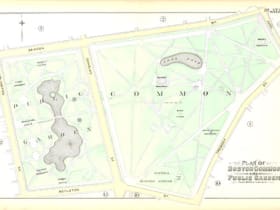
Boston Common and Public Garden
2.0 miles away
America's oldest public park beside the country's first public botanical garden, with pedal-powered swan boats, seasonal flower beds, and monuments at the heart of Boston.
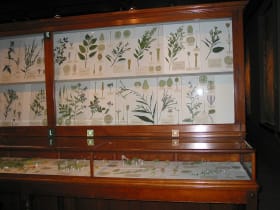
Harvard Museum of Natural History Glass Flowers
2.9 miles away
People walk right past this in Cambridge, but it is one of a kind on earth.

USS Constitution
3.2 miles away
Kids get to climb aboard a real fighting ship more than two centuries old.

Adams National Historical Park
7.5 miles away
Two modest saltbox birthplaces and the graceful Old House at Peace field make up this Quincy site, home to four generations of the Adams family.

Minute Man National Historical Park
12 miles away
This is where kids can actually stand on the spot the Revolution started.

World's End
12 miles away
Frederick Law Olmsted laid out the winding, tree-lined carriage roads on this Hingham peninsula in the 1890s for a neighborhood that was never built, leaving a rolling green headland that juts into Bo...

Walden Pond
14 miles away
The water is the surprise: Walden is a glacial kettle pond, over a hundred feet deep and startlingly clear, formed when a buried block of ice melted after the last ice age.

Fuller Craft Museum
16 miles away
Almost nobody outside the field knows Brockton holds New Englands only contemporary craft museum, on a pond in a leafy park.