

Adams National Historical Park
59 Greenleaf St, Quincy, MA
Quincy, MA
The birthplaces and lifelong home of two presidents, where four generations of one remarkable family lived, wrote, and shaped a young country.
Adams National Historical Park preserves the homes of one of the most influential families in American history. Here you can walk through the plain saltbox house where John Adams, the second president, was born in 1735, and the house next door where his son John Quincy Adams, the sixth president, was born. A short distance away stands the Old House at Peace field, the grand family estate the Adamses called home for four generations, from 1788 until 1927.
What makes the park extraordinary is not just the presidents but the sweep of the family. This was the home of Abigail Adams, whose letters remain among the most quoted in American history, and of the historians, diplomats, and writers who followed. The rooms are full of their real furnishings, and the Stone Library out back holds the actual books they read and wrote in, an intimate look at a family that helped build a nation.
What Travelers Love
- Standing in the modest saltbox house where John Adams was born
- The Old House at Peace field, lived in by four generations of the Adams family
- The Stone Library, a fireproof stone building holding thousands of the family's books
- The formal 18th century garden, still planted much as it was in the family's day
Worth Knowing
- The historic houses are seen by guided tour; a trolley links the visitor center to the sites
- The park operates on a seasonal schedule, so check the calendar before planning a visit
- The visitor center is in downtown Quincy, a short distance from the houses themselves
- Wear comfortable shoes, as the tour involves walking and stairs in the older buildings
Learn about Adams National Historical Park
The family that shaped a country
The story begins with John Adams, born in a small farmhouse in what was then the north precinct of Braintree. He grew up to become a lawyer, a leader of the Revolution, a diplomat abroad, the first vice president, and the second president of the United States. His wife, Abigail, ran the family farm and raised their children through years when he was away serving the young country, and her sharp, vivid letters give us one of the clearest windows into the era.
Their son John Quincy Adams was born in the house next door and went on to a long career of his own, as a diplomat, secretary of state, the sixth president, and later a member of Congress who fought against slavery until his death. The generations that followed included Charles Francis Adams, a diplomat during the Civil War, and the historian Henry Adams, whose memoir remains a classic. Few American families left such a deep mark across so many years, and it all traces back to these Quincy homes.
The birthplaces and the Old House
The two birthplace houses are simple New England saltboxes, plain and sturdy, standing close together on Franklin Street. They are among the oldest presidential birthplaces in the country still on their original sites, and their modesty tells you a great deal about the family's beginnings. John Adams was born in one, and he and Abigail raised their family in the other, where John Quincy came into the world.
In 1788 the family bought the larger home they named Peace field, and it grew over the years into the elegant Old House that anchors the park today. Inside, the rooms are filled with the family's own furnishings, portraits, and belongings, gathered across four generations who lived there. Outside, the formal garden still blooms much as it did in Abigail's time, and the whole estate carries the settled, lived-in feeling of a family home rather than a museum.
The Stone Library
Behind the Old House stands one of the park's treasures, the Stone Library, built in the 1870s at the wish of John Quincy Adams. He wanted a fireproof building to protect the family's books and papers, and so it was raised in solid granite, apart from the wooden house, so that a fire in one could never destroy the other.
Inside, the shelves hold thousands of volumes that the family gathered and read across the generations, some in Latin, Greek, French, and other languages the Adamses knew. To stand in the room is to stand inside the mind of a family that valued learning above almost everything, and the collection remains one of the finest surviving private libraries of its era in the country.
Visiting the park and Quincy
A visit usually begins at the visitor center in downtown Quincy, where a trolley carries visitors out to the historic houses. The birthplaces and the Old House are seen by guided tour, and rangers bring the family's story to life room by room, so it is worth allowing a good stretch of time to see everything without rushing.
Quincy itself wears its history proudly as the City of Presidents. John Adams and John Quincy Adams are both buried in a crypt beneath the United First Parish Church in the center of town, alongside their wives, and the church welcomes visitors in season. The city sits right on Boston Harbor, so a day here pairs easily with the wider sights of Boston and the South Shore.
Closest Boutels
The closest Boutel™ stays, so you can turn this stop into an overnight. Each is a place we chose through independent editorial review, never a paid placement.
AWOL Provincetown
Honorable Mention59 Province Lands Road, Provincetown, MA
44 miles away|Learn More ›
Details
Quincy, MA
Frequently asked questions
What is Adams National Historical Park?
Located in Quincy, just south of Boston, it preserves the homes of the remarkable Adams family, including the modest saltbox birthplaces of President John Adams and his son President John Quincy Adams, and the elegant Old House at Peacefield where generations of the family lived. With its historic houses, gardens, and the beautiful Stone Library, the park offers an intimate look at one of America's most influential families across a century of national history.
What can you see at Adams National Historical Park?
You can tour the two presidential birthplaces, humble farmhouses that shaped the men who helped found the nation, and the grander Old House at Peacefield with its lovely gardens, along with the Stone Library, built to hold the family's thousands of books and papers. Together they trace the Adams family from Revolutionary beginnings to national prominence, brought to life by knowledgeable guides who share the stories behind the walls.
How do you visit the Adams houses?
Visits begin at the park's visitor center in downtown Quincy, where you get tickets and board a trolley that shuttles you to the historic homes, since the houses are seen by guided tour rather than on your own. Because the homes are open seasonally and tours have limited capacity, it is wise to check current dates, hours, and tour availability before you go, and to allow a few hours to see everything at an unhurried pace.
When is the best time to visit Adams National Historical Park?
The historic houses are generally open for tours from spring through fall, so plan a warm-season visit and confirm current operating dates, especially early or late in the season. Late spring and summer are lovely for the gardens at Peacefield, while fall adds beautiful foliage. Starting earlier in the day gives you time for the trolley, the tours, and a relaxed look at all the sites.
Who will enjoy Adams National Historical Park?
History buffs and anyone interested in the founding of the United States will find it deeply rewarding, walking through the actual homes of two presidents and one of the nation's most accomplished families. Families and students gain a vivid, tangible sense of early American life and leadership. It makes an excellent, enriching day trip from Boston for those wanting to go beyond the city's better-known Revolutionary sites.
Nearby

World's End
6.4 miles away
Frederick Law Olmsted laid out the winding, tree-lined carriage roads on this Hingham peninsula in the 1890s for a neighborhood that was never built, leaving a rolling green headland that juts into Bo...
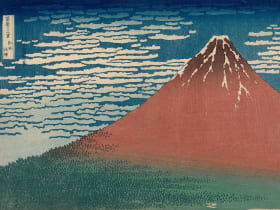
Museum of Fine Arts, Boston
7.4 miles away
One of the world's great encyclopedic art museums, with the largest Monet collection outside France, a legendary ancient Egyptian hall, and top American art.
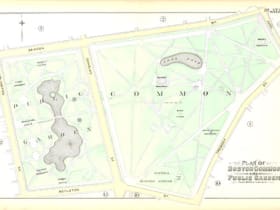
Boston Common and Public Garden
7.4 miles away
America's oldest public park beside the country's first public botanical garden, with pedal-powered swan boats, seasonal flower beds, and monuments at the heart of Boston.
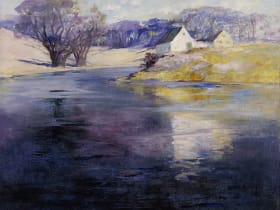
Isabella Stewart Gardner Museum
7.5 miles away
Most Boston visitors make it to the Museum of Fine Arts and never walk the extra block to this one, which is a mistake.

USS Constitution
8.5 miles away
Kids get to climb aboard a real fighting ship more than two centuries old.
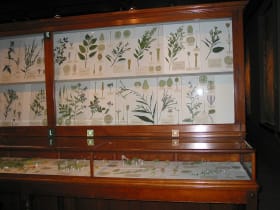
Harvard Museum of Natural History Glass Flowers
10 miles away
People walk right past this in Cambridge, but it is one of a kind on earth.

Fuller Craft Museum
11 miles away
Almost nobody outside the field knows Brockton holds New Englands only contemporary craft museum, on a pond in a leafy park.

Minute Man National Historical Park
19 miles away
This is where kids can actually stand on the spot the Revolution started.