

Museum of Fine Arts, Boston
465 Huntington Ave
Boston, MA
Half a million works under one roof, from the largest trove of Monet paintings outside France to a legendary hall of ancient Egypt.
The Museum of Fine Arts is one of the great encyclopedic art museums of the world, a place where you can stand before a Monet, then walk a few galleries and find yourself among four-thousand-year-old Egyptian statues, colonial American silver, Japanese woodblock prints, and modern sculpture. Founded in 1870 and opened to the public on the Fourth of July in 1876, the nation's hundredth birthday, it has grown into a collection of roughly half a million objects, one of the most complete in the Americas.
What sets the MFA apart is not just its size but the depth of a few areas where it is simply among the best on earth. It holds the largest group of Monet paintings outside France, the finest collection of nineteenth-century American art anywhere, and one of the world's great holdings of ancient Egyptian art. For a road-trip stop, it is the rare museum where a first-time visitor and a lifelong art lover both walk out having seen something unforgettable.
What Travelers Love
- The largest collection of Monet paintings outside of France, alongside a famous room of Impressionist masters
- One of the finest ancient Egyptian collections anywhere, much of it dug up by the museum's own expeditions
- The soaring glass-roofed courtyard of the Art of the Americas wing, a favorite place to pause
- A collection so broad you can circle the whole world of art in a single afternoon
Worth Knowing
- The museum is very large, so pick two or three wings rather than trying to see everything in one visit
- It sits right on a subway line and has its own stop, which is far easier than driving and parking downtown
- Certain evenings have reduced or by-donation admission, so it is worth checking the schedule before you go
- Backpacks and large bags usually need to be checked, and the busiest times are weekend afternoons
Learn about Museum of Fine Arts, Boston
A museum built for a young nation's centennial
The MFA began in 1870, when a group of Boston leaders set out to build a public art museum for the city, using the art already gathered by the Boston Athenaeum library as its starting seed. Six years later, on July 4, 1876, it opened its doors in a red-brick building on Copley Square, timed to the country's centennial celebration. Boston was booming, its universities and industries flush, and the museum grew fast on gifts from the city's wealthy families.
By 1909 the collection had outgrown Copley Square, and the museum moved to its present home on Huntington Avenue in the Fenway, a dignified stone building that has been added to ever since. The most striking modern addition is the Art of the Americas wing, opened in 2010, whose bright glass courtyard has become one of the most photographed spaces in the building.
From Monet's haystacks to the tombs of Egypt
Ask a first-time visitor what to see and the answer is usually the Impressionists. The MFA's Monet holdings are the largest outside of France, thanks in large part to early Boston collectors who bought his work when it was still controversial, and the museum's rooms of Monet, Renoir, and Degas draw crowds year round. Nearby hang colonial and nineteenth-century American masterpieces, from John Singleton Copley portraits to landscapes of a growing country, in what is considered the finest such collection anywhere.
The other jewel is ancient Egypt. Much of it came from decades of joint archaeological expeditions the museum ran with Harvard in the early twentieth century, which means many of the mummies, jewelry, and monumental statues were excavated by the MFA's own teams rather than simply bought. The result is one of the most important Egyptian collections in the world, with special strength in the earliest dynasties of the Old Kingdom.
One roof, the whole world
What makes a stop at the MFA feel bigger than a single museum is how far its collection reaches. It holds one of the largest gatherings of Japanese woodblock prints outside Japan, a deep collection of Asian art stretching back thousands of years, European Old Masters, contemporary galleries, textiles, furniture, and musical instruments. Its total holdings run to roughly half a million objects, and it ranks among the largest art museums in the world by gallery space.
For a traveler, that breadth is the point. You can spend a rainy afternoon crossing continents and centuries without ever leaving the building, and still know you only scratched the surface. It is the kind of place that rewards a return visit and makes a strong anchor for a day in the Fenway.
Visiting the MFA
The museum sits on Huntington Avenue in the Fenway, easily reached by Boston's subway, which has its own stop right at the door, a far simpler option than parking a car downtown. Give yourself at least half a day, and rather than trying to see all hundred-plus galleries, choose two or three wings that interest you most and slow down.
The building has restaurants and cafes, a courtyard to rest in, and a well-stocked shop, and certain evenings offer reduced or by-donation admission that is worth planning around. Just outside, the Back Bay Fens, Symphony Hall, and the Isabella Stewart Gardner Museum are all within an easy walk, making the MFA the natural centerpiece of a cultural day in the city.
Closest Boutels
The closest Boutel™ stays, so you can turn this stop into an overnight. Each is a place we chose through independent editorial review, never a paid placement.
AWOL Provincetown
Honorable Mention59 Province Lands Road, Provincetown, MA
50 miles away|Learn More ›
Details
Boston, MA
Frequently asked questions
What is the Museum of Fine Arts, Boston?
The Museum of Fine Arts, or MFA, is one of the largest and most comprehensive art museums in the country, holding an encyclopedic collection that spans the globe and the ages, from ancient Egyptian and Asian art to European masters and a celebrated Art of the Americas wing. With hundreds of thousands of works, world-class Impressionist paintings, and constant special exhibitions, it is a cornerstone of Boston's cultural life and a must for art lovers visiting the city.
What are the highlights of the MFA?
The MFA is renowned for its exceptional Egyptian and Asian collections, a superb array of Impressionist paintings including major works by Monet, and outstanding American art by the likes of Copley and Sargent in its Art of the Americas wing, alongside contemporary galleries and rotating blockbuster exhibitions. With so much to see, picking a few collections or a special show to focus on helps you get the most from a visit without feeling rushed.
How much time do you need at the MFA?
The museum is vast, so plan on at least half a day, and a full day if you want to explore in depth, though you can also enjoy a focused visit of a couple of hours by choosing specific wings or exhibitions. Wear comfortable shoes, since you will cover a lot of ground, and consider a map or the museum's highlights guide to prioritize what you most want to see.
When is the best time to visit the MFA?
Weekday mornings right at opening are the quietest, while weekends, holidays, and popular special exhibitions draw the biggest crowds. Buying timed tickets in advance is recommended, and note that some special exhibitions may require separate tickets. As a fully indoor destination it is a superb rainy-day or cold-weather choice year-round, making it a reliable anchor for a Boston day whatever the weather.
What is near the Museum of Fine Arts?
The MFA sits in Boston's Fenway area, right near the intimate and unique Isabella Stewart Gardner Museum, making it easy and rewarding to pair the two on the same day or weekend of art. The surrounding neighborhood offers dining, and other Fenway attractions are close by. Together the two museums showcase very different but complementary sides of Boston's rich art scene.
Nearby

Isabella Stewart Gardner Museum
0.3 miles away
Most Boston visitors make it to the Museum of Fine Arts and never walk the extra block to this one, which is a mistake.
Boston Common and Public Garden
1.8 miles away
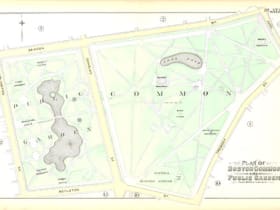
America's oldest public park beside the country's first public botanical garden, with pedal-powered swan boats, seasonal flower beds, and monuments at the heart of Boston.
Harvard Museum of Natural History Glass Flowers
2.9 miles away
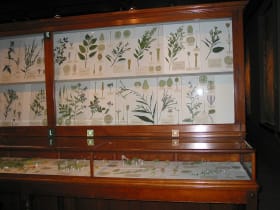
People walk right past this in Cambridge, but it is one of a kind on earth.

USS Constitution
3.0 miles away
Kids get to climb aboard a real fighting ship more than two centuries old.

Adams National Historical Park
7.4 miles away
Two modest saltbox birthplaces and the graceful Old House at Peace field make up this Quincy site, home to four generations of the Adams family.

Minute Man National Historical Park
12 miles away
This is where kids can actually stand on the spot the Revolution started.

World's End
12 miles away
Frederick Law Olmsted laid out the winding, tree-lined carriage roads on this Hingham peninsula in the 1890s for a neighborhood that was never built, leaving a rolling green headland that juts into Bo...

Walden Pond
14 miles away
The water is the surprise: Walden is a glacial kettle pond, over a hundred feet deep and startlingly clear, formed when a buried block of ice melted after the last ice age.

Fuller Craft Museum
16 miles away
Almost nobody outside the field knows Brockton holds New Englands only contemporary craft museum, on a pond in a leafy park.