

USS Constitution
93 Chelsea St, Charlestown, MA
Charlestown, MA
The world's oldest commissioned warship still afloat, the frigate that earned the name Old Ironsides when British cannonballs seemed to bounce off her oak sides.
USS Constitution is the oldest commissioned warship still afloat anywhere in the world, a wooden frigate first launched in Boston in 1797 and still officially a ship of the United States Navy, crewed by active-duty sailors. Berthed in the historic Charlestown Navy Yard, she is best known by her nickname, Old Ironsides, earned in a famous battle when British cannonballs appeared to bounce harmlessly off her thick oak hull.
She was one of the first six frigates built for the young American navy, ships meant to be faster and more heavily armed than their size suggested. Constitution proved her worth in the War of 1812, winning a string of victories that lifted the spirits of a struggling new nation. Saved from the scrapyard more than once by public outcry, she has been preserved for over two centuries and remains a living monument you can walk aboard.
What Travelers Love
- Standing on the deck of a fighting ship that first sailed in the 1790s and is still commissioned
- The story of how she earned the nickname Old Ironsides in battle
- Active-duty Navy sailors serving as her crew and telling her history
- The neighboring museum and the Bunker Hill Monument just up the hill, all on the Freedom Trail
Worth Knowing
- The ship is an active U.S. Navy vessel, so boarding it may involve a brief security screening
- She is occasionally away from her berth for maintenance or turnaround cruises, so check before you go
- The nearby USS Constitution Museum is a separate building and welcomes visitors on a donation basis
- It is a working Navy yard on the water, so dress for wind off the harbor
Learn about USS Constitution
Building the young navy's frigates
In the 1790s the United States, its merchant ships preyed upon by pirates and foreign powers, decided it needed a real navy, and Congress authorized the construction of six frigates. Constitution was one of them, built in Boston and launched in 1797. Her designers made her larger and more powerfully built than typical frigates of the day, with an unusually thick hull of live oak, a dense and heavy American wood.
That sturdy construction was not just for show. The idea was to create ships that could outfight anything they could not outrun and outrun anything they could not outfight. Constitution's live-oak sides, in places nearly two feet thick, would soon prove their value in a way that gave her the enduring nickname the whole country would come to know.
How she became Old Ironsides
The nickname was born in August 1812, early in the War of 1812, when Constitution met the British frigate Guerriere in a fierce Atlantic duel. As the two ships hammered each other at close range, sailors watched British cannonballs strike Constitution's hull and seem to bounce off. One of her crew is said to have cried out that her sides were made of iron, and the name Old Ironsides stuck.
The victory over Guerriere was the first of several. During the war Constitution defeated multiple British warships, and each triumph was a tonic for a young country that badly needed good news at sea against the world's most powerful navy. Those wins turned the ship into a national symbol, and she carried the pride of that era for the rest of her long life.
Saved by the public, again and again
By the 1830s the aging ship was slated for scrapping, and word of her fate stirred public outrage. A young writer named Oliver Wendell Holmes published a poem called Old Ironsides that captured the nation's affection for her, and the outcry helped save the ship from destruction. It would not be the last time popular feeling rescued her.
Over the following century Constitution was repaired, rebuilt, and at one point restored with money raised in part by American schoolchildren who sent in their pennies. Kept in commission and periodically overhauled with as much original-style craftsmanship as possible, she has survived long enough to become the oldest commissioned warship afloat in the world, a rare object that connects the founding era directly to the present.
Visiting the ship and the navy yard
Today Constitution is berthed at the Charlestown Navy Yard, part of Boston National Historical Park and a stop on the city's Freedom Trail. She is still an active Navy vessel with a crew of sailors who maintain her and share her story, and boarding her means stepping onto the deck of a genuine fighting ship of the age of sail. Because she is a working vessel, a brief security screening may be part of the visit, and she occasionally leaves her berth for maintenance or short harbor cruises.
Right beside the ship, the USS Constitution Museum tells her story in depth and welcomes visitors on a donation basis, with hands-on exhibits about sailors' lives and the ship's battles. Just up the hill stands the Bunker Hill Monument, marking the famous Revolutionary War battle, so the whole area rewards a walk. Being on the harbor, it can be breezy, so dress accordingly whatever the season.
Closest Boutels
The closest Boutel™ stays, so you can turn this stop into an overnight. Each is a place we chose through independent editorial review, never a paid placement.
Details
Charlestown, MA
Frequently asked questions
What is the USS Constitution?
The USS Constitution, affectionately known as Old Ironsides, is the world's oldest commissioned warship still afloat, launched in 1797 and famous for its stunning victories in the War of 1812, when British cannonballs seemed to bounce off its sturdy oak hull. Berthed at the Charlestown Navy Yard in Boston and a highlight of the Freedom Trail, it remains an active-duty U.S. Navy ship, offering visitors a remarkable, hands-on connection to early American naval history.
Is it free to tour the USS Constitution?
Yes, boarding the ship and joining the guided tours are free. Active-duty Navy sailors lead roughly half-hour tours that take you across the top deck, gun deck, and berth areas, sharing the ship's storied history. The nearby USS Constitution Museum is separate and asks a suggested donation, and it is well worth visiting, ideally before the ship, to put what you see aboard into fuller context with its hands-on exhibits.
What should I know before visiting the USS Constitution?
The ship is generally open to visitors Tuesday through Sunday, and because it is an active military vessel, all adult visitors must show a photo ID, such as a driver's license or passport, at the security gate. Touring below deck involves climbing a steep ladder, so full mobility is required for the lower decks. It is smart to check current hours before you go, since the ship occasionally closes for events or maintenance.
How do you get to the USS Constitution?
It sits in the Charlestown Navy Yard, easily reached on foot by following Boston's Freedom Trail, or by bus, or by taking the scenic ferry from Long Wharf across the harbor to the Navy Yard pier, which many visitors enjoy. Driving with nearby garage parking is also an option. Combining the visit with a Freedom Trail walk lets you tie the ship into a fuller day of Boston's Revolutionary and maritime history.
When is the best time to visit the USS Constitution?
Going earlier in the day helps you avoid the longest lines for the free tours, and weekdays tend to be quieter than weekends. The ship is open year-round on its regular schedule, and the adjacent museum makes a great indoor complement in any weather. Checking the current schedule before your visit is wise, as hours and access can vary seasonally and around Navy events.
Nearby
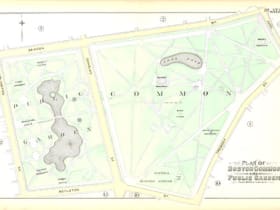
Boston Common and Public Garden
1.4 miles away
America's oldest public park beside the country's first public botanical garden, with pedal-powered swan boats, seasonal flower beds, and monuments at the heart of Boston.

Museum of Fine Arts, Boston
3.0 miles away
One of the world's great encyclopedic art museums, with the largest Monet collection outside France, a legendary ancient Egyptian hall, and top American art.
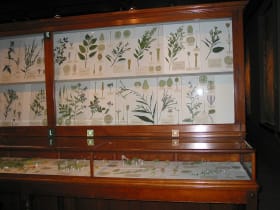
Harvard Museum of Natural History Glass Flowers
3.0 miles away
People walk right past this in Cambridge, but it is one of a kind on earth.
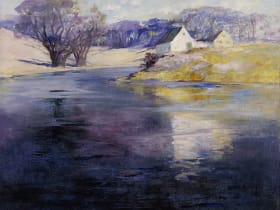
Isabella Stewart Gardner Museum
3.2 miles away
Most Boston visitors make it to the Museum of Fine Arts and never walk the extra block to this one, which is a mistake.

Adams National Historical Park
8.5 miles away
Two modest saltbox birthplaces and the graceful Old House at Peace field make up this Quincy site, home to four generations of the Adams family.

World's End
12 miles away
Frederick Law Olmsted laid out the winding, tree-lined carriage roads on this Hingham peninsula in the 1890s for a neighborhood that was never built, leaving a rolling green headland that juts into Bo...

Minute Man National Historical Park
12 miles away
This is where kids can actually stand on the spot the Revolution started.

Walden Pond
15 miles away
The water is the surprise: Walden is a glacial kettle pond, over a hundred feet deep and startlingly clear, formed when a buried block of ice melted after the last ice age.

Fuller Craft Museum
19 miles away
Almost nobody outside the field knows Brockton holds New Englands only contemporary craft museum, on a pond in a leafy park.