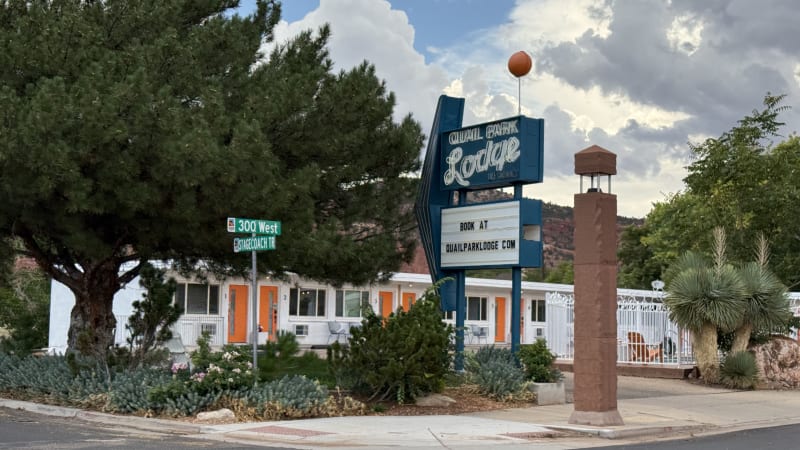
By 1960, the American motel had never looked better. Along two-lane highways from coast to coast, neon burned against the dusk, kidney-shaped pools glittered blue under floodlights, and rooflines swept upward as though the whole building were about to lift off. This was the age of the Space Age, of rockets and satellites and a booming middle class with money in its pocket and a new car in the driveway.
The motel, once a humble cluster of cabins, had become one of the brightest symbols of that optimism, promising every modern comfort to anyone willing to point a car down the open road.
It was a peak that carried the seeds of its own decline. Even as the roadside blazed with confidence, the ground was shifting beneath it. A vast new network of interstate highways was filling in fast, pulling traffic off the old routes that the mom-and-pop courts depended on. National chains were spreading with startling speed, standardizing the guest experience and squeezing the independents who had built the industry. The decade would go down as the last great flowering of the classic roadside motel, a final, glorious season before the road itself was remade.
The Space Age on the roadside
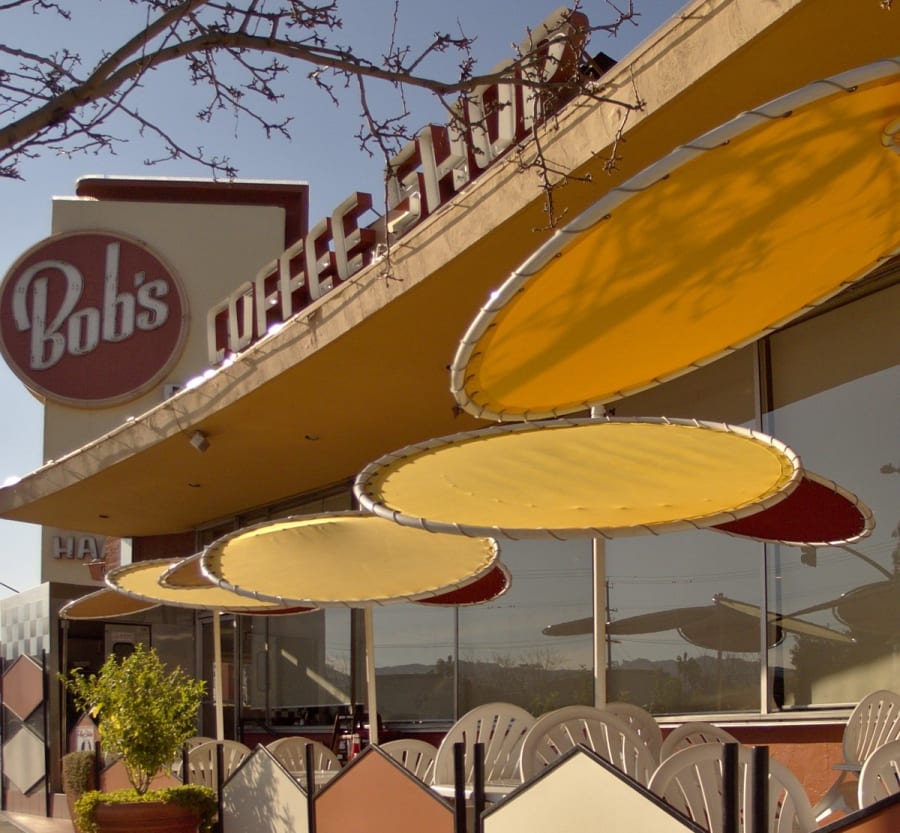
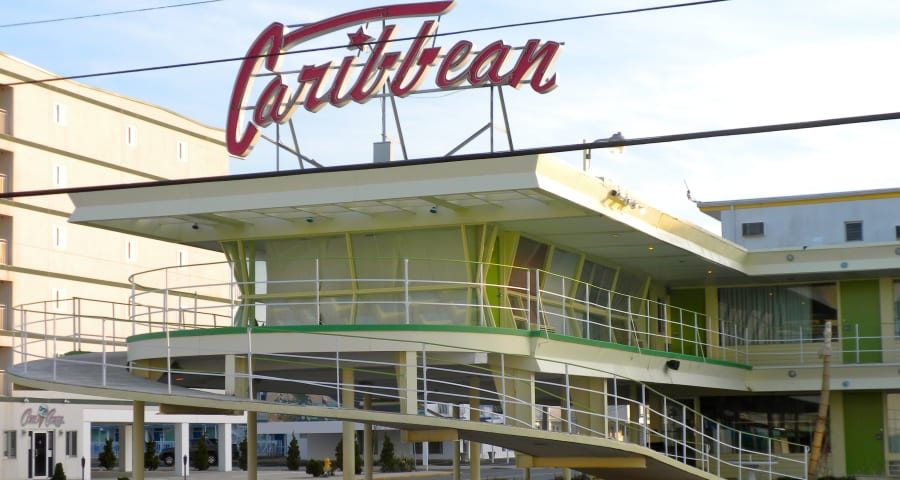
The look of the 1960s motel came straight out of the era's imagination. Designers reached for the vocabulary of the Atomic Age and the Space Age, and the roadside answered with boomerangs, starbursts, parabolas, and orbiting atoms rendered in steel, glass, and glowing neon. This exuberant style, later nicknamed Googie, had bloomed in Southern California in the postwar years and spread across the country to become the visual language of the highway. Coffee shops, bowling alleys, and above all motels wore it proudly, with upswept roofs and towering signs built to catch the eye of a driver doing sixty on the open road.
This was the confident consumer culture that historians came to call Populuxe, a world where the future felt bright, affordable, and close enough to touch. The same amoeba and boomerang shapes that turned up on Formica countertops and lounge chairs reappeared in pools, logos, and the great illuminated signs that announced a night's rest. Owners competed for attention with architecture as much as with amenities. A soaring neon arrow, a diving-board silhouette, a name spelled out in script twenty feet tall, these were how a motel shouted across the darkness that it had a vacancy, a color television, and a heated pool waiting inside.
Every mile of new interstate was a quiet catastrophe for the old roadside, bypassing the two-lane highways and draining the traffic from the courts that lined them.
For the traveling family, the payoff was pure delight. The 1960s motel offered nearly every modern comfort a household could want on the road, from air conditioning to the swimming pool that had become the era's must-have attraction. Pools grew bigger and more elaborate through the decade, ringed by patios and lounge chairs, a small oasis to break up a long day of driving. Pull off the highway, and the promise glowed right there in the neon: the good life, available by the night, no reservation required.
The interstate giveth and taketh away
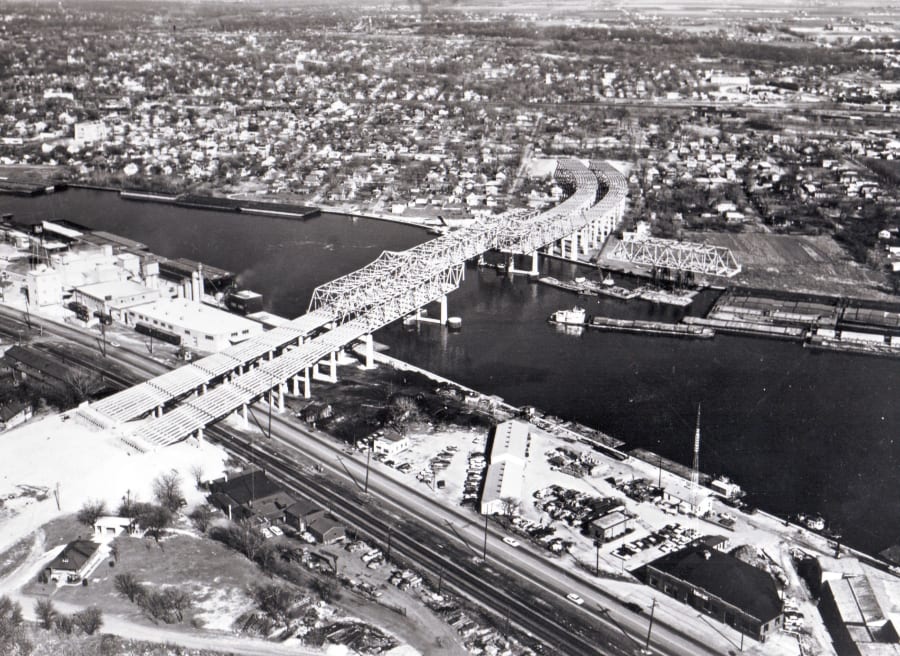
The great transformation of the decade was written in concrete. The Interstate Highway System, launched by the Federal-Aid Highway Act of 1956, filled in rapidly through the early 1960s. By the end of 1962 roughly 14,300 miles had opened, with nearly 2,000 miles laid in that single year and thousands more under construction. A year later almost 16,600 miles were open, with another 5,000 in progress. Divided, limited-access, and fast, the new roads made travel safer and quicker than anything Americans had known, collapsing distances that had once meant days behind the wheel.
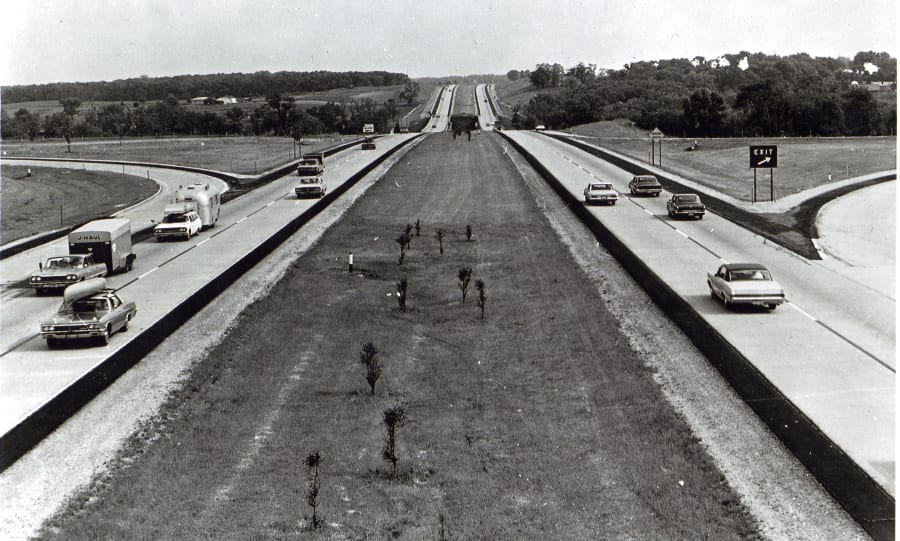
But every mile of interstate was a quiet catastrophe for the old roadside. The new highways did not follow the historic routes. They bypassed them. Traffic that had crawled through main streets and past long rows of motor courts was funneled instead onto the interstate, and where the cars went, the business followed. Whole stretches of the celebrated U.S. Route 66 were superseded by new interstates such as I-40, I-44, and I-55, which drew off the traffic and, town by town, drained the lifeblood from the businesses that lined the older road.
The human cost fell hardest on small places and small owners. Towns that had thrived on passing motorists found themselves stranded off the new roads, some fading toward ghost-town silence once the traffic vanished. The colorful independent courts, the ones with the hand-painted signs and the owner living in the office out front, were suddenly on the wrong highway. Many lacked the capital to pick up and move to an interchange miles away, and so, one by one, the neon began going dark along the two-lane roads that the interstate had left behind.
Peak glamour and the rise of the chains
At the very moment the independents grew most vulnerable, the national chains were rising to take their place. Holiday Inn, founded by Kemmons Wilson in Memphis in 1952 and marked by its towering, unmistakable Great Sign, expanded at a breathtaking pace. There were 100 Holiday Inns by 1959, 500 by 1964, and the thousandth opened in San Antonio in 1968. Ramada, Howard Johnson's, and the cooperative Best Western association grew alongside it. Best Western, an informal referral network founded in 1946, counted 699 member properties and more than 35,000 rooms by 1963, making it the largest motel brand of its moment.
What the chains sold was not neon novelty but the promise of the predictable. A guest could pull into a Holiday Inn in any state and know exactly what to expect, a clean, standardized, family-friendly room at a familiar price, reachable straight from the interstate. That certainty was powerful for a traveling public covering long distances on unfamiliar roads. It also erased much of what had made the old motels distinctive. The regional flavor, the roadside whimsy, and the personality of the individual owner slowly gave way to a uniform experience stamped out to a national template.
The chains held every advantage in the new landscape. They had the capital to build fresh properties at the very interchanges where the interstate delivered its traffic, precisely the ground the independents could not afford to reach. They had national reservation systems and coast-to-coast advertising that no single owner could match. Business steadily dwindled for the colorful roadside courts, and many closed. Seen clearly, the 1960s stand as the last golden years of the classic American motel, its neon at its brightest even as the interstate era and the chains were already reshaping everything the road would become.
Questions about 1960s motels
How much of the Interstate Highway System was built during the 1960s?
Construction moved fast through the decade. By the end of 1962 about 14,300 miles of interstate had opened, including nearly 2,000 miles completed in that year alone, and by late 1963 almost 16,600 miles were open with roughly another 5,000 miles under construction. This rapid buildout, launched by the Federal-Aid Highway Act of 1956, is what steadily rerouted traffic away from the older two-lane highways during the 1960s.
Why did the interstates hurt independent roadside motels?
The new interstates were designed to bypass the older routes rather than follow them, so the steady stream of motorists that had passed the roadside courts was funneled onto the limited-access highways instead. Traffic drained away from the two-lane roads, including long stretches of Route 66, and many small owners lacked the capital to relocate to the distant new interchanges. With the cars gone, business dwindled and a great many independent motels eventually closed.
How quickly did the big motel chains grow in the 1960s?
Very quickly. Holiday Inn, founded in 1952, grew from 100 locations in 1959 to 500 by 1964, opening its thousandth in San Antonio in 1968. The Best Western association reported 699 member properties and more than 35,000 rooms by 1963, and Ramada expanded rapidly as well. These chains offered standardized, predictable lodging beside the interstates, and their scale and reservation systems gave them advantages the independents could not match.
The motel, decade by decade
This is one chapter in a longer story. Follow the American motel from the estates and cabin camps that came before it, through the neon golden age, to the interstate era that changed everything. To learn more, visit our other history pages: Before the Motel, the 1930s, the 1940s, and the 1950s.