
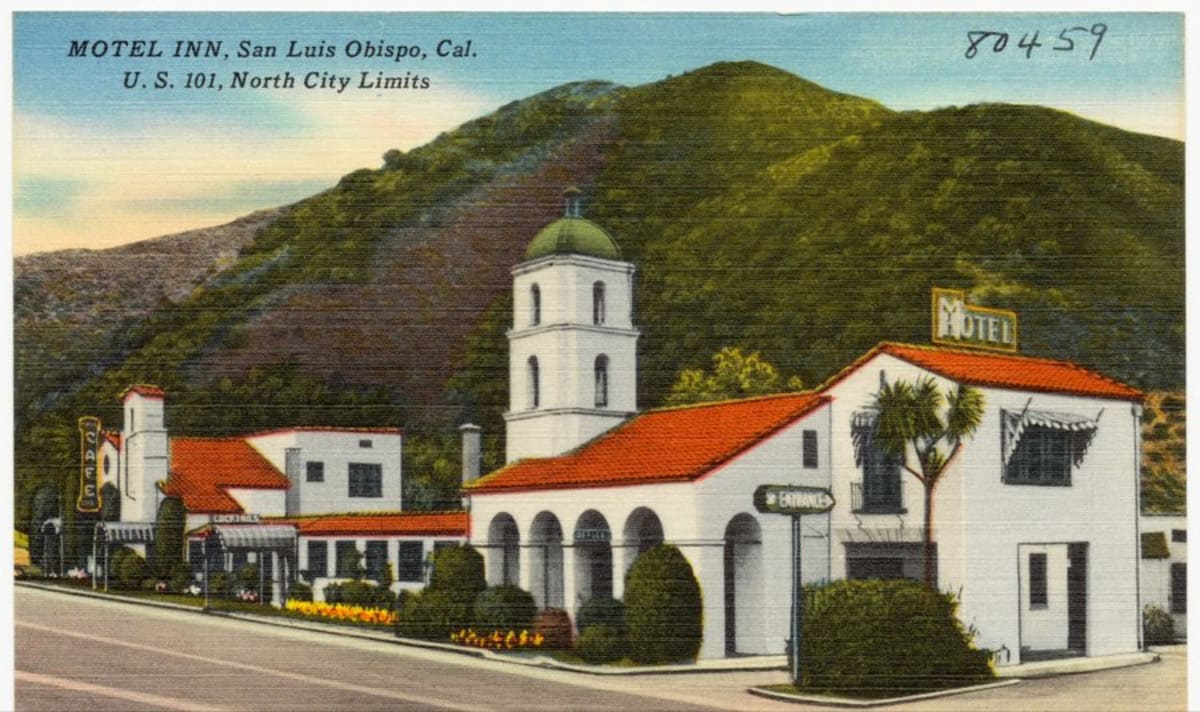
The word you say a dozen times on every road trip is younger than you think. There were no "motels" in America until 1925. That December, an architect named Arthur Heineman opened the Milestone Mo-Tel Inn in San Luis Obispo, California, squeezed the phrase "motor hotel" onto a single sign, and gave the language a brand-new word.
So here is a question that sounds simple and is not: where did Americans sleep on the road before the motel had a name? Before the neon, before the motor court, before you could drive up to your own door.
The answer is a small group of American stays that were already standing, and already taking in travelers, before 1930. Each was built for a completely different life, from a Victorian estate to a mining town’s worker housing, and each still rents rooms today. Their story is really the story of how a whole country learned to travel.
The Age of Rails and Verandas (1880s to 1900s)
Picture travel before the automobile. You went by train or by stagecoach, on somebody else’s schedule, and when you arrived you stayed in a grand railroad hotel, a spa resort, a boarding house, or the spare room of a private home. Hospitality was personal, a little formal, and built around the rhythms of the rails.

The oldest stay of them all comes from this world. Sandaway Suites & Beach in Oxford, Maryland, began in 1882 as the Sinclair House, a Victorian estate leaning out over the Tred Avon River. Down in Ocean Springs, Mississippi, The Roost started life in 1894 as a private Southern residence, generations before it grew a speakeasy and a restaurant. And in the frontier town of Cody, Wyoming, a gateway to Yellowstone, the world’s first national park, Chamberlin Inn rose in 1901; Agnes Chamberlin opened it as a boarding house, and its push-button light switches and clawfoot tubs are still there.
Some of these buildings were not lodging at all. The Nightingale, a landmark in the hot-springs town of Pagosa Springs, Colorado, since 1898, began as the town’s first medical clinic. Today you can book a night and sleep where the local doctor once kept office hours, which is either wonderful or a little haunting, depending on your mood.
Enter the Automobile (1900s to 1910s)
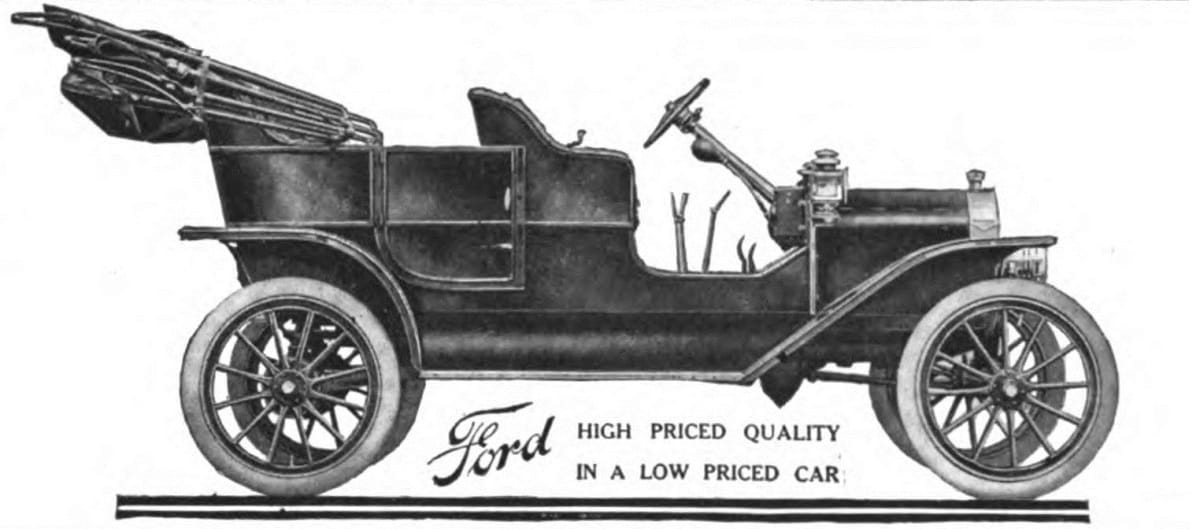
Then came the machine that changed everything. Ford’s Model T arrived in 1908, and within a decade the car went from a rich man’s toy to a family’s freedom. For the first time, ordinary people could point themselves at the horizon and simply go. The earliest road-trippers pitched tents in "auto camps." Older lodges and worker housing quietly began renting to these restless new travelers, and the map of American hospitality started to shift from the train depot to the open road.
These pioneers catch that turn. Yodeler Motel in Red Lodge, Montana, went up in 1909, built by Daniel O’Shea as apartment housing for working-class coal-mining families; a Bavarian-style remodel came in 1961, and it now wears a spot on the National Register of Historic Places. On the shore of a quiet Michigan lake, Birch Lodge was raised by Edgar and Cornelia Ford in 1911. And in Carmel-by-the-Sea, California, just as that seaside artists’ colony was being born, the storybook cottages of the Lamp Lighter Inn began welcoming guests in 1912.
The Roaring Twenties and the First Courts (1920s)
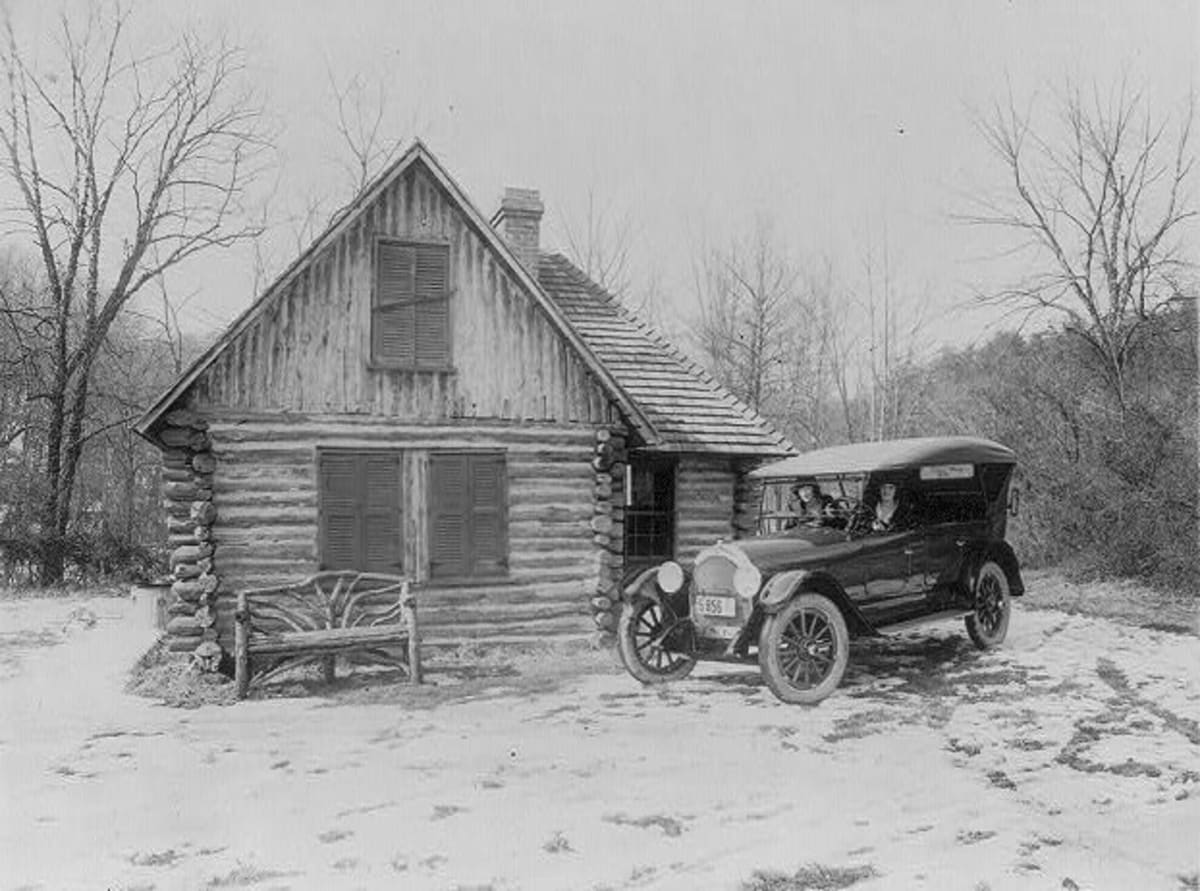
By the 1920s the automobile had won. Highways were being strung across the country, Route 66 was commissioned in 1926, and a new vocabulary appeared to serve the driver: the "tourist camp," the "cabin court," the "tourist court." This is the decade the motel was born, when Heineman opened his Milestone in 1925 and named the thing.
The 1920s pioneers show the whole range of what a traveler might find. Buffalo Lodge opened near Colorado Springs in 1919 as a hunting lodge billed, marvelously, as "Colorado’s Most Modern Cottage City."
That same year, in Ithaca, New York, a couple named Blanche and Percy Marion started taking in boarders and building cottages at what would become the Grayhaven. In Palm Springs, Ingleside Estate arrived in 1925 as a Spanish Colonial Revival mansion, commissioned by the Birge family from the celebrated architect George Washington Smith, and it still carries its Old Hollywood glamour. High above Lake Tahoe, the same family has run the timber cabins of Tamarack Lodge since 1927. And out in the West Texas desert, rancher Alfred Gage hired the architects Trost & Trost to build the Gage Hotel, which opened in 1927 as the genteel gateway to Big Bend.
You can still flip the push-button switches, sleep in the sandstone cabin, and wake up where the doctor once practiced.
And then, at the very end of the decade, the format the whole country was about to fall in love with finally shows up, purpose-built and unmistakable. Two of these stays date to 1929, the dawn of the motel age. Rockwood Motor Court in Springfield, Missouri, was raised from Ozark sandstone right on the original alignment of Route 66, and it is the oldest still-operating motor court on the Mother Road. Out in the Black Hills of South Dakota, the Historic Log Cabin Motel opened the same year as the Log Cabin Tourist Camp, a cluster of true log cabins now on the National Register.
These two are the hinge, the moment the motel, freshly named and spreading fast, was about to define the American road trip for the rest of the century.
What ties these fourteen together is not an architectural style or a single era. It is survival. They lived through the Depression, through interstates that bypassed their towns, through long decades when nobody wanted anything old. In every case, someone kept the lights on, and then a new generation came along and brought them all the way back.
They are the prologue to everything the American motel became, and a good reminder that a road trip has always been about more than a place to sleep. It is about pulling into exactly the right place at the end of exactly the right drive, in a building that could not be anywhere else on earth.
Questions about America's oldest stays
What is the oldest place I can still stay at?
Sandaway Suites & Beach in Oxford, Maryland. Its Sinclair House was built in 1882 as a Victorian estate on the Tred Avon River, and it is the oldest of the pre-1930 pioneers.
When did the first motel open?
The Milestone Mo-Tel Inn opened in San Luis Obispo, California, on December 12, 1925. Its owner, the architect Arthur Heineman, coined the word “motel” by shortening “motor hotel” to fit his sign.
Were there really motels before 1925?
No. The word and the format both arrived in 1925. The older stays on this page were originally built as homes, boarding houses, lodges, clinics, and hotels, and only later welcomed road-trippers as the automobile took over travel.
Are these historic stays still fully operating?
Yes. Every property here is still renting rooms today, most of them lovingly restored. A place with real history does not have to feel like a museum.
The motel, decade by decade
This is the first chapter in a longer story. Follow the American motel from the estates and cabin camps here, through the neon golden age, to the interstate era that changed everything. To learn more, visit our other history pages: the 1930s, the 1940s, the 1950s, and the 1960s.