
Palatki Heritage Site
Packard Trail, Sedona, AZ
Sedona, AZ
Sinagua cliff dwellings tucked beneath red-rock overhangs, alongside a rock-art gallery whose painted and carved images span thousands of years.
Palatki Heritage Site is one of the most rewarding cultural places in the Sedona area, a pair of red-rock alcoves that shelter ancient cliff dwellings and an extraordinary gallery of rock art. The name Palatki comes from a Hopi word meaning red house, a fitting description for the stone rooms built into the warm-hued cliffs by the Sinagua people some seven centuries ago.
A short trail leads to the dwellings, their walls of stacked stone still standing beneath the protecting rock, while a second trail reaches an alcove whose walls carry pictographs and petroglyphs spanning thousands of years, from ancient hunter-gatherers through the Sinagua and beyond. Volunteer guides help visitors read the images and understand the people who made them. Uncrowded and deeply atmospheric, Palatki offers a quiet, human counterpoint to Sedona's famous scenery.
What Travelers Love
- Well-preserved Sinagua cliff dwellings set beneath towering red rock
- A remarkable rock-art gallery layering thousands of years of images
- Knowledgeable volunteer guides who bring the site to life
- The quiet, uncrowded red-rock setting away from busy Sedona trails
Worth Knowing
- Access requires a reservation and the site limits visitors, so plan ahead
- The dirt approach road can be rough, so a higher-clearance vehicle helps after rain
- The rock art and dwellings are fragile and sacred, so stay on trails and never touch the images
- Short walks over uneven ground reach the sites, so wear sturdy shoes
Learn about Palatki Heritage Site
The Sinagua and their red house
The cliff dwellings at Palatki were built by the Sinagua, a culture of farmers and builders who lived across the Verde Valley and red-rock country, raising corn, beans, and squash and constructing homes both in the open and tucked into protective alcoves like this one. They occupied Palatki for a time in the twelfth and thirteenth centuries before moving on, part of the broad shifts that reshaped life across the Colorado Plateau.
The Sinagua did not vanish. Their descendants are counted today among the Hopi and other Pueblo peoples, who maintain ties to these ancestral sites, and the Yavapai and Apache also hold deep connections to this land, living now as the Yavapai-Apache Nation. Palatki is understood not as a ruin of a lost people but as an ancestral home of living communities, a distinction that shapes how it is cared for and shared.
The rock-art gallery
A short walk from the dwellings leads to the Grotto, an alcove whose sheltered walls hold one of the largest and oldest rock-art collections in the red-rock country. Here images layer atop one another across an immense span of time, from the archaic hunter-gatherers who came long before the Sinagua, through the Sinagua themselves, and on to later Yavapai and Apache peoples, each leaving their mark.
The images include both pictographs, painted in mineral pigments, and petroglyphs, pecked into the stone, and they range from animals and human figures to spirals and abstract designs whose meanings remain partly mysterious. Some smoke-blackened panels show where people sheltered and lit fires beneath the overhang. Reading these overlapping images, guided by the volunteers who know them well, is like turning the pages of a very old and many-authored book.
The red-rock setting
Palatki lies in the striking sandstone country west of Sedona, where the red rocks rise in cliffs, buttes, and alcoves shaped by ages of erosion. The warm red color comes from iron in the sandstone, and the great overhangs that shelter the dwellings and rock art formed where softer rock weathered away beneath harder caps, leaving protective hollows perfectly suited to human use.
The surrounding land carries a pinyon-juniper woodland dotted with agave, prickly pear, and manzanita, cut by dry washes that run only after rain. It is quieter and less trafficked than the trails closer to town, and the drive in on the forest road, winding through the red rocks, is part of the site's appeal. The setting makes clear why people chose to live here, sheltered, scenic, and close to water and game.
Season by season
Spring and fall are the finest times to visit, with mild days ideal for the short walks and comfortable conditions in the exposed red-rock country. Spring can bring desert wildflowers, and fall brings clear air and pleasant temperatures.
Summer days grow hot in the open sun, and afternoon monsoon storms can send water down the washes and roughen the approach road, so morning visits are wise. Winter is cool and quiet, occasionally dusted with snow that makes the red rocks especially beautiful, though the dirt road can turn muddy after storms. In every season the fragile dwellings and rock art call for care, so visitors stay on the trails and leave no trace.
Closest Boutels
The closest Boutel™ stays, so you can turn this stop into an overnight. Each is a place we chose through independent editorial review, never a paid placement.
The Iron Horse Inn
Boutel1034 N Main St, Cottonwood, AZ 86326, Cottonwood, AZ
10 miles away|Learn More ›
Lantern Light Inn & Wedding Gardens
Boutel+3085 W State Rte 89A, Sedona, AZ
17 miles away|Learn More ›
Details
Sedona, AZ
Frequently asked questions
What is the Palatki Heritage Site?
The Palatki Heritage Site, in the red-rock country near Sedona, Arizona, preserves ancient cliff dwellings built by the Sinagua people centuries ago, along with one of the largest and most significant collections of rock art in the region, spanning thousands of years. Nestled against striking red cliffs in the Coconino National Forest, the site features well-preserved stone dwellings tucked into alcoves and panels of pictographs left by many cultures over millennia. Offering a fascinating and respectful window into the area's deep Native history amid beautiful Sedona scenery, Palatki is a rewarding cultural destination.
Do you need reservations to visit Palatki Heritage Site?
Yes, because Palatki is a fragile and significant cultural site with limited access to protect it, reservations are typically required to visit, so you should book ahead rather than simply showing up. Visits usually involve short guided or self-guided walks with volunteers or staff on hand to share the history and help protect the site. The access road can be unpaved and rough. Checking current reservation requirements, hours, and road conditions before you go is important to ensure you can visit this protected heritage site.
What can you see at the Palatki Heritage Site?
You can walk short trails to view the ancient Sinagua cliff dwellings set into red-rock alcoves and see remarkable panels of rock art, including pictographs painted by peoples spanning thousands of years, from ancient hunter-gatherers through the Sinagua and beyond. Volunteers and interpretive information explain the dwellings, the art, and the cultures that created them. The combination of well-preserved architecture, extraordinary rock art, and stunning red-rock scenery makes for a moving and educational visit into the deep human history of the Sedona area.
What should visitors keep in mind at Palatki?
Palatki is a fragile, sacred, and legally protected site, so visitors must never touch the rock art or dwellings, since oils from skin damage the ancient pigments and stone, and must stay on designated trails and follow all guidance from staff and volunteers. Removing or disturbing anything is illegal and deeply disrespectful. Treating the dwellings and rock art with care, viewing them only from the proper vantage points, and respecting the site's cultural significance to descendant tribes ensures this irreplaceable heritage endures for future generations to appreciate.
When is the best time to visit the Palatki Heritage Site?
Spring and fall offer the most comfortable weather for the short walks in the red-rock setting, while summer can be hot, so morning visits are best then, and winter is cool but generally accessible, though the unpaved access road can be affected by weather. Mornings offer pleasant light and cooler temperatures. Because reservations are typically required and access is limited, checking current requirements, hours, and road conditions before you go is essential. The milder months provide the most enjoyable experience of this fascinating heritage site.
What is near the Palatki Heritage Site?
Palatki is in the red-rock country northwest of Sedona in the Coconino National Forest, near the related Honanki Heritage Site, Sedona's famous formations like Cathedral Rock and Boynton Canyon, and the town's galleries and trails, with the Verde Valley's ancient sites like Tuzigoot and Montezuma Castle within reach. That makes the Palatki Heritage Site a fascinating cultural stop to combine with Sedona's red-rock scenery, hiking, and arts, and the other ancient sites of the Verde Valley in central Arizona.
Nearby

Sycamore Canyon Wilderness
4.2 miles away
Sycamore Canyon is a 21-mile wilderness canyon with a perennial creek, sycamore-cottonwood gallery forest, and red rock walls.

Jerome
9.0 miles away
A former copper boomtown stacked up the side of a mountain, once branded the wickedest town in the West and now an artists' colony full of galleries and ghost stories.

Tuzigoot National Monument
9.1 miles away
Tuzigoot is a hilltop pueblo of 110 rooms occupied by the Sinagua people for nearly 300 years.

Jerome Grand Hotel
9.1 miles away
The Jerome Grand Hotel occupies the 1926 United Verde Hospital, built by the Phelps Dodge Corporation on the most prominent point in Jerome at 5,200 feet.
Dead Horse Ranch State Park
10 miles away
A cool, green riverside state park on the Verde River just outside Cottonwood, with three fishing lagoons, shady cottonwood trails, and some of the best birding in Arizona.
Verde Canyon Railroad
10 miles away
Verde Canyon Railroad runs a 4-hour, 40-mile excursion through the Verde Canyon, which has no road access - train is the only way in.
Boynton Canyon
14 miles away
Boynton Canyon is one of Sedona's premier day hikes - 6 miles round-trip through a lush canyon that ends in a box with high red walls. The Enchantment Resort sits midway through the canyon.
Mingus Mountain Viewpoint
14 miles away
Mingus Mountain rises on the north flank of the Black Hills above the Verde Valley and has a series of viewpoints accessible from US-89A on the switchbacking road between Prescott and Jerome.

Red Rock State Park
16 miles away
Red Rock State Park is a quieter alternative to Slide Rock, with guided creek hikes, ranger programs, and a riparian cottonwood corridor along Oak Creek.

Cathedral Rock
19 miles away
Cathedral Rock is the most-photographed rock formation in Arizona. The classic shot is from the Red Rock Crossing area of Oak Creek, with the twin spires reflected in the water.
Red Rock Scenic Byway
19 miles away
Red Rock Scenic Byway follows AZ-179 for about seven miles between the Village of Oak Creek and Sedona, threading past some of the most photographed red rock in the Southwest.
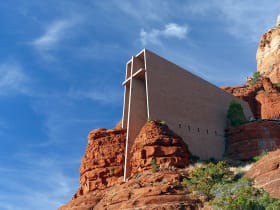
Chapel of the Holy Cross
20 miles away
A modernist chapel built straight into the red rock buttes just south of Sedona, with a ninety-foot cross for a spine and a glass wall framing the Verde Valley.