
Temple Square
15 E S Temple St, Salt Lake City, UT
Salt Lake City, UT
The founding heart of Salt Lake City, where pioneers laid out a city around a granite temple that took forty years to build by hand.
Temple Square is where Salt Lake City began. When Brigham Young led the first Latter-day Saint pioneers into the Salt Lake Valley in 1847, he chose this block as the center of the new city and laid out the entire street grid around it, measuring the addresses of the whole valley from its southeast corner. To understand Salt Lake City, you start here.
The square is dominated by the Salt Lake Temple, a great granite building topped with spires that took some forty years to raise, block by hand-cut block, in the pioneer era. Beside it stands the domed Tabernacle, home to the world-famous choir, along with gardens, fountains, and visitor buildings. It is the spiritual and historic heart of The Church of Jesus Christ of Latter-day Saints, and a welcoming place for travelers of every background to walk and learn.
What Travelers Love
- The soaring granite Salt Lake Temple, decades in the making
- The domed Tabernacle and its renowned choir and pipe organ
- Manicured gardens and fountains in the heart of downtown
- The origin point from which the whole city grid was measured
Worth Knowing
- The temple interior is not open to the public, but the grounds and other buildings are
- Parts of the square undergo major renovation from time to time, so some areas may be closed
- The Tabernacle Choir performs and rehearses publicly at certain times
- The grounds are a quiet, welcoming green space open to visitors of any faith
Learn about Temple Square
The pioneers and the founding of a city
In July 1847 Brigham Young led an advance company of Latter-day Saint pioneers out of the Wasatch and into the Salt Lake Valley, seeking a refuge far from the persecution the church had faced in the East and Midwest. Within days of arriving, Young identified this block as the site for a temple and the center of the new settlement, and the pioneers set to work surveying a broad, orderly grid of streets radiating from it.
That decision shaped everything that followed. Salt Lake City's famously wide streets and its address system, which counts blocks out from Temple Square in each direction, both trace back to this founding moment. Long before the pioneers, this valley was home to the Northwestern Shoshone, Ute, and Goshute peoples, who lived in and traveled the region and retain ties to it today, a deeper history that underlies the pioneer story told on the square.
Building the granite temple
The Salt Lake Temple is the enduring symbol of the square and of the pioneer effort. Ground was broken in 1853, but construction stretched on for about forty years, finally completed in 1893, an extraordinary span reflecting the difficulty of the work. The great granite blocks were quarried from Little Cottonwood Canyon to the southeast and hauled to the site, at first by ox teams over many days and later by rail.
The pioneers labored on the temple through hardship, and at one point buried the foundations and disguised the site as a plowed field to protect it during a period of conflict, then dug it back up and pressed on. The finished temple, with its castellated walls and cluster of spires topped by a golden statue, stands as a monument to pioneer persistence. Its interior is reserved for sacred ordinances and is not open to visitors, but its exterior and grounds are there for all to see.
The Tabernacle and its choir
Beside the temple stands the Salt Lake Tabernacle, an unusual domed building completed in the 1860s, its great oval roof built by pioneer craftsmen without steel, using wooden trusses pinned together and, in places, bound with rawhide. Its acoustics are legendary, so fine that a pin dropped at the front can be heard at the back, and it houses a large and famous pipe organ.
The Tabernacle is best known as the home of the Tabernacle Choir, one of the most recognized choirs in the world, which has performed and broadcast from here for generations. Public rehearsals and performances let visitors hear the choir and organ in the hall built for them. Between the temple and the Tabernacle, the square offers a remarkable window into both the faith and the craft of the people who built Salt Lake City.
Walking the grounds
Beyond its landmark buildings, Temple Square is simply a beautiful place to walk. The grounds are planted with seasonal gardens and flowers, threaded with paths and fountains, and open to everyone regardless of faith. Visitor buildings and viewpoints around the block help tell the story of the pioneers and the city they founded, and the atmosphere is calm and welcoming in the middle of a busy downtown.
The square does undergo major renovation and seismic upgrading from time to time, so parts of it may be fenced or closed during a visit, and it is worth checking what is open before you go. Even so, a stroll around the block, past the granite temple and the domed Tabernacle, remains one of the essential things to do in Salt Lake City and the best way to feel the origins of the city all around you.
Closest Boutels
The closest Boutel™ stays, so you can turn this stop into an overnight. Each is a place we chose through independent editorial review, never a paid placement.
Details
Salt Lake City, UT
Frequently asked questions
What is Temple Square?
Temple Square is a historic complex spanning several city blocks in downtown Salt Lake City, the spiritual and historic heart of the Church of Jesus Christ of Latter-day Saints and the city's most-visited attraction. It gathers landmark buildings, beautifully landscaped gardens, and visitor centers into one walkable area. Whether you come for the architecture, the history, the music, or simply a peaceful stroll among the fountains and flowers, it offers a calm, welcoming retreat in the center of the city.
What can you see at Temple Square?
Highlights include the iconic Salt Lake Temple, the historic Tabernacle known for its remarkable organ and famous choir, the Conference Center, the Church History Museum, the FamilySearch genealogy library, and the pioneer-era Beehive House, all surrounded by manicured gardens. Note that the Salt Lake Temple has undergone a major renovation, so access to some areas varies, and it is worth checking what is currently open before you visit.
Is Temple Square free, and are there tours?
Yes, Temple Square is free to visit, and free guided tours are available for those wanting a deeper look at the history and buildings, typically offered by friendly hosts in a low-pressure way. If your timing is right, you can also catch a free organ recital in the Tabernacle, a memorable experience. You can spend anywhere from half an hour strolling the grounds to a few hours exploring the buildings and museums in depth.
When is the best time to visit Temple Square?
Spring and summer are lovely, when the gardens, flowers, and landscaping are in full bloom and reason enough to visit on their own. The winter holiday season is spectacular, when hundreds of thousands of twinkling lights adorn the square from Thanksgiving through New Year's, drawing large crowds. Any time of year, the peaceful gardens and fountains make it a relaxing stop in downtown Salt Lake City.
What is near Temple Square?
Temple Square sits in the heart of downtown Salt Lake City, within easy walking distance of the City Creek Center shopping district, the Utah State Capitol a bit uphill, and numerous restaurants and other attractions. Its central location makes it an easy anchor for exploring downtown on foot, and it pairs well with the city's museums, dining, and nearby access to the Wasatch mountains for a full Salt Lake visit.
Nearby

Liberty Park
1.8 miles away
Liberty Park covers 80 acres in central Salt Lake City and is the largest urban park in the city. The children's play area is large and well-maintained. A splash pad operates in summer at no charge.
Natural History Museum of Utah
3.5 miles away
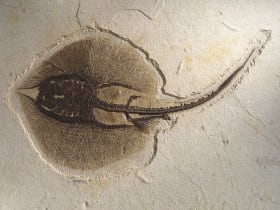
The Natural History Museum of Utah has one of the most comprehensive Utah dinosaur collections in the world, including allosaurus, stegosaurus, and a full-skeleton ceratopsian display.
This Is The Place Heritage Park
4.2 miles away
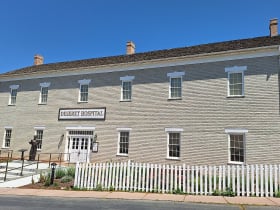
This Is the Place is where Brigham Young reportedly said "This is the right place" upon first seeing the Salt Lake Valley in 1847 after leading 2,000 pioneers west.
Wheeler Historic Farm
10 miles away
Wheeler Historic Farm operates as a living history site and working farm on the edge of Salt Lake Valley.

Great Salt Lake State Park
11 miles away
The Great Salt Lake is 7-10x saltier than the ocean, making it impossible to sink. The Saltair area (16 miles west of Salt Lake City) is the nearest accessible swimming beach.
Great Salt Lake Shoreline Park
13 miles away
The northeast shore of the Great Salt Lake accessible from Salt Lake City. The lake's north arm has an extremely high salinity that turns the water pink from halophilic bacteria.
Big Cottonwood Canyon
14 miles away
Big Cottonwood Canyon (UT-190) is the most accessible canyon in the Wasatch Range for Salt Lake residents.

Point of the Mountain Viewpoint
17 miles away
Point of the Mountain is the topographic ridge that separates the Salt Lake Valley from Utah Valley to the south.
Little Cottonwood Canyon, Alta and Snowbird
18 miles away
Little Cottonwood Canyon narrows to a slot at its base and climbs to 11,000 feet at Alta and Snowbird ski resorts.

Utah Olympic Park
19 miles away
Utah Olympic Park hosted the bobsled, luge, skeleton, ski jumping, and Nordic combined events of the 2002 Salt Lake City Olympics.