

The Sonoran Desert
Central and southern Arizona
Phoenix, AZ
The only desert where the giant saguaro grows, greener and more alive than any desert has a right to be.
The Sonoran Desert is the great cactus desert of the American Southwest, spreading across southern Arizona and deep into Mexico, and it is unlike any other desert in the world. Its signature is the giant saguaro, the tall, many-armed cactus that grows wild nowhere else on Earth and that stands like a sentinel across the hills and valleys around Phoenix and Tucson. To many people this is simply what a desert looks like, but that image belongs almost entirely to this one place.
What makes the Sonoran Desert so remarkable is how alive it is. Most deserts are stark and nearly bare, but this one gets rain in two seasons, a gentle winter soaking and a dramatic summer monsoon, and that double dose of water supports a lush, crowded community of plants and animals. Green paloverde trees, spiny ocotillo, and dozens of kinds of cactus fill the ground, and the desert hums with life from before dawn to well after dark.
What Travelers Love
- The towering, many-armed saguaro cactus, found in the wild only in this desert
- How green and alive the desert feels compared with the barren deserts of the world
- Spectacular sunsets and sunrises that turn the mountains and cactus gold and rose
- Spring wildflower blooms that can carpet the desert floor in color after a wet winter
Worth Knowing
- Summer heat is extreme, so hike early, carry far more water than you think you need, and rest in shade
- Nearly everything here can poke, sting, or bite, so watch where you put your hands and feet
- Do not touch or step near the cholla cactus, whose spined joints detach and cling to skin and clothing
- The desert is fragile, so stay on trails and never disturb or remove plants, which are protected by law
Learn about The Sonoran Desert
The saguaro and a green desert
The saguaro is the heart of this desert and one of the botanical wonders of North America. A saguaro grows very slowly, taking many years to reach even knee height and often a century or more before it grows its first arm, and the oldest can live well beyond a human lifetime. Its pleated trunk swells to store water after rains, its white flowers open in the warm nights of late spring, and its red fruit has fed the people of this desert for as long as anyone has lived here.
The saguaro is only the tallest member of a whole green community. Paloverde and mesquite trees shade young cactus as they grow, ocotillo throws up its whip-like stems that leaf out after rain and flame red at the tips, and prickly pear, cholla, barrel, and hedgehog cactus crowd the ground. This richness is why the Sonoran is often called the most biologically diverse desert in the world, a desert that looks, at a glance, almost like a dry garden.
Two rainy seasons and the monsoon
The secret to all this life is water, delivered twice a year. Gentle rains soak the desert in winter, feeding the spring wildflowers and green-up. Then in the heat of summer the monsoon arrives, when moist air pushes up from the south and builds towering thunderheads that unleash sudden, violent storms in the late afternoon, complete with dust walls, lightning, and hard rain that can flood dry washes in minutes.
The desert responds to every drop. After a wet winter, the floor can erupt in spring wildflowers, from golden poppies to blue lupine, in blooms that draw people from across the region. After the monsoon rains, the whole desert flushes green and the toads and insects emerge in a rush. Living things here have learned to move fast when the water comes and to wait patiently through the long dry stretches in between.
The people of the desert
This desert has been home to people for thousands of years, and it still is. The Tohono O'odham, whose name means the Desert People, and the Akimel O'odham, the River People, are the living heirs of a long desert culture, and they still harvest the saguaro fruit each summer to make syrup and mark the new year. The great canals that water Phoenix today trace the outlines of an even older network dug by the Hohokam, ancestral farmers who built a sophisticated irrigation civilization across this valley more than a thousand years ago.
Later came Spanish missionaries, ranchers, and eventually the modern city, but the desert has shaped every one of them. Phoenix takes its very name from the idea of a city rising from the ashes of that ancient Hohokam world, built on the same rivers and the same canals. To understand this place, it helps to remember that people have been thriving in this desert, not just surviving it, for a very long time.
Wildlife, nights, and the seasons
Much of the desert's animal life waits out the heat and comes alive in the cool of morning, evening, and night. Coyotes, javelinas, jackrabbits, and roadrunners move at the edges of the day, while the elf owl and the Gila woodpecker nest inside old saguaros. The Gila monster, a slow venomous lizard found in this region, and the desert tortoise are among its most famous residents, and rattlesnakes and scorpions are part of the landscape too, best given a wide berth.
Each season has its own character. Spring is the glory of wildflowers and mild weather. Summer is fierce, with brutal daytime heat broken by the drama of the monsoon storms. Fall cools gradually and brings a second, quieter green-up. Winter is the gentlest season, with warm days, cool nights, and clear skies, which is exactly why so many people come to the Sonoran Desert in the months when the rest of the country is cold.
Closest Boutels
The closest Boutel™ stays, so you can turn this stop into an overnight. Each is a place we chose through independent editorial review, never a paid placement.
Details
Phoenix, AZ
Frequently asked questions
What is the Sonoran Desert?
The Sonoran Desert is a vast and remarkably biodiverse desert that covers much of southern Arizona, along with parts of California and northwestern Mexico. Unlike starker deserts, it is famous for its lush diversity of life, most iconically the towering saguaro cactus, which grows almost nowhere else. Shaped by two rainy seasons that support an astonishing variety of plants and animals, the Sonoran Desert features saguaro forests, rugged mountains, and colorful wildflower blooms. It is one of the most beautiful, alive, and distinctive deserts in the world, defining the landscape of the Arizona Southwest.
What makes the Sonoran Desert special?
The Sonoran Desert stands out for its extraordinary biodiversity, being one of the wettest and most life-filled deserts on earth thanks to two distinct rainy seasons, a gentle winter rain and a dramatic summer monsoon, that nourish a rich array of plants and animals. It is the only place where the iconic saguaro cactus grows wild in abundance, and it hosts countless other cacti, wildflowers, birds, reptiles, and mammals. This lushness and diversity, along with its dramatic scenery, make the Sonoran Desert uniquely beautiful among the world's deserts.
Where can you experience the Sonoran Desert?
You can experience the Sonoran Desert throughout southern Arizona, including in Saguaro National Park near Tucson, the Arizona-Sonora Desert Museum, Organ Pipe Cactus National Monument, the Desert Botanical Garden and mountain preserves around Phoenix, and countless parks, trails, and scenic drives across the region. Whether hiking among saguaros, visiting a desert garden, or driving through cactus forests, the desert is easy to explore and enjoy. Its beauty is on display all across the Arizona Southwest, from urban preserves to remote wilderness monuments.
What safety precautions should I take in the Sonoran Desert?
The desert heat is the primary danger, especially in summer when temperatures can be life-threatening, so carry far more water than you think you need, wear sun protection and sturdy shoes, avoid strenuous activity during the hot midday hours, and hike early or in cooler months. Watch for wildlife like rattlesnakes and never touch cacti, whose spines cause painful injuries. Tell someone your plans in remote areas, since shade and services can be scarce. Respecting the heat and hazards lets you safely enjoy the desert's beauty.
When is the best time to experience the Sonoran Desert?
The cooler months from late fall through early spring are by far the best time to explore, offering comfortable temperatures for hiking and sightseeing, and spring is spectacular for wildflower and cactus blooms following winter rains. Summer brings dangerous, extreme heat that makes desert activity hazardous, though the summer monsoon can bring dramatic storms and a burst of green. For safe, comfortable, and beautiful experiences of the Sonoran Desert, especially its blooms, plan visits during the cool season and avoid the peak summer heat.
Nearby

Liberty Wildlife
3.0 miles away
One of the largest wildlife rehabilitation centers in the Southwest, in south Phoenix, heals thousands of injured desert animals a year and opens to the public, where rescued eagles, owls, hawks, and...

Papago Park
3.1 miles away
Hole in the Rock is a natural opening in a red volcanic butte in Papago Park, a city park straddling the Phoenix-Scottsdale border.

Desert Botanical Garden
3.3 miles away
The Desert Botanical Garden in Papago Park has 50,000 plants representing 4,500 species from deserts worldwide, including one of the world's most comprehensive collections of Sonoran Desert plants.
Roosevelt Row Arts District
3.8 miles away
Roosevelt Row (1st-3rd Streets, 1st-7th Avenues) is a 15-block district with over 100 painted murals, live-work artist studios, galleries, and some of Phoenix's best food and cocktail culture.

Heard Museum
4.7 miles away
The Heard Museum has the most comprehensive collection of Southwest Native American art and culture in the world.

Camelback Mountain
5.0 miles away
Camelback Mountain rises 1,420 feet above the Phoenix Basin and has two routes to the summit: Echo Canyon (1.2 miles up, Class 3 scramble with cables) and Cholla Trail (1.8 miles, less technical).
Scottsdale Old Town
5.2 miles away
Scottsdale's Old Town has the highest concentration of Western art galleries in the United States.
South Mountain Park
8.2 miles away
South Mountain Park and Preserve covers 16,000 acres at the southern edge of Phoenix, making it one of the largest municipal parks in the United States.
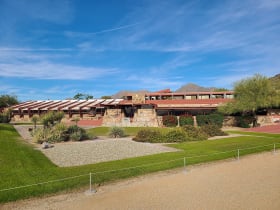
Taliesin West
14 miles away
Taliesin West was Frank Lloyd Wright's winter home and architecture school from 1937 until his death in 1959. The campus is still an active school (Frank Lloyd Wright School of Architecture).

Apache Trail Scenic Drive
30 miles away
The Apache Trail (AZ-88) follows the route used to haul supplies during the Roosevelt Dam construction.