


Liberty Wildlife
2600 E Elwood St, Phoenix, AZ
Phoenix, AZ
A working wildlife hospital and open-air campus in south Phoenix where thousands of injured desert animals are healed each year, and where the ones who cannot go back to the wild become close-up ambassadors for the ones that can.
On the south side of Phoenix, near the restored banks of the Salt River, sits one of the busiest wildlife hospitals in the American Southwest. Liberty Wildlife rescues, heals, and releases thousands of injured and orphaned desert animals every year, from tiny hummingbirds to golden eagles, and it opens its doors so the public can watch that work up close and meet the birds who live there for good.
It is part hospital, part sanctuary, and part outdoor classroom. The animals that recover are returned to the wild, but some are too badly hurt to survive on their own, and these become ambassadors: great horned owls, red-tailed hawks, peregrine falcons, and vultures who help teach visitors why the desert's wild creatures matter. Standing a few feet from an owl's unblinking gaze is the kind of encounter that stays with a kid, and a grown-up, for a long time.
What Travelers Love
- Meeting rescued eagles, owls, hawks, falcons, and vultures up close
- Watching a real wildlife hospital care for injured desert animals
- Daily programs where handlers introduce the resident ambassador birds
- Learning how hurt animals are healed and returned to the wild
Worth Knowing
- It is a working rehabilitation center, so it is open to visitors only on certain days and hours; check before you go
- Admission is typically free or by donation, and the nonprofit runs on that support
- Mornings are best in the desert heat, both for the animals' comfort and yours
- This is a place to observe animals quietly, not a petting zoo, so follow the handlers' lead
Learn about Liberty Wildlife
A hospital for wild things
Liberty Wildlife began in 1981 and has grown into one of the largest wildlife rehabilitation organizations in the region, treating many thousands of animals a year. Its patients are the wild creatures of the Sonoran Desert and beyond, hawks tangled in fences, owls struck by cars, songbirds and baby birds fallen from nests, tortoises, and the occasional bobcat or coyote pup, brought in by the public and by other agencies from across Arizona.
The goal for every patient is the same: heal it and set it free. The organization's medical team and volunteers nurse injured animals back to health and release the ones that recover, and the open campus lets visitors glimpse that effort, from the mews where birds regain their strength to the daily rhythm of a real animal hospital at work.
Meet the ambassadors
Not every animal can go home. Some arrive with injuries that leave them unable to hunt, fly, or survive in the wild, and rather than lose them, Liberty Wildlife gives them a permanent home as education ambassadors. Eagles, owls, hawks, falcons, ravens, and vultures perch in shaded enclosures across the campus, each with a name and a story, and handlers bring them out for programs throughout the day.
These close encounters are the heart of a visit. A great horned owl turning its head to fix you with enormous eyes, or a falcon mantling its wings on a handler's glove, turns abstract ideas about wildlife into something immediate and unforgettable. The daily talks explain how each bird came to be there and what its wild cousins need to thrive in a growing desert city.
The feather repository and a mission of respect
Liberty Wildlife runs a program found almost nowhere else: a federally authorized Non-Eagle Feather Repository. When migratory birds in its care die, their feathers, talons, and parts are collected and legally distributed to enrolled members of Native American tribes for use in religious and cultural ceremonies, meeting a real need in a lawful, respectful way.
That program reflects the spirit of the whole place. Liberty Wildlife is not a zoo but a rescue, built around the ideas of healing, education, and respect for the animals of the desert. A visit supports that work directly, and it sends people home looking a little more closely at the hawks circling over their own neighborhoods.
Closest Boutels
The closest Boutel™ stays, so you can turn this stop into an overnight. Each is a place we chose through independent editorial review, never a paid placement.
Details
Phoenix, AZ
Frequently asked questions
What is Liberty Wildlife?
Liberty Wildlife, in Phoenix, Arizona, is one of the largest and most respected wildlife rehabilitation and education organizations in the Southwest, dedicated to rescuing, rehabilitating, and releasing injured and orphaned native animals. At its facility, visitors can learn about Arizona's wildlife, see non-releasable resident animals such as eagles, hawks, owls, and other raptors that serve as education ambassadors, and discover the important work of wildlife conservation. Offering tours and educational programs, Liberty Wildlife provides an inspiring, up-close look at native species and the dedicated effort to protect them.
What can you see and do at Liberty Wildlife?
You can take a tour or attend educational programs to see resident animals that cannot be released back to the wild, including majestic eagles, hawks, owls, and other raptors, and learn about Arizona's wildlife, the threats these animals face, and the rescue and rehabilitation work being done. Presentations often feature live animal ambassadors up close. The experience is both engaging and educational, ideal for animal and nature lovers of all ages, and it supports a meaningful conservation mission that helps countless native creatures each year.
Do you need to plan ahead to visit Liberty Wildlife?
Because Liberty Wildlife is primarily a working rehabilitation facility, public access is often through scheduled tours, programs, or specific open hours rather than all-day drop-in visits, so it is important to check the current schedule and any reservation requirements before you go. Planning around the available tour times or educational events ensures you can experience the animals and learn about the organization's work. Checking the latest visiting information in advance is the best way to make the most of a visit to this conservation center.
When is the best time to visit Liberty Wildlife?
Visits generally align with the facility's scheduled tours, programs, and open hours, so the best time depends on that schedule, which is worth checking in advance. Mornings and the cooler months are more comfortable given Phoenix's heat, especially since parts of the experience may be outdoors. Educational programs and animal presentations are highlights to time your visit around. Checking the current calendar and any reservation needs before you go ensures you catch the animal encounters and tours that make a visit rewarding.
What is near Liberty Wildlife?
Liberty Wildlife is in the Phoenix area, within reach of downtown Phoenix's museums and attractions, the Heard Museum, Papago Park with the Desert Botanical Garden and Phoenix Zoo, and South Mountain Park, with Scottsdale and Tempe nearby. That makes Liberty Wildlife an inspiring and educational stop to combine with the zoo, gardens, museums, and other family-friendly attractions of the Valley of the Sun on a visit to central Arizona.
Nearby

Sonoran Desert
3.0 miles away
The Sonoran Desert covers 100,000 square miles of southwestern Arizona, southeastern California, and northwestern Mexico.
Roosevelt Row Arts District
4.3 miles away
Roosevelt Row (1st-3rd Streets, 1st-7th Avenues) is a 15-block district with over 100 painted murals, live-work artist studios, galleries, and some of Phoenix's best food and cocktail culture.
South Mountain Park
5.2 miles away
South Mountain Park and Preserve covers 16,000 acres at the southern edge of Phoenix, making it one of the largest municipal parks in the United States.

Heard Museum
5.4 miles away
The Heard Museum has the most comprehensive collection of Southwest Native American art and culture in the world.

Papago Park
5.5 miles away
Hole in the Rock is a natural opening in a red volcanic butte in Papago Park, a city park straddling the Phoenix-Scottsdale border.

Desert Botanical Garden
5.7 miles away
The Desert Botanical Garden in Papago Park has 50,000 plants representing 4,500 species from deserts worldwide, including one of the world's most comprehensive collections of Sonoran Desert plants.

Camelback Mountain
8.0 miles away
Camelback Mountain rises 1,420 feet above the Phoenix Basin and has two routes to the summit: Echo Canyon (1.2 miles up, Class 3 scramble with cables) and Cholla Trail (1.8 miles, less technical).
Scottsdale Old Town
8.0 miles away
Scottsdale's Old Town has the highest concentration of Western art galleries in the United States.
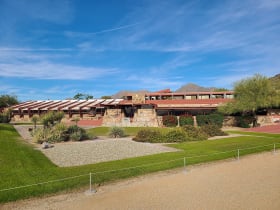
Taliesin West
17 miles away
Taliesin West was Frank Lloyd Wright's winter home and architecture school from 1937 until his death in 1959. The campus is still an active school (Frank Lloyd Wright School of Architecture).

Apache Trail Scenic Drive
31 miles away
The Apache Trail (AZ-88) follows the route used to haul supplies during the Roosevelt Dam construction.