
Siletz Bay National Wildlife Refuge
Millport Slough Ln, off US-101
Lincoln City, OR
A quiet estuary at the edge of a busy beach town, where a diked dairy pasture was let back to salt marsh and the tide, the salmon, and the eagles returned.
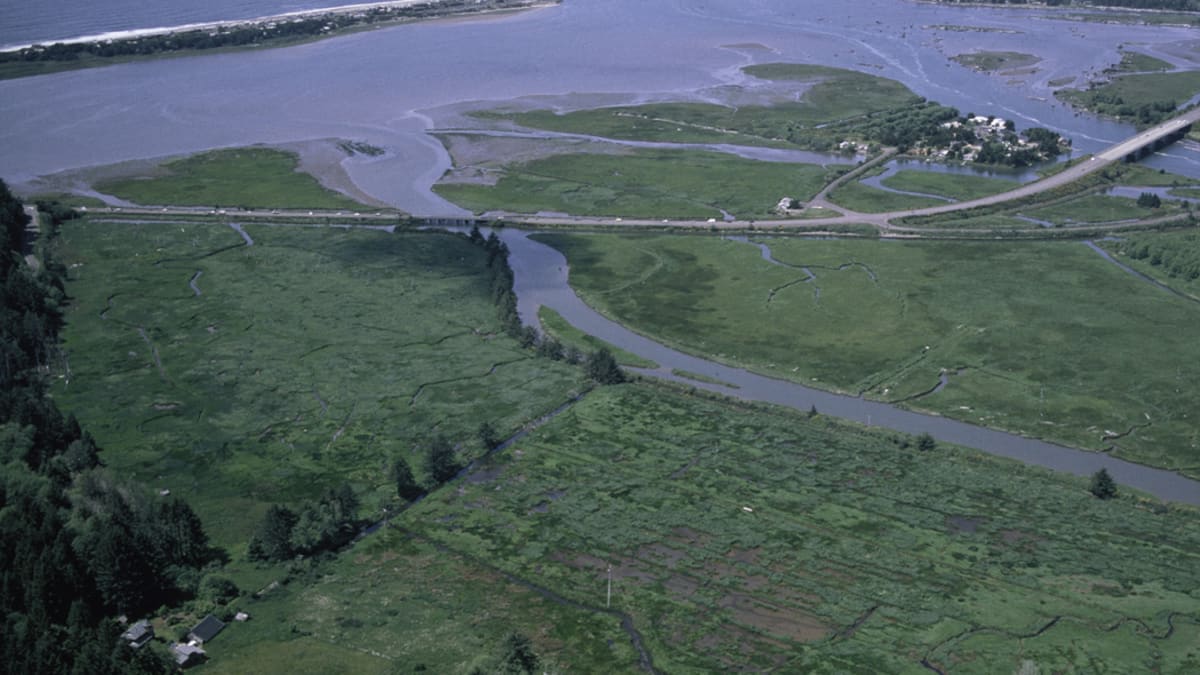
Siletz Bay National Wildlife Refuge is a piece of the Oregon coast being handed back to the tide. Where the Siletz River widens into its bay at the south edge of Lincoln City, a spread of salt marsh, brackish marsh, tidal sloughs, mudflats, and coastal forest has been set aside for the fish and birds of the estuary, threaded by a single easy walking trail and open to quiet paddlers. It is the kind of place a road-tripper can slip into for an hour of birds and big water and come out feeling like the coast got a little wilder.
The refuge is young as protected places go, established in 1991, and much of what you see is the result of deliberate repair rather than untouched wilderness. For generations this bottomland was diked and ditched into dairy pasture, its natural rhythm of flooding and draining shut off behind earthen walls. The refuge exists to undo that, to breach the dikes, fill the ditches, and let the salt water back in, and the marsh, the salmon, and the eagles have answered.
What Travelers Love
- An easy, flat island loop trail out into a living tidal estuary, minutes from the beach and the outlet shops
- The eerie ghost forest of salt-bleached snags along the highway, with hawks and eagles perched on them
- Bald eagles, great blue herons, and great egrets working the marsh and mudflats at low tide
- A quiet, uncrowded pocket of wild coast right beside a busy vacation town
Worth Knowing
- The refuge is open daily from sunrise to sunset and there is no entry fee
- The Alder Island Nature Trail is a short, flat, unpaved loop of a little under a mile, easy for most walkers but muddy after rain
- The estuary is a great paddle for canoes and kayaks at higher tides, launched near the trailhead, but check the tide before you go so you are not left on the mud
- Bring binoculars and a bird guide, and stay on the trail and out of the marsh so you do not disturb nesting and feeding birds
Learn about Siletz Bay National Wildlife Refuge
A pasture given back to the sea
Long before it was a refuge, the flat ground around Siletz Bay was drained for farming. Settlers threw up dikes and cut drainage ditches to turn the tidal marsh into pasture for dairy cows, a common story up and down the Oregon coast, where the richest, flattest land was almost always old estuary. The trouble is that a diked marsh is a dead marsh: cut off from the tides, it loses the flooding-and-draining pulse that makes an estuary one of the most productive habitats on earth.
When the U.S. Fish and Wildlife Service established the refuge in 1991, restoring that marsh became the whole point. In a major project near Millport Slough, crews breached and removed thousands of feet of dike, filled well over a thousand feet of ditch, and added woody debris back to the channels to give young fish cover, working alongside partners including Ducks Unlimited and the Confederated Tribes of Siletz. Almost as soon as the salt water returned, so did the marsh plants, the small fish, and the birds that hunt them.
The ghost forest and the birds
Drive US-101 through the refuge and you cannot miss the ghost forest: pale, bare skeleton trees standing in the marsh on both sides of the highway. They are the salt-starched remains of trees that died when the tides came back and the ground turned brackish and salty again, a striking, slightly haunted sight that is also a plain record of the land changing back into what it was. Look at their tops and you will often find red-tailed hawks and bald eagles using the snags as perches over the marsh.
The estuary is a serious birding stop. Great blue herons and great egrets stalk the shallows and mudflats, eagles and hawks work the edges, and the tidal channels draw salmon and trout moving between the river and the sea. Because the refuge mixes salt marsh, mudflat, slough, and forest so close together, a short visit can turn up wading birds, raptors, waterfowl, and songbirds without much walking at all. Low tide, when the mudflats are exposed and the birds gather to feed, is often the liveliest time to look.
Walking Alder Island and paddling the bay
The one built trail is the Alder Island Nature Trail, opened in 2017, a flat unpaved loop of a little under a mile that carries you out onto an island between the river and its marshes. It is an easy, level walk that gets you into the estuary rather than just looking at it from the road, with water, marsh grass, and the snags of the ghost forest around you, and it is short enough to fit between beach time and dinner in town.
The better way to see the refuge, though, may be from the water. Canoes, kayaks, and other non-motorized boats are welcome to explore the tidal bay and the mouth of the Siletz, launched from near the trailhead, and paddling lets you slip quietly along the channels where the birds are. The catch is the tide: come at low water and you can be stranded on the mud, so plan your paddle around a rising or high tide and give yourself time to get back.
Visiting Siletz Bay
The refuge lies at the south end of Lincoln City, and the Alder Island trailhead is signed off US-101 near Millport Slough, just a few minutes' drive from the beach, the outlet shops, and most of the town's lodging. It is open daily from sunrise to sunset, there is no fee, and there are no services on site, so bring water and anything you need. A dry day makes the trail and the launch easier.
Give yourself an unhurried hour to walk the island loop, or a half day if you want to paddle the bay on a good tide. Bring binoculars, watch the snags for eagles, and keep to the trail and off the marsh so the birds can feed and nest in peace. For a town best known for its beach and its kites, Siletz Bay is the quiet flip side, a wild, working estuary that is being coaxed back to life right at the edge of the crowds.
Closest Boutels
The closest Boutel™ stays, so you can turn this stop into an overnight. Each is a place we chose through independent editorial review, never a paid placement.
Details
Lincoln City, OR
Frequently asked questions
What is there to do at Siletz Bay National Wildlife Refuge?
This estuary refuge near Lincoln City is all about quiet nature. The main draw is the short, easy Alder Island Nature Trail, a roughly half-mile walk along the Siletz River and a slough through restored tidal marsh, excellent for spotting songbirds, waterfowl, and herons. You can also paddle the calm tidal channels by kayak or canoe from the small car-top launch, taking in the marsh and its wildlife from the water.
Is Siletz Bay good for birdwatching?
Yes, birding is rewarding year-round. Along the trail and slough you may see herons, egrets, ducks, mergansers, and cormorants, and there is a well-known osprey nest that delights visitors in season. Early mornings and low-tide periods, when birds feed along the exposed mudflats, are often the best times to watch. Bring binoculars and move quietly for the best sightings.
Do I need to plan around the tides at Siletz Bay?
Yes, this is important here. Because the trail runs through tidal marsh, high tides can flood and block portions of the path, so planning your visit around low tide gives you full access and, conveniently, the best wildlife viewing as animals feed on the mudflats. Check a tide table before you go, and be ready to turn back if you find the low areas underwater.
What are the rules at Siletz Bay National Wildlife Refuge?
It is a protected refuge, so a few rules keep it that way. There is no fee, and it is open from sunrise to sunset with no overnight parking. Dogs are not allowed on the nature trail, which protects the wildlife, so leave pets at home. Only non-motorized boats may use the launch. Stay on the trail, take nothing, and keep noise down out of respect for the birds and other visitors.
When is the best time to visit Siletz Bay National Wildlife Refuge?
Birdlife is good all year, but spring and fall migrations bring the greatest variety, and winter draws wintering waterfowl to the marsh. Low tide and early morning are the best times of day for both the trail and wildlife viewing regardless of season. Drier months make the natural-surface trail more pleasant, but with rain gear and a tide check, it is a rewarding, peaceful stop any time.
Nearby
Devil's Lake State Recreation Area
5.1 miles away
A large, sheltered freshwater lake right in the middle of Lincoln City, just off US 101 and a short walk from the beach, calm for paddling when the ocean is rough.
Road's End State Recreation Area, Lincoln City
6.3 miles away
Road's End is the locals' beach in Lincoln City: no amenities, no services, just a rocky headland and a wide sand beach that's usually half-empty even in summer.
Whale Watching Center
6.9 miles away
A free Oregon State Parks overlook built into the seawall in the middle of Depoe Bay, right on US 101, where tall picture windows and trained volunteers with binoculars help you spot the resident gray...
Rocky Creek State Scenic Viewpoint
8.8 miles away
A quiet forested clifftop above Whale Cove on the central Oregon Coast, one of the best low-key spots to watch gray whales pass, including a group that feeds here through summer.

Devil's Punchbowl State Natural Area
11 miles away
A collapsed sea cave at Otter Rock, off the Otter Crest Loop about five miles south of Depoe Bay, where the surf rushes in and churns a giant bowl of rock to foam at high tide.
Cascade Head: Coastal Prairie and Salmon Estuary
12 miles away
Cascade Head's coastal prairie hosts the rare Oregon silverspot butterfly, which depends on early blue violet plants found only in this type of native grassland.
Moolack Beach
14 miles away
A long, wild, uncrowded beach north of Newport famous for agates, fossils, and ancient petrified wood exposed in dark low-tide bedrock, with the Yaquina Head lighthouse to the south.

Yaquina Head Outstanding Natural Area, Newport
16 miles away
The tide pools here are the payoff. On most of the Oregon coast you hunt for a decent pool; at Cobble Beach they are laid out in tiers right below the lighthouse, close enough that a family can be cro...
Agate Beach State Recreation Site
16 miles away
A broad, open sweep of sand at the north edge of Newport, running up to the dark basalt of Yaquina Head and its lighthouse.
Mo's Original, Newport
19 miles away
Mo's is the Oregon coast's most famous chowder house: a 1946 original on Newport's working Bayfront with the same recipe for 80 years.

Hatfield Marine Science Center, Newport
19 miles away
Hatfield's touch tanks let kids handle sea stars, urchins, and small invertebrates under staff supervision - great for a rainy Oregon coast day.

Oregon Coast Aquarium
20 miles away
One of the nation's top-ranked aquariums, on Yaquina Bay in Newport and once the home of Keiko from Free Willy.