
Road's End State Recreation Area
NW 35th Ct
Lincoln City, OR
A calm pocket beach at the very end of the road, with a secret cove you can only reach when the tide pulls back.
Road's End is exactly what the name says: the place where Logan Road runs out and Lincoln City meets the Pacific one last time before the coast turns wild. It is a calmer, more sheltered beach than the busy central strands to the south, backed by low bluffs and edged with ragged lava islands where cormorants stand drying their wings. Most days you can have long stretches of it nearly to yourself.
The part that draws people in the know is the headland at the north end, Roads End Point. When the tide pulls far enough back, you can walk around the base of the point to a hidden cove and beach on the far side, a pocket of shoreline sealed off the rest of the day. It is a small adventure with a real catch: the passage only opens at low tide, and the ocean will close it behind you if you linger.
What Travelers Love
- A quieter, more sheltered beach than Lincoln City's busy central strands
- Rounding the point at low tide to a hidden cove most visitors never see
- Tide pools full of sea stars and anemones among the low-tide rocks
- Watching for gray whales and glass floats from a calm stretch of sand
Worth Knowing
- The hidden cove is only reachable at low tide; check a tide table before you go
- Time it wrong and the incoming tide can strand you for hours until the next low tide
- Rocks around the tide pools stay wet and slippery, so wear shoes with grip
- Look but do not touch the tide-pool creatures, and give hauled-out seabirds room
Learn about Road's End State Recreation Area
The story of Road's End
This stretch of the central Oregon coast is the homeland of Salish-speaking Tillamookan peoples. The river just to the north was known as the Nechesne, and Nechesne people lived along it, with the Nestucca to the north and Siletz peoples along the Siletz River to the south. In 1877 the Nestucca were removed to a village on the Salmon River at the northern edge of the Siletz Reservation. Today these peoples are enrolled in the Confederated Tribes of Siletz Indians, one of the most diverse confederations of tribes and bands on a single reservation in the country, with headquarters in Siletz southeast of town. The Tribe operates the Chinook Winds resort on Lincoln City's north side.
Lincoln City itself is younger than most towns its size because it was stitched together from several smaller ones. After years of failed attempts, the coastal communities voted to consolidate and incorporated as a single city on March 3, 1965, merging Oceanlake, DeLake, Nelscott, Taft, and Cutler City, and pulling in smaller villages including Kernville and Road's End along the way. The new name was picked by newspaper ballot over runners-up like Surfland and Holiday Beach.
Road's End kept its plainspoken name for the obvious reason. It marks the northern terminus of the town, the neighborhood where the last road reaches the sand between Logan Creek and the point. Beyond it the coast climbs toward the protected headland of Cascade Head, so for the everyday traveler, this really is where the road ends and the walking begins.
The hidden cove and the tide pools
The signature move at Road's End is the walk to the secret cove. From the main parking area it is a little over a mile north along the sand to Roads End Point, where the beach narrows against a basalt headland. At low tide you can pick your way around the base of the point to a tucked-away beach and cove on the far side that stays cut off the rest of the day. It is the sort of place that feels like a discovery even though generations of locals have made the same walk.
The catch is the tide, and it is not a small one. The route around the point is only open near low water, and the incoming tide can close it behind you and strand you for hours until the next low. Every local account stresses the same thing: check a tide table, time your visit to a falling or low tide, and keep an eye on the ocean the whole time you are past the point.
The rocky low-tide reefs here are also good for tide pooling. Look in the pools for sea stars in sunset colors, purple and green anemones, sea urchins, hermit crabs, and clusters of dark mussels clinging to the rock. The usual rules apply: watch your footing on the slick basalt, look but do not touch, and know when the tide turns.
The coast, whales, and seabirds
The Oregon coast is one of the great gray whale flyways, and Lincoln City is a reliable place to watch from shore. Gray whales pass close in near the rocky points and reefs, and Road's End's calm sightlines make it an easy place to scan the horizon for a spout or a rolling back.
Right at the beach, the low lava islands offshore serve as roosts. Cormorants gather on them to dry their outstretched wings, and the broader Lincoln City coastline draws pelicans, loons, oystercatchers, grebes, and more, especially around the rocky headlands. South of town, a large colony of harbor seals hauls out on the sand spit in Siletz Bay.
The shore itself rewards slow beachcombing. This is prime country for hunting agates and sea glass, and Lincoln City's Finders Keepers program hides handblown glass floats along the beaches for lucky walkers to find and keep.
Season by season
Winter is storm-watching season and the heart of the southbound gray whale migration, which peaks roughly from mid-December into mid-January. On a wild day the surf pounds the point and the tide swings are dramatic, so the hidden cove is best left alone unless conditions are calm and the timing is right.
Spring brings the northbound whales, starting in late March with stragglers lingering into early summer, along with milder weather and lower crowds than the peak season.
Summer is the busiest stretch, when the beaches fill and the kites come out, though Road's End tends to stay quieter than the central strands. Whatever the season, the visit that matters most is planned around the tide, not the calendar: aim for a low tide if you want the cove and the best tide pooling.
Closest Boutels
The closest Boutel™ stays, so you can turn this stop into an overnight. Each is a place we chose through independent editorial review, never a paid placement.
Details
Lincoln City, OR
Frequently asked questions
What is the secret beach at Roads End?
At the north end of Roads End, at low tide, you can scramble around the point known as Roads End Point into a hidden cove with its own secluded beach, a favorite discovery for adventurous visitors. The catch is timing: this is only reachable around low tide, and the way back can be cut off as the water rises. Go early in the low-tide window, do not linger, and watch the incoming tide closely so you are not stranded for hours.
Are there tide pools at Roads End?
Yes. Venturing toward the rocky area at the north point at low tide reveals tide pools full of sea stars, anemones, and other sea life. Explore them gently, watch your step on the slick rocks, and take only photos. As with the hidden cove, keep a close eye on the tide and the surf, never turn your back on the ocean, and keep children within reach around the rocks and waves.
Can you hike at Roads End?
Yes, one of Lincoln City's signature short hikes, up a headland known as the Knoll, can be reached from the Roads End area, rewarding you with sweeping views over the Pacific and a bird's-eye look at the town. It is a great way to pair a beach visit with a viewpoint. Wear sturdy shoes, and enjoy the panorama from the top before heading back down to the sand.
What are the glass floats at Lincoln City?
From mid-fall through late spring, Lincoln City hides hundreds of hand-blown glass floats along its miles of public beach, from the Roads End area south to Siletz Bay, as part of a beloved local tradition, and finders get to keep them. It adds a fun treasure-hunt element to a beach walk in the off-season. Search above the tide line among the driftwood and grass, and check the local program for the current details.
When is the best time to visit Roads End?
Plan around low tide, which unlocks the tide pools and the hidden cove and is the whole point for many visitors, so check a tide table first. Summer brings the warmest weather and easiest beach days, while the off-season adds dramatic surf and the glass-float hunt. Park in the designated lot at the end of the road, since it is a dead end, and bring layers for the coastal breeze.
Outside the Park
Devil's Lake State Recreation Area
2.2 miles away
A large, sheltered freshwater lake right in the middle of Lincoln City, just off US 101 and a short walk from the beach, calm for paddling when the ocean is rough.
Cascade Head: Coastal Prairie and Salmon Estuary
4.6 miles away
Cascade Head's coastal prairie hosts the rare Oregon silverspot butterfly, which depends on early blue violet plants found only in this type of native grassland.
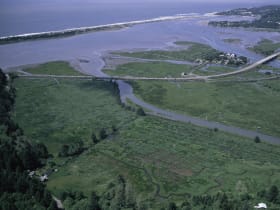
Siletz Bay National Wildlife Refuge
7.2 miles away
A restored coastal salt marsh and estuary at the south end of Lincoln City, where a diked dairy pasture was let back to the tide.

Bob Straub State Park
13 miles away
A wild three-mile sand spit with the open Pacific on one side and the quiet Nestucca River on the other, saved from becoming a highway.
Whale Watching Center
14 miles away
A free Oregon State Parks overlook built into the seawall in the middle of Depoe Bay, right on US 101, where tall picture windows and trained volunteers with binoculars help you spot the resident gray...

Cape Kiwanda State Natural Area
14 miles away
A soft, honey-gold sandstone headland the ocean has carved into arches and sea caves, backed by a giant sand dune you can climb for a wide Pacific view.
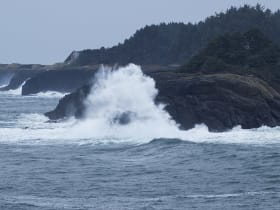
Rocky Creek State Scenic Viewpoint
16 miles away
A quiet forested clifftop above Whale Cove on the central Oregon Coast, one of the best low-key spots to watch gray whales pass, including a group that feeds here through summer.

Devil's Punchbowl State Natural Area
18 miles away
A collapsed sea cave at Otter Rock, off the Otter Crest Loop about five miles south of Depoe Bay, where the surf rushes in and churns a giant bowl of rock to foam at high tide.