
Fort Stevens State Park
Peter Iredale Rd
Hammond, OR
The rusted ribs of a shipwreck on the sand, walk-through gun batteries, and a warm lake behind the dunes, all where the Columbia River meets the Pacific.
Fort Stevens is three very different places stacked onto one wind-scoured point of land. It is a military fort that guarded the mouth of the Columbia River for about eighty-four years, from the Civil War through World War II. It is the resting place of the Peter Iredale, a four-masted sailing ship whose steel bones still jut from the beach where she ran aground in 1906. And it is a quiet family park of forest trails and a warm freshwater lake, all at the raw edge where the biggest river in the West pours into the Pacific.
Most coastal forts are either torn down or fenced off, and most shipwrecks are long gone beneath the waves. Here you can walk through the concrete gun batteries, then walk down to the wreck, then go swimming in Coffenbury Lake, all in an afternoon. It is that unlikely combination, and the fort's own strange brush with war, that makes Fort Stevens more than just a good beach.
What Travelers Love
- Walking right up to the rusted, century-old wreck of the Peter Iredale on the open beach
- Swimming and paddling the calm, warmer freshwater of Coffenbury Lake behind the dunes
- Exploring real decommissioned coastal-defense batteries and bunkers on foot
- The easy, mostly flat paved bike trails linking campground, lake, forest, and ocean
Worth Knowing
- The park sits where the river meets the ocean, so the weather turns fast and windy, and layers and a windbreaker help even in summer
- To see the Peter Iredale wreck at its most exposed and photogenic, time your visit around low tide
- The Pacific here is cold with strong currents, so Coffenbury Lake is the family-friendly place to actually swim
- It is a large park with separate hubs, the batteries, the wreck, the lake, and the campground, so a bike makes getting between them far easier than driving each one
Learn about Fort Stevens State Park
The fort that watched the river for eighty-four years
The Army began building here in 1863 and 1864, first as a simple Civil War earthwork battery meant to keep enemy ships out of the Columbia. In 1865 it took the name Fort Stevens, after Isaac Stevens, a Union general and former territorial governor. Together with two forts across the water on the Washington side, it formed a triangle of guns aimed at the river mouth, and it kept that watch, its weapons upgraded generation after generation, from the Civil War all the way through World War II.
That makes it one of the longest-serving military defense sites on the entire West Coast. When it was finally decommissioned in 1947, the guns were pulled but the concrete stayed, and today the old batteries and bunkers remain open to walk through. Battery Russell, the one visitors reach most easily, still holds the cold, echoing rooms and gun platforms where soldiers once stood their long, quiet watch over the sea.
The night a submarine fired on the mainland
On the night of June 21, 1942, a Japanese submarine, the I-25, surfaced off the coast and lobbed seventeen shells from its deck gun toward Fort Stevens. It was the first time an enemy had fired on a mainland United States military installation since the War of 1812, and it has never happened again since.
The strange part is what the fort did in response, which was nothing. The commanders judged the submarine was out of range, and firing back would only have lit up their gun positions for the enemy to see. So the batteries stayed silent. The shells did almost no damage, most of them falling into a swamp and near a baseball backstop, with one cutting a telephone line. The real story here is not a battle but a garrison choosing restraint, and that quiet decision is exactly why the place today feels eerie and thoughtful rather than triumphant.
The Peter Iredale and Coffenbury Lake
In October 1906 the Peter Iredale, a four-masted British sailing barque, ran aground on the beach here in heavy weather while trying to enter the Columbia. Everyone aboard survived, but the ship was left to the sand and the surf. More than a century later her rusted bow and the stubs of her masts still rise from the beach, one of the most accessible shipwrecks anywhere on the West Coast, best seen at low tide and unforgettable at sunset.
Behind the dunes, in the shelter of the coastal forest, lies Coffenbury Lake, a long freshwater lake that is the park's warm-water secret. The open Pacific here is cold and dangerous for swimming, but the lake is calm and gentle, good for a swim, a paddle, or an easy loop hike along its shore. It is the reason families settle in at Fort Stevens for whole days rather than a quick beach stop.
Tying it all together are miles of flat, paved trails that thread from the campground through the forest to the lake, the batteries, and the beach. On a bike you can string the whole park into one loop, moving from military history to shipwreck to swimming hole without ever getting in the car.
Visiting Fort Stevens
The park sits just west of Warrenton and Astoria, at the tip of the point where the Columbia meets the Pacific, an easy drive from anywhere on the north Oregon coast. Because it is so exposed, the weather can swing quickly from sun to wind and fog, so bring layers even in high summer and check the tide tables if the wreck is on your list.
Give yourself at least half a day to do it justice. Wander the cold rooms of Battery Russell, walk out to the Peter Iredale, then retreat to Coffenbury Lake for a swim and a picnic in the trees. It is one of the rare places where a road trip can touch real history, a genuine shipwreck, and a proper family beach day all on the same afternoon, at the wild northwest corner of Oregon.
Closest Boutels
The closest Boutel™ stays, so you can turn this stop into an overnight. Each is a place we chose through independent editorial review, never a paid placement.
Details
Hammond, OR
Frequently asked questions
What is the best way to get around Fort Stevens State Park?
The park is large and its main sights, the campground, Coffenbury Lake, the old gun batteries, and the Peter Iredale shipwreck, are spread some distance apart. About nine miles of paved bike trails link them all through the forest and dunes, and regular visitors often say the easiest and most enjoyable way to see everything is by bike rather than driving between each stop. There are also several miles of walking trails if you would rather explore on foot.
When is the best time to see the Peter Iredale shipwreck?
The rusted remains of the Peter Iredale sit right on the open beach, a short walk from the parking area, and they are most exposed around low tide, so it is worth checking a tide table before you go. Many visitors aim for late afternoon, when the low sun and sunset light over the wreck make for the most memorable photos.
Can you swim at Fort Stevens?
The open Pacific here is cold and known for strong currents, so most families skip ocean swimming and head instead to Coffenbury Lake, a freshwater lake tucked behind the dunes with calmer, warmer water and two designated swimming areas. A gentle loop trail of about two miles circles the lake through the forest, and there is a boat ramp for paddling.
What should I wear or bring to Fort Stevens State Park?
Because the park sits right where the Columbia River meets the ocean, the weather can turn cold and windy quickly, even in the middle of summer, so layers and a windbreaker are a good idea any time of year. Visitors also often mention bringing insect repellent in the late spring and early summer, when mosquitoes can be active near the wetlands and forest. Sturdy shoes help on the trails and the stony parts of the beach.
Can you explore the old military batteries at Fort Stevens?
Yes. Fort Stevens guarded the mouth of the Columbia River from the Civil War through World War II, and although it was decommissioned in the 1940s, the concrete gun batteries and bunkers were left standing. Battery Russell is the one most visitors reach easily, and you can walk through its echoing rooms and old gun platforms. A flashlight is handy if you want to explore the darker interior spaces.
Is Fort Stevens a good place to see wildlife?
It can be. The park's mix of forest, wetland, dune, and shoreline draws a lot of birdlife, and one local surprise is that Roosevelt elk regularly wander through the park and campground, so it is not unusual to spot a herd grazing in the early morning or evening. Keep a respectful distance and never approach or feed them.
Inside the Park
South Jetty of the Columbia River
2.2 miles away
Drive to the end of Clatsop Spit in Fort Stevens State Park, near Hammond west of Astoria, to reach the South Jetty, where the mighty Columbia River pours into the Pacific across the Graveyard of the...
Outside the Park

Cape Disappointment State Park
5.9 miles away
Cape Disappointment is where the Columbia River collides with the Pacific at the foot of the Long Beach Peninsula, a place of fog, wind, and enormous history.
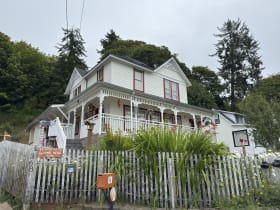
The Goonies House
8.9 miles away
The hillside Victorian in Astoria that played Mikey's house in the 1985 movie The Goonies still stands above the Columbia River, at the top of its long gravel drive in the oldest town in the Pacific N...
World Kite Museum
11 miles away
The World Kite Museum in Long Beach has a collection of more than 1,500 kites from 33 countries, displayed in changing exhibits covering military kites, fighter kites, Japanese rokkaku competition kit...

Long Beach Pacific Shoreline
12 miles away
A wide, hard-packed strand billed as the longest continuous beach on a peninsula anywhere, running some 28 miles up Washington's southwest coast.

Gearhart Beach
13 miles away
A wide, dune-backed public beach on the quiet north Oregon coast, just above Seaside.
Seaside Aquarium
15 miles away
The hand-feeding harbor seal experience at Seaside Aquarium is one of the most memorable hands-on wildlife moments kids can have on the Oregon coast - seals come right up to the edge of the pool to ta...
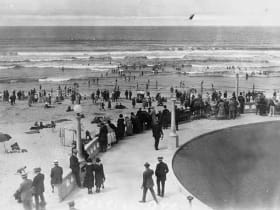
Seaside Promenade and Turnaround
15 miles away
Seaside's mile-and-a-half oceanfront boardwalk, the classic Oregon coast Prom, running along the wide Pacific beach to a landmark Turnaround circle where a Lewis and Clark statue marks the end of thei...
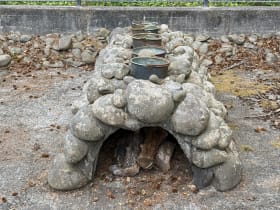
Lewis and Clark Salt Works, Seaside
16 miles away
Most people in Seaside never leave the Promenade, so this small stone ring on a quiet corner goes unnoticed.

Ecola State Park
20 miles away
Ecola State Park drapes over Tillamook Head just north of Cannon Beach, with bluff-top viewpoints over sea stacks, Haystack Rock, and the lonely offshore Tillamook Rock Lighthouse.