
Seaside Aquarium
200 N Prom
Seaside, OR
One of the oldest privately owned aquariums on the West Coast, set in a converted 1920s saltwater bathhouse right on the Prom, where a family of harbor seals still greets you at the door.
The Seaside Aquarium is a small, delightfully old-fashioned aquarium set right on the oceanfront Promenade in Seaside, billed as one of the oldest privately owned aquariums on the West Coast. Inside a building that began life as a 1920s saltwater bathhouse, rows of glass tanks hold the marine life of the Oregon coast: a giant Pacific octopus, wolf eels, rockfish, crabs, and touch tanks of anemones and sea stars. A family of harbor seals greets visitors near the entrance, and buying a tray of fish to feed them is a rite of passage for coast-bound kids.
It is the opposite of a slick modern aquarium, and that is the charm. The building is a century old, the collection is compact, and the staff are close at hand. Behind the scenes, the aquarium also serves as the local first responder for stranded seals, sea lions, and whales along the north Oregon coast, so the small storefront on the Prom does quiet, serious work well beyond its size.
What Travelers Love
- Buying a tray of fish and feeding the harbor seals just inside the door
- The small, old-fashioned scale, where staff are close at hand and nothing feels corporate
- Touch tanks full of anemones, urchins, and sea stars for young hands
- A collection built entirely from Oregon coast species, from a giant Pacific octopus to wolf eels
Worth Knowing
- This is a small, historic aquarium, not a large modern one, so set expectations for its intimate scale
- It is indoors and open nearly year-round, closing only on a few major holidays
- There are no public restrooms on site, so plan around that
- Feeding the seals is a paid extra, and it is a highlight worth budgeting for with kids
Learn about Seaside Aquarium
The story of the Seaside Aquarium
This stretch of the north Oregon coast is the homeland of the Clatsop, a Chinookan people who have lived here since long before recorded history, and in winter a mixed Clatsop and Nehalem village stood near where Seaside sits today. The Clatsop are a living people, and their presence here frames one of the area's most famous episodes. In the winter of 1806, the Lewis and Clark expedition, wintering at Fort Clatsop and out of salt, sent men to the coast beside that village to boil seawater into salt. The journals record that the villagers had been very kind and attentive, helping feed the salt makers through the cold weeks.
The aquarium's building started as something else entirely. It opened in 1924 as a saltwater bathhouse, a natatorium with a heated pool fed by ocean water pumped in through a pipe still visible at the tide line. The Depression closed the baths in the early 1930s, and the building passed through a few other uses before reopening as the Seaside Aquarium in 1937.
It has run as a private, admission-funded aquarium ever since, and by the aquarium's own account, descendants of the original founders remain active in its operations. Remarkably, it still draws seawater for its tanks through the same pipe laid in the 1920s. In the decades since, it also pioneered captive breeding of harbor seals, so the seals you meet at the door today were born on site, several generations along.
Inside the aquarium
The collection is small and focused entirely on the Oregon coast, which gives it a strong sense of place. A giant Pacific octopus holds court in a central tank, and the rows around it hold wolf eels, rockfish, cod, crabs, and other creatures pulled from the local waters. It is compact enough to see in an unhurried visit, and close enough that the animals feel present rather than distant.
The harbor seals are the headliners. A family of them lives near the entrance, and visitors can buy a tray of fish and feed them by hand, a splashy, memorable moment that keeps generations of coast visitors coming back. The touch tanks, stocked with anemones, urchins, and sea stars, do the same job for the smallest visitors, turning a rainy-day stop into hands-on discovery.
The aquarium also carries responsibilities that reach well past its walls. It acts as the local responder for the marine mammal stranding network along the northern Oregon and southern Washington coast, posting signs around resting seal pups on the beach and coordinating the response when whales, seals, or sea lions strand. A visit supports that work.
Wildlife of the Seaside coast
Beyond the tanks, the Seaside shoreline is its own wildlife show. Harbor seals pup along this coast through the warmer months, and the aquarium regularly reminds beachgoers to give resting pups plenty of space and never to touch them, since a mother is usually nearby.
Gray whales pass offshore on their long migrations, most visible around midwinter and again in early spring, and a group of them lingers to feed near the Oregon coast through much of the year. The clifftops and headlands south of town are good vantage points when the whales are running.
The nearby Necanicum Estuary draws river otters, ospreys, blue herons, and shorebirds, and the rocky tide pools hold green anemones, purple urchins, and orange sea stars. Bald eagles and even Roosevelt elk turn up near the shore, a reminder that the wild edge of Oregon starts right at the end of the Prom.
Season by season
Because the aquarium is indoors, it works in any weather and stays open nearly year-round, closing only for a handful of major holidays. That makes it a reliable stop on a gray or stormy coast day, when the beach is too wild for lingering.
Summer is the busiest season, when Seaside fills with beachgoers and the Prom hums with visitors, and the aquarium runs extra beachfront programs on some days. Spring brings whale migration and the start of harbor seal pupping along the shore.
Fall and winter turn quieter and wetter, with dramatic storm-watching from the Promenade and the winter stretch of the gray whale migration offshore. Whatever the season, the seals are always in, which is a large part of why families keep coming back.
Closest Boutels
The closest Boutel™ stays, so you can turn this stop into an overnight. Each is a place we chose through independent editorial review, never a paid placement.
Details
Seaside, OR
Frequently asked questions
What is the Seaside Aquarium?
It is a small, historic aquarium right on the Seaside Promenade, one of the oldest on the West Coast, dating to the 1930s. Old-fashioned and compact rather than large and modern, it has a nostalgic charm and a personal, hands-on feel. Its most famous feature is the group of harbor seals near the entrance, and it offers a quick, family-friendly stop, especially handy on a rainy coast day.
Can you feed the seals at the Seaside Aquarium?
Yes, and it is the signature experience. For a small extra cost you can buy a tray of fish to toss to the resident harbor seals, who bark, clap, and put on a show for a treat, to the delight of kids and adults alike. Be prepared to get splashed, wash your hands well afterward since the fish is separate from admission, and lift small children so they can safely reach to feed.
What else is there to see at the Seaside Aquarium?
Beyond the seals, the aquarium has tanks of local sea life and a touch tank where kids can gently meet tide-pool creatures like sea stars and anemones, plus displays about the animals of the Oregon coast. It is small enough to see in well under an hour, which makes it easy to combine with a walk on the neighboring Promenade and beach for a fuller Seaside outing.
Is the Seaside Aquarium worth visiting?
For families, especially with young children, and for a short, low-cost, rainy-day activity, many visitors find the seal feeding and touch tank a fun, memorable experience. It is worth setting expectations that this is a small, vintage aquarium rather than a large modern facility. If you are hoping for underwater tunnels and big exhibits, the larger Oregon Coast Aquarium down in Newport is the grander option.
When is the best time to visit the Seaside Aquarium?
Being indoors, it is an ideal stop when coastal weather turns wet or windy, and any season works. It is busiest on summer days and holiday weekends, so weekday or off-peak visits are calmer, and scheduled seal feeding times are fun to catch. Checking current hours before you go is wise, and its spot on the Prom makes it easy to pair with a beach stroll.
Nearby
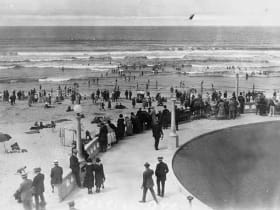
Seaside Promenade and Turnaround
0.3 miles away
Seaside's mile-and-a-half oceanfront boardwalk, the classic Oregon coast Prom, running along the wide Pacific beach to a landmark Turnaround circle where a Lewis and Clark statue marks the end of thei...
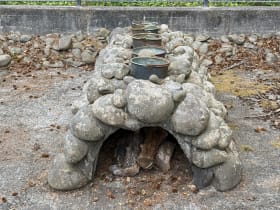
Lewis and Clark Salt Works, Seaside
0.8 miles away
Most people in Seaside never leave the Promenade, so this small stone ring on a quiet corner goes unnoticed.

Gearhart Beach
2.1 miles away
A wide, dune-backed public beach on the quiet north Oregon coast, just above Seaside.

Ecola State Park
5.6 miles away
Ecola State Park drapes over Tillamook Head just north of Cannon Beach, with bluff-top viewpoints over sea stacks, Haystack Rock, and the lonely offshore Tillamook Rock Lighthouse.

Haystack Rock
7.9 miles away
One of the tallest sea stacks you can walk right up to at low tide, ringed by tide pools and topped by nesting puffins, standing off the beach at Cannon Beach.
Fort Stevens State Park
14 miles away
At the wild northwest tip of Oregon where the Columbia River meets the Pacific, Fort Stevens stacks a Civil War through World War II coastal fort, the rusted beach wreck of the Peter Iredale, and warm...
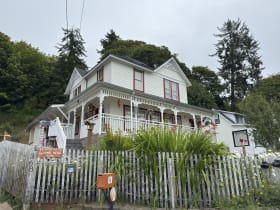
The Goonies House
15 miles away
The hillside Victorian in Astoria that played Mikey's house in the 1985 movie The Goonies still stands above the Columbia River, at the top of its long gravel drive in the oldest town in the Pacific N...
Oswald West State Park
16 miles away
A rainforest-backed cove on the north Oregon coast, named for the governor who saved the state's beaches for the public.
South Jetty of the Columbia River
18 miles away
Drive to the end of Clatsop Spit in Fort Stevens State Park, near Hammond west of Astoria, to reach the South Jetty, where the mighty Columbia River pours into the Pacific across the Graveyard of the...
Neahkahnie Mountain Summit
18 miles away
The summit view from Neahkahnie Mountain is one of the best non-alpine lookouts on the Oregon coast: Manzanita, Nehalem Bay, Tillamook Bay, and the horizon of the Pacific all at once.

Manzanita Beach
19 miles away
Seven miles of wide, uncrowded sand curving south from Manzanita beneath Neahkahnie Mountain, one of the highest headlands on the Oregon coast.