
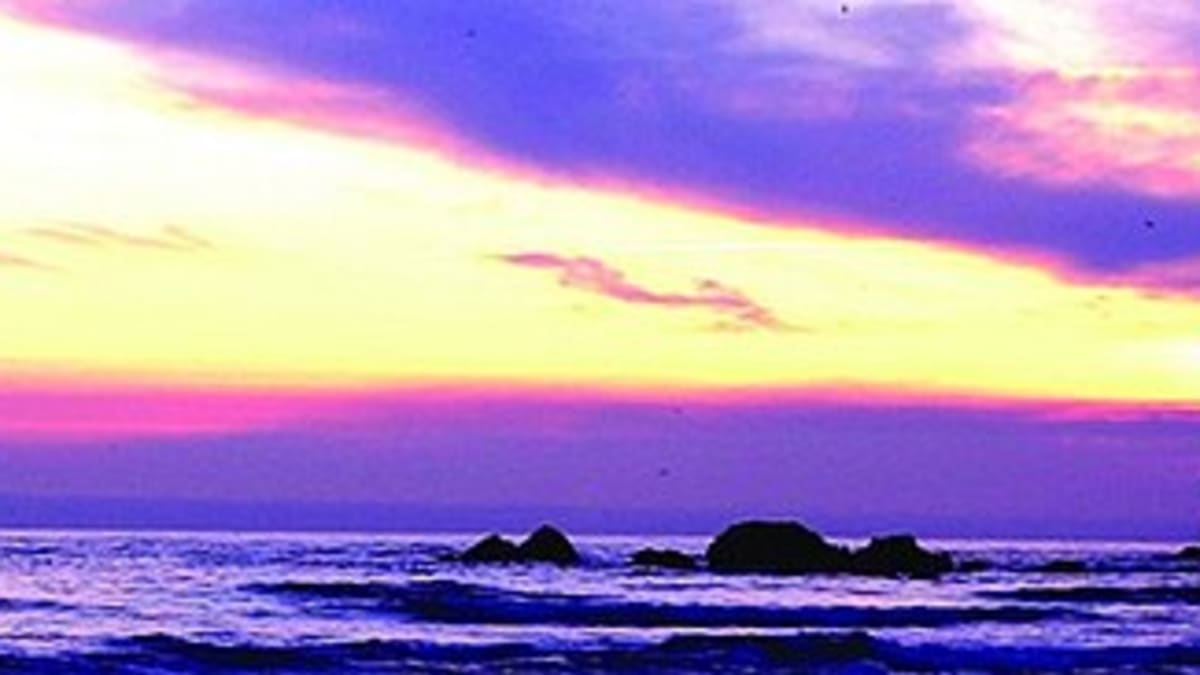
Haystack Rock
Cannon Beach, near S Hemlock St
Cannon Beach, OR
One of the tallest sea stacks you can walk right up to at low tide, ringed by tide pools and topped by nesting puffins, standing off the beach at Cannon Beach.
Haystack Rock is the sea stack nearly everyone pictures when they picture the Oregon coast: a great humped monolith of dark basalt, 235 feet tall, standing just off the beach at Cannon Beach with a scatter of smaller rocks, the Needles, beside it. Unlike most of the coast's rocks, which sit far offshore, this one rises right at the edge of the sand, so at low tide you can walk straight out across the flats and stand at its base.
That closeness is what makes it special. Ringed around its foot is one of Oregon's richest and most accessible tide-pool gardens, and on its green upper ledges nest tufted puffins and other seabirds. It is both a postcard landmark and a living piece of wild coast, protected top to bottom, where a family can spend a morning meeting sea stars and watching puffins wheel overhead.
What Travelers Love
- Walking right out to the base of a 235-foot sea stack at low tide, something you can do at very few of Oregon's rocks
- Tide pools full of orange sea stars, green anemones, crabs, and other creatures at the foot of the rock
- Tufted puffins nesting on the grassy shoulders of the rock in spring and early summer, the easiest place to see them in the Northwest
- Volunteer interpreters on the beach at low tide who point out the wildlife and answer questions
Worth Knowing
- The rock and its tide pools are only reachable on foot at low tide, so check a tide table and plan your walk around the low water
- The tide-pool area is a protected Marine Garden, so watch your step, keep to the sand between pools, and do not pick up or move the animals
- Above the beach the rock is a national wildlife refuge and climbing on it is not allowed, which also keeps the puffins safe
- There is no shade and the wind can be sharp, so bring a layer even on a sunny day, and watch children near the incoming tide
Learn about Haystack Rock
A remnant of an ancient river of lava
Haystack Rock is far older than the beach it stands on. Around seventeen million years ago, enormous floods of lava poured westward across what is now the inland Northwest, some of it reaching all the way to the coast. There the molten rock cooled into hard basalt, and over the long ages that followed the softer sediments around it wore away while the tough basalt held on. What is left is a sea stack: a lone pillar of ancient rock the ocean has not yet been able to grind down.
The rock's shape, a broad cone with a rounded top, gave it the name Haystack, a name shared by a few other rocks along the coast but claimed most famously by this one. At 235 feet it is one of the tallest sea stacks in the world you can reach on foot, and it anchors the long crescent of Cannon Beach like a natural monument.
The tide pools and the Marine Garden
When the tide pulls back, the base of Haystack Rock becomes one of the best tide-pool grounds on the Oregon coast. In the shallow pools and on the rock's wet lower flanks you can find ochre and purple sea stars, green sea anemones that close around your fingertip, hermit crabs, chitons, limpets, snails, and the occasional nudibranch, all living packed together in the narrow band the tide covers and uncovers twice a day.
Because it is so easy to reach, the area is protected as one of Oregon's Marine Gardens, a place where the animals may be watched but not collected or disturbed. On many low tides, volunteer interpreters from the Haystack Rock Awareness Program set up on the sand to help visitors find creatures, name what they are seeing, and understand how fragile the little world at the rock's feet really is.
Puffins and the seabirds above
Look up from the tide pools in spring or early summer and you may catch the bright orange bill of a tufted puffin among the grass and burrows on the rock's upper shoulders. Haystack Rock is one of the very few places on the West Coast where these comical, hard-to-see seabirds nest close enough to shore to watch from the beach, and it draws birders from far away in the puffin months, roughly April into July.
The puffins share the rock with gulls, cormorants, black oystercatchers, and other seabirds, and above the high-tide line the whole stack is part of the Oregon Islands National Wildlife Refuge. Climbing the rock is forbidden, which protects both the nesting birds and the climbers, and keeps this one crowded ledge of wild coast as busy with life as it has been for ages.
Visiting Haystack Rock
The rock sits toward the south end of Cannon Beach's main strand, an easy walk from the town's shops and from several beach accesses off Hemlock Street. There is no charge to walk the beach, but the tide rules the visit: the tide pools and the base of the rock are only reachable at low water, so look up a tide table before you go and time your walk for the lowest tide of the day.
Dress for wind and wet feet, keep an eye on children near the returning water, and step carefully among the pools, staying on bare sand and rock rather than on the animals. Give yourself a slow hour or two to walk out, meet the tide-pool creatures, watch for puffins, and simply stand at the foot of a rock that has weathered the Pacific for millions of years. It is the kind of place that makes the drive to the coast worth it on its own.
Closest Boutels
The closest Boutel™ stays, so you can turn this stop into an overnight. Each is a place we chose through independent editorial review, never a paid placement.
Details
Cannon Beach, OR
Frequently asked questions
What is Haystack Rock?
Haystack Rock is a towering basalt sea stack rising about 235 feet straight out of the beach at Cannon Beach, one of the most famous and photographed landmarks on the Oregon coast. At low tide you can walk right up to its base across the sand. It is a protected Marine Garden, home to rich tide pools and nesting seabirds, and its dramatic silhouette against the surf and sunset is unforgettable.
Can you see puffins at Haystack Rock?
Yes, and it is one of the easiest places in Oregon to spot colorful tufted puffins. They nest on the rock's grassy upper slopes, typically from around April into July, and can be seen with binoculars from the beach. Cormorants, gulls, and other seabirds nest here too. Volunteers are often on the sand during the season with spotting scopes to help you find the puffins and learn about them.
What can you see in the tide pools at Haystack Rock?
At low tide the rocks around the base reveal wonderful tide pools full of orange and purple sea stars, green anemones, crabs, and other sea life, making it a favorite for families and nature lovers. Because it is a protected Marine Garden, the rule is strictly look but do not touch: do not pry creatures off the rocks, step carefully to avoid crushing life, and leave everything as you found it.
Is it safe to climb or explore Haystack Rock?
You may walk to the base at low tide, but climbing on Haystack Rock is not allowed and is genuinely dangerous, both to protect the fragile wildlife and because the rock is slick and unstable. Respect the roped-off protected areas, keep a close eye on the incoming tide so you are not cut off, watch constantly for sneaker waves, and keep children close on the slippery rocks near the surf.
When is the best time to visit Haystack Rock?
Plan around low tide, which lets you reach the base and explore the tide pools, so check a tide table before you go. Spring and early summer add nesting puffins, while sunset any time of year is spectacular behind the rock. It is a popular spot, so early mornings are quietest for parking in Cannon Beach and for having the tide pools more to yourself. Bring layers for the cool coast.
Nearby

Ecola State Park
2.5 miles away
Ecola State Park drapes over Tillamook Head just north of Cannon Beach, with bluff-top viewpoints over sea stacks, Haystack Rock, and the lonely offshore Tillamook Rock Lighthouse.
Lewis and Clark Salt Works, Seaside
7.1 miles away
Most people in Seaside never leave the Promenade, so this small stone ring on a quiet corner goes unnoticed.
Seaside Promenade and Turnaround
7.6 miles away
Seaside's mile-and-a-half oceanfront boardwalk, the classic Oregon coast Prom, running along the wide Pacific beach to a landmark Turnaround circle where a Lewis and Clark statue marks the end of thei...
Seaside Aquarium
7.9 miles away
The hand-feeding harbor seal experience at Seaside Aquarium is one of the most memorable hands-on wildlife moments kids can have on the Oregon coast - seals come right up to the edge of the pool to ta...
Oswald West State Park
8.5 miles away
A rainforest-backed cove on the north Oregon coast, named for the governor who saved the state's beaches for the public.

Gearhart Beach
9.9 miles away
A wide, dune-backed public beach on the quiet north Oregon coast, just above Seaside.
Neahkahnie Mountain Summit
10 miles away
The summit view from Neahkahnie Mountain is one of the best non-alpine lookouts on the Oregon coast: Manzanita, Nehalem Bay, Tillamook Bay, and the horizon of the Pacific all at once.

Manzanita Beach
12 miles away
Seven miles of wide, uncrowded sand curving south from Manzanita beneath Neahkahnie Mountain, one of the highest headlands on the Oregon coast.
Nehalem Bay State Park
13 miles away
A four-mile sand spit just south of Manzanita, off US-101, sealing quiet Nehalem Bay off from the open Pacific.