
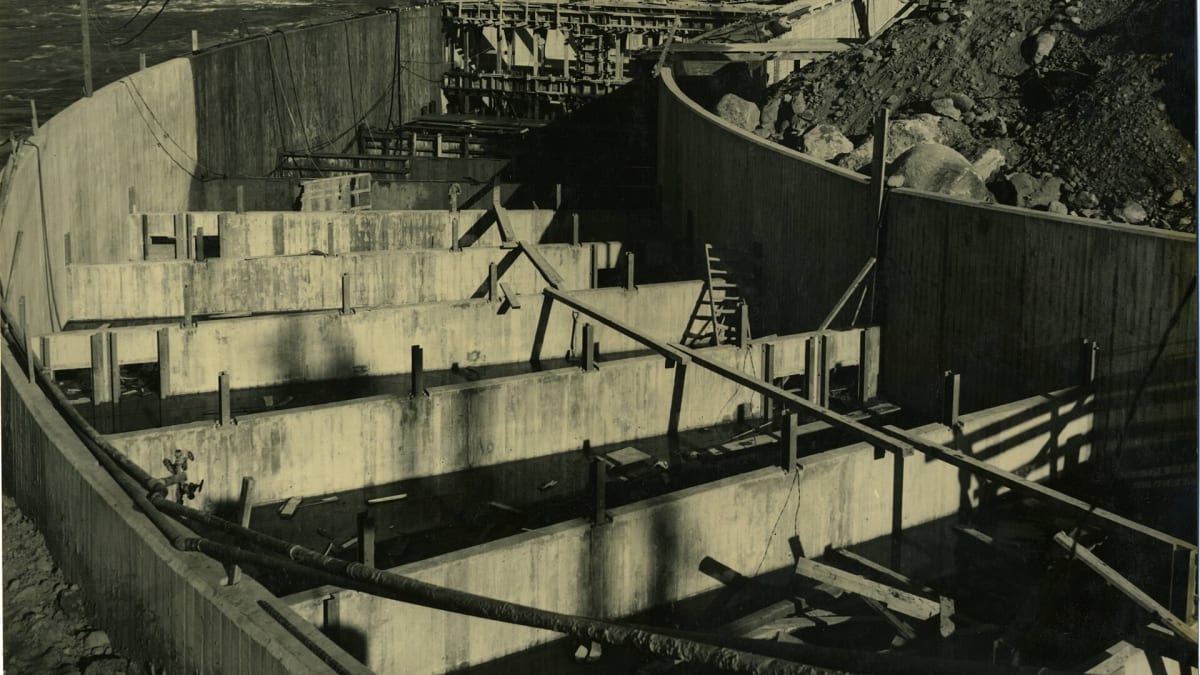
Bonneville Dam Fish Ladder
Bonneville Lock and Dam Visitor Center
Cascade Locks, OR
Press your face to an underwater window and watch wild salmon, steelhead, and giant sturgeon shoulder their way up the Columbia, one of the best free wildlife shows in the Northwest.
At Bonneville Dam you can do something that sounds impossible: sit in a quiet, dim room below the waterline and watch wild fish climb a river. Big windows look straight into the fish ladder, the stepped concrete channel that lets migrating fish get past the dam, and through the glass a steady parade of chinook and coho salmon, steelhead, shad, and prehistoric-looking lamprey works upstream just inches away.
It is one of the great free wildlife experiences in the Pacific Northwest, and a front-row seat to one of the continent's epic journeys. These fish are on their way from the ocean back to the mountain streams where they hatched, and Bonneville is the moment you get to look them in the eye.
What Travelers Love
- Watching wild salmon and steelhead climb the ladder through a big underwater window
- The chance to see enormous white sturgeon and eel-like Pacific lamprey up close
- Meeting Herman the Sturgeon in his pond at the nearby fish hatchery
- A free, all-ages stop with the whole Columbia Gorge around it
Worth Knowing
- It is free to visit, and the underwater viewing rooms let you watch fish in any weather
- Fish move upriver year-round, but the big salmon runs peak in late summer and fall, roughly September and October, when hundreds pass in a day
- There are visitor centers on both the Oregon and Washington sides of the dam; the fish counting and the hatchery with Herman are easy to pair
- It is an active federal dam, so allow a little time for security and follow posted rules
Learn about Bonneville Dam Fish Ladder
The dam and the fish ladders
Bonneville Lock and Dam was the first great dam built across the lower Columbia, raised during the Great Depression in the 1930s as a public works project and a source of hydropower. From the start, engineers knew the dam would block the river's legendary salmon runs, so they built fish ladders alongside it: long, stepped channels of pooled water that let fish climb past the dam a short leap at a time.
The underwater viewing rooms are built right into those ladders. Behind the glass, the fish that just swam up from the Pacific pass in a slow, determined stream, and at the peak of the runs the count can top a thousand fish in a single day. Biologists still tally every fish that passes, run by run, species by species, which is how the health of the Columbia's salmon is measured.
What you will see through the glass
The stars are the salmon and steelhead: chinook (the largest, also called king), coho, sockeye, and ocean-bright steelhead, each returning in its own season. Alongside them come schools of American shad and, most startling of all, huge white sturgeon, armored, whiskered fish that can grow well over ten feet and live for many decades.
Look closely at the rocks and glass and you may spot Pacific lamprey, ancient jawless fish that climb the ladder by suction, a species central to the region's tribes and now the focus of restoration efforts. Every one of these animals is mid-journey, which is part of what makes the window so mesmerizing.
The river, the tribes, and the runs
Long before the dam, this stretch of the Columbia was one of the greatest fishing places on earth. For thousands of years the Columbia River tribes gathered at the rapids and falls of the Gorge to catch salmon, and salmon remain central to their cultures, treaty rights, and life today. The runs you watch at the window are the same runs their families have depended on for countless generations.
The salmon's story is not a simple one. Dams, harvest, and habitat loss reduced runs that were once almost unimaginably large, and today hatcheries, ladders, and restoration work all aim to keep the fish coming. Watching them climb at Bonneville is both a wonder and a reminder of what it takes to keep a river alive.
Herman the Sturgeon and the hatchery
A short drive from the viewing windows, the Bonneville Fish Hatchery is a pretty, park-like place with ponds full of trout and sturgeon and interpretive displays about the fish. Its most famous resident is Herman the Sturgeon, a white sturgeon well over ten feet long who cruises a viewing pond with a window of his own, delighting generations of visitors.
The hatchery grounds, with their old stonework, gardens, and rearing ponds, make an easy and free companion to the dam. Together, the ladder window and the hatchery tell the whole arc of the salmon's life, from egg to ocean and back.
When to go
Something is usually moving through the ladder in every season, so a visit pays off any time of year, and the indoor viewing rooms make it a fine rainy-day or hot-day stop. For the biggest show, aim for the fall chinook and coho runs in September and October, when the windows can be crowded with fish.
Spring and early summer bring spring chinook, sockeye, and summer steelhead, plus the shad in early summer, so there is almost always something to see. Pair a visit with a hike or a drive in the surrounding Gorge and you have one of the most rewarding, low-cost days in the region.
Closest Boutels
The closest Boutel™ stays, so you can turn this stop into an overnight. Each is a place we chose through independent editorial review, never a paid placement.
Details
Cascade Locks, OR
Frequently asked questions
What can you see at the Bonneville Dam fish ladder?
The highlight is the underwater viewing windows, where you can look right into the fish ladder and watch salmon, steelhead, sturgeon, shad, and eel-like Pacific lamprey work their way upstream past the dam. It is a rare, close look at a wild migration in progress, and it is free to visit. The Oregon side also has a fish hatchery with more to see.
When is the best time to see salmon at Bonneville Dam?
Late summer into fall is prime time, roughly August through October and often peaking in September, when large numbers of adult Chinook and coho salmon and steelhead push up the Columbia and climb the ladder. You can see fish at other times of year too, but that fall run is when the windows are busiest with big, bright migrating salmon.
Who is Herman the Sturgeon?
Herman is the beloved star of the Sturgeon Viewing Center at the Bonneville hatchery on the Oregon side, a white sturgeon well over nine feet long and many decades old. Sturgeon are living relics from the age of the dinosaurs, and getting to watch one this size glide past the glass is a highlight for kids and adults alike.
Is Bonneville Dam a good stop for families, and is it accessible?
Yes on both counts. It is free, engaging, and largely indoors at the viewing windows, which makes it a great rainy-day or all-ages stop, and the fish, the big sturgeon, and the working dam hold kids' attention. The visitor facilities are designed to be accessible, with elevators down to the underwater windows and level paths around the grounds.
What else is there to do around Bonneville Dam?
The dam sits in the heart of the Columbia River Gorge, so it pairs naturally with other Gorge stops. The historic Bridge of the Gods and the town of Cascade Locks are just upriver, and famous waterfalls like Multnomah Falls lie a short drive west. Between the fish ladder, the hatchery, and the scenery, it is easy to build a half-day around it.
Nearby

Eagle Creek Trail
1.1 miles away
A legendary Columbia Gorge waterfall hike blasted into sheer basalt cliffs in 1915, stringing together fall after fall, including the emerald pool of Punch Bowl Falls and Tunnel Falls, where the trail...

Bridge of the Gods and Cascade Locks
2.3 miles away
A slender steel toll bridge across the Columbia River in the heart of the Gorge, named for a Native American legend of a natural stone land bridge, at the historic town of Cascade Locks where steamboa...
Beacon Rock
4.0 miles away
Beacon Rock is right off SR-14 in Beacon Rock State Park, about 35 miles east of Vancouver.
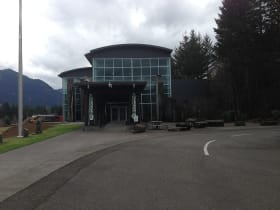
Columbia Gorge Interpretive Center
4.4 miles away
The Columbia Gorge Interpretive Center Museum in Stevenson documents the natural and human history of the gorge, from Ice Age floods through Native American cultures, the Lewis and Clark Expedition, a...

Oneonta Gorge
7.3 miles away
The cliffs of Oneonta Gorge are close enough together that a full-grown Douglas fir could not fall across the gap in the narrowest section.

Multnomah Falls
9.7 miles away
Multnomah Falls drops 620 feet in two tiers, the tallest waterfall in Oregon, with the arched Benson Bridge spanning the gap between them.
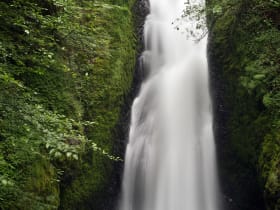
Bridal Veil Falls
13 miles away
Most drivers on the Historic Columbia River Highway stop at Multnomah and skip Bridal Veil three miles back, even though the walk is the same length and the falls are easily as dramatic.
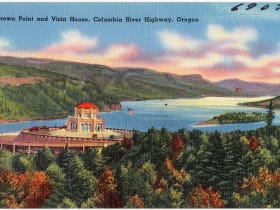
Vista House at Crown Point
16 miles away
Most Gorge visitors are aimed at the waterfalls and treat Crown Point as a drive-by.