

Columbia Gorge Interpretive Center
990 SW Rock Creek Dr
Stevenson, WA
The whole story of the Columbia River Gorge under one roof, from the Ice Age floods to the fishing peoples to the steamboats, with a river view to match.
The Columbia Gorge Interpretive Center is the place to understand everything you are looking at in the Columbia River Gorge. In one building it lays out the geologic forces that carved this canyon, the Native peoples who made it one of the great gathering and fishing places of North America, and the waves of newcomers who logged, fished, and steamed their way through it.
It is a real museum, not just a viewpoint, and its setting on a bluff at Stevenson gives it a gorge view to match its subject. For anyone driving the Washington side of the gorge, it turns a scenic corridor into a story you can follow.
What Travelers Love
- A clear, well-told overview of how the gorge was formed and who has lived in it
- The towering replica fishwheel, a machine that once scooped salmon from the river by the ton
- Exhibits on the Native peoples who fished and traded here for thousands of years
- Big windows and a setting with a genuine gorge view over the Columbia
Worth Knowing
- It is an indoor museum, which makes it a perfect stop on a rainy or windy gorge day
- The center keeps regular hours and charges admission, so check before a late-day visit
- It pairs well with the outdoor gorge sights nearby, so leave time for both
- Some exhibits touch on hard history, including the loss of Native fishing sites to dams
Learn about Columbia Gorge Interpretive Center
How the gorge was carved
The gorge is the only near-sea-level route through the Cascade Range, and it was cut over millions of years by the Columbia River slicing through layer after layer of volcanic basalt. The finishing touches came in the last Ice Age, when the catastrophic Missoula floods roared through and scoured the canyon walls, leaving the sheer cliffs and hanging waterfalls that define it.
The center walks visitors through that deep time, so that the waterfalls, the cliffs, and the strange shapes of the gorge stop being just scenery and start reading as the record of fire, water, and unimaginable floods.
A gathering place on the river
For thousands of years the gorge was one of the most important places on the continent, its rapids and falls famous salmon fisheries where many peoples met to fish, trade, and gather. Chinookan-speaking communities lived along the lower river, and the exhibits center their long presence and their fishing culture.
One local story explains the landscape itself. The Bridge of the Gods, a natural land bridge that Native tradition says once spanned the river, is remembered in legend and turns out to have a basis in geology, a massive landslide that briefly dammed the Columbia. The modern steel bridge nearby borrows the old name.
Fishwheels, steamboats, and settlers
The center's signature object is a soaring replica of a fishwheel, a rotating scoop that industrial-era operators used to lift salmon out of the river in staggering numbers before the wheels were banned. It stands as both a feat of engineering and a symbol of how quickly the newcomers pressed the river's abundance.
Other exhibits trace the steamboat and railroad era, the logging that built the gorge towns, and the everyday life of the people who settled here, including a few genuinely eccentric collections that give the museum its local flavor.
Making the most of a gorge day
Because it is indoors, the center is an ideal anchor for a day in the gorge, which is famous for sudden wind and rain. Pair it with the outdoor sights just up and down the river, from Beacon Rock's summit trail to the fish ladder at Bonneville Dam.
The gorge is dramatic in every season, green and rushing with waterfalls in spring, warm and windy in summer, and quiet under low cloud in winter. The center's story holds up whatever the weather is doing outside its windows.
Closest Boutels
The closest Boutel™ stays, so you can turn this stop into an overnight. Each is a place we chose through independent editorial review, never a paid placement.
Details
Stevenson, WA
Frequently asked questions
What is the Columbia Gorge Interpretive Center?
The Columbia Gorge Interpretive Center, in the town of Stevenson in southwestern Washington, is a museum dedicated to the natural and human history of the spectacular Columbia River Gorge. Overlooking the gorge, the center offers exhibits on the region's dramatic geology and the Ice Age floods that shaped it, the Native peoples who have lived along the river for thousands of years, the era of explorers, settlers, and the fishing and logging industries, and the natural environment. Featuring artifacts, a large fishwheel, and engaging displays, the Columbia Gorge Interpretive Center provides fascinating context on this remarkable landscape, making it a rewarding stop for understanding the history and beauty of the Columbia River Gorge.
What can you see at the Columbia Gorge Interpretive Center?
You can explore exhibits on the geology of the Columbia River Gorge and the cataclysmic Ice Age floods that carved it, the history and culture of the Native peoples of the region, the arrival of explorers and settlers, the fishing, logging, and steamboat eras, and the natural history of the gorge, along with artifacts, a large historic fishwheel, a collection of rosaries, and views of the gorge. The engaging displays bring the region's story to life. With its exhibits on the geology, Native history, and human heritage of the Columbia River Gorge, the interpretive center offers an educational and enriching stop in southwestern Washington.
When is the best time to visit the Columbia Gorge Interpretive Center?
As an indoor museum, the Columbia Gorge Interpretive Center is enjoyable year-round and a great option in any weather, including a good choice on a rainy gorge day. Weekdays and mornings tend to be less crowded. Checking current hours before you go is wise, and allowing an hour or two lets you enjoy the exhibits. It pairs well with exploring the gorge's outdoor attractions on a nice day. The indoor setting means almost any time works, making the Columbia Gorge Interpretive Center a reliable and educational stop year-round in the Columbia River Gorge of southwestern Washington.
Is the Columbia Gorge Interpretive Center good for families?
Yes, the Columbia Gorge Interpretive Center is a good family stop, with exhibits and artifacts that engage children and teach them about the gorge's geology, the Ice Age floods, Native cultures, and the region's history in an accessible way, along with intriguing items like the large fishwheel. The manageable size makes it easy to enjoy with kids. It provides helpful context for appreciating the gorge's dramatic scenery. With its engaging exhibits and educational focus, the Columbia Gorge Interpretive Center offers an enriching family-friendly stop that enhances a visit to the Columbia River Gorge in southwestern Washington.
What is near the Columbia Gorge Interpretive Center?
The Columbia Gorge Interpretive Center is in Stevenson in southwestern Washington, near the iconic Beacon Rock, the many waterfalls and trails of the Columbia River Gorge, the Bonneville Dam, and within reach of Portland, Oregon, across the river and the gorge's Washington and Oregon attractions. That makes the Columbia Gorge Interpretive Center an educational stop to combine with Beacon Rock, the gorge's scenery and waterfalls, and the other attractions of the Columbia River Gorge on a visit to Washington.
Nearby

Bridge of the Gods and Cascade Locks
2.7 miles away
A slender steel toll bridge across the Columbia River in the heart of the Gorge, named for a Native American legend of a natural stone land bridge, at the historic town of Cascade Locks where steamboa...

Bonneville Dam Fish Ladder
4.4 miles away
The underwater viewing windows are the draw: floor-to-ceiling glass with salmon and steelhead swimming past at eye level. During fall Chinook season, the volume of fish can be extraordinary.

Eagle Creek Trail
4.5 miles away
A legendary Columbia Gorge waterfall hike blasted into sheer basalt cliffs in 1915, stringing together fall after fall, including the emerald pool of Punch Bowl Falls and Tunnel Falls, where the trail...
Beacon Rock
7.7 miles away
Beacon Rock is right off SR-14 in Beacon Rock State Park, about 35 miles east of Vancouver.

Oneonta Gorge
11 miles away
The cliffs of Oneonta Gorge are close enough together that a full-grown Douglas fir could not fall across the gap in the narrowest section.

Multnomah Falls
14 miles away
Multnomah Falls drops 620 feet in two tiers, the tallest waterfall in Oregon, with the arched Benson Bridge spanning the gap between them.
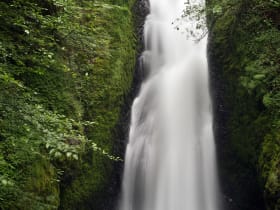
Bridal Veil Falls
17 miles away
Most drivers on the Historic Columbia River Highway stop at Multnomah and skip Bridal Veil three miles back, even though the walk is the same length and the falls are easily as dramatic.