
Walnut Canyon National Monument
10 Forest Service Rd 622, Flagstaff, AZ
Flagstaff, AZ
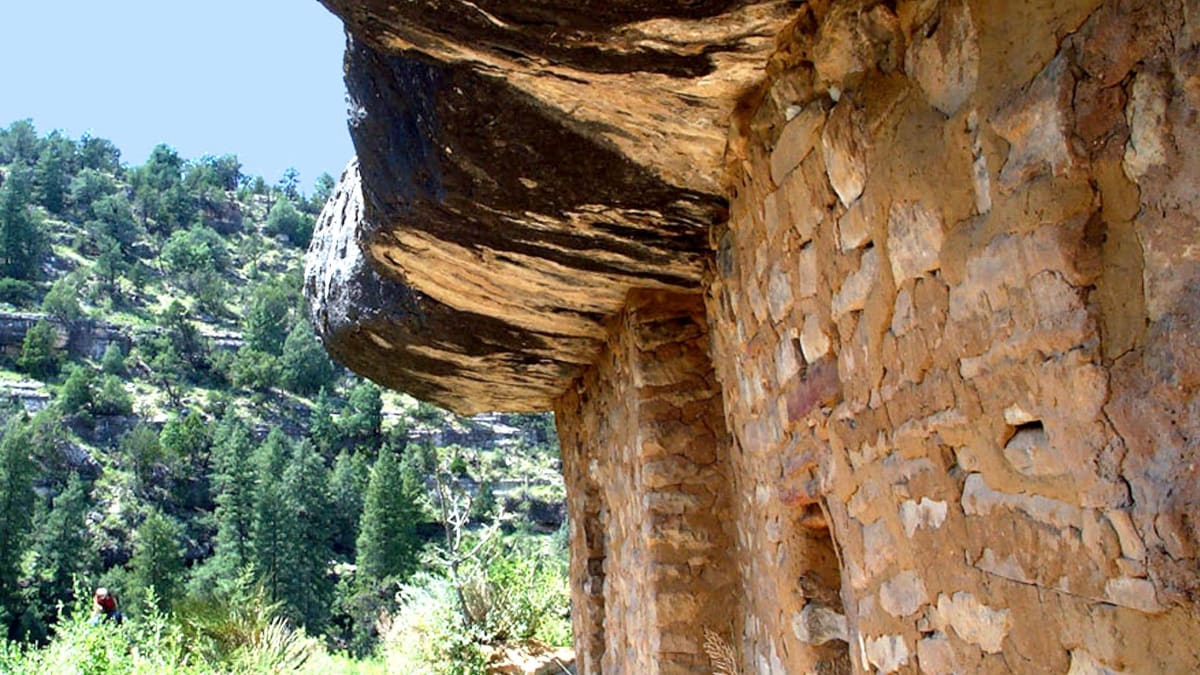
Cliff dwellings tucked under limestone ledges in a deep, forested canyon, where you can walk the same ledge paths the ancestral Sinagua used seven centuries ago.
Walnut Canyon National Monument protects one of the most intimate ancient sites in Arizona, a deep limestone canyon whose walls are lined with the cliff dwellings of the ancestral Sinagua people. Between roughly 1100 and 1250, families built small stone rooms under the natural overhangs of the canyon, tucking a whole community into the ledges, and a trail today lets visitors walk right past the doorways they left behind.
The canyon itself is a striking place, a gorge cut hundreds of feet deep through pale bands of limestone, with a ribbon of forest and creek at the bottom. What makes it feel so alive is the Island Trail, which descends from the rim onto a peninsula of rock ringed by dwellings, so you pass room after room at close range, ducking under the same overhangs and treading the same ledges that families used more than seven hundred years ago.
What Travelers Love
- Walking the Island Trail down among the actual cliff dwelling rooms
- The dramatic view into the deep, forested canyon from the rim
- Stepping into the cool, shaded ledges where a whole community once lived
- The mix of high desert and pine forest, unusual in the same short walk
Worth Knowing
- The Island Trail descends steeply and climbs back up at high elevation, so pace yourself and bring water
- This is an ancestral site sacred to living tribes; do not touch the walls or remove anything, and stay on the trail
- At nearly 7,000 feet the canyon can be cold, snowy, or icy in winter, so check conditions
- Summer afternoons can bring thunderstorms, so start early and watch the sky
Learn about Walnut Canyon National Monument
The Sinagua of the canyon
The people who lived in Walnut Canyon were the Sinagua, an ancestral Puebloan culture whose name comes from Spanish words meaning without water, for the dry high country they farmed. They settled the canyon around the year 1100, building their homes into the natural alcoves formed where softer rock had eroded out beneath harder limestone ledges. They grew corn, beans, and squash on the rim and in the canyon, gathered the wild plants of the forest, and traded across the wider Southwest.
The canyon was well chosen. The south-facing ledges caught the winter sun and stayed warmer, the overhangs gave shelter from weather, and the varied slopes, from desert-like exposures to shaded pine forest, offered an unusual range of plants and animals within a short distance. By around 1250 the Sinagua had left Walnut Canyon, part of the broad movement of ancestral peoples across the region, and their descendants live on today, connected to the Hopi and to other Puebloan and regional tribes who regard the canyon as an ancestral home.
Walking the Island Trail
The heart of a visit is the Island Trail, a loop that drops steeply from the rim, by a long stair, onto a rock peninsula, or island, that the canyon's creek nearly wraps around. The trail circles this island past dozens of cliff dwelling rooms built into the ledges on both sides, letting you look directly into the small stone chambers, notice the soot still darkening some ceilings, and imagine the daily life once lived here.
It is a moderately strenuous walk, descending and then climbing back up a good many stairs at nearly seven thousand feet of elevation, so it deserves a steady pace. For those who prefer an easier route, the Rim Trail runs along the top with overlooks into the canyon and a couple of surface sites. Either way, the sensation of walking the same narrow ledges that families once used, with the forested canyon dropping away below, is what stays with visitors long after.
A canyon of many worlds
Walnut Canyon is a place where several ecosystems meet in a small space. The cool, shaded north-facing slopes hold Douglas fir and ponderosa pine, more like a mountain forest, while the sunnier south-facing walls support pinyon, juniper, and desert plants like agave and cactus. This diversity, packed into a single canyon, gave the Sinagua a wide range of food and materials, and it makes the canyon unusually rich in plant and animal life today.
The wildlife reflects that variety. Mule deer and elk move through the forest, and the tassel-eared Abert's squirrel bounds among the pines. Ringtails, a shy relative of the raccoon, den in the canyon's rocks, and rock squirrels and a wealth of birds, from canyon wrens to hawks, fill the gorge. The walnut trees that give the canyon its name grow along the creek at the bottom, part of a lush strip of streamside greenery threading the pale rock.
Season by season
Because Walnut Canyon sits at high elevation, its seasons are more like a mountain's than a desert's. Summer is the busiest time, warm and green, though afternoon thunderstorms roll in during the monsoon, so an early start is wise. The days are pleasant and the canyon at its most alive.
Fall brings crisp air and turning color along the creek, and thinner crowds. Winter is cold and can be snowy, with the Island Trail's stairs turning icy, so sure footing and warm layers matter, and the snow-dusted canyon is quietly beautiful. Spring is mild and lovely, with wildflowers on the rim. In any season, the combination of ancient dwellings and dramatic forested canyon makes Walnut Canyon one of the most rewarding short visits near Flagstaff.
Closest Boutels
The closest Boutel™ stays, so you can turn this stop into an overnight. Each is a place we chose through independent editorial review, never a paid placement.
Lantern Light Inn & Wedding Gardens
Boutel+3085 W State Rte 89A, Sedona, AZ
27 miles away|Learn More ›
The Iron Horse Inn
Boutel1034 N Main St, Cottonwood, AZ 86326, Cottonwood, AZ
41 miles away|Learn More ›
Details
Flagstaff, AZ
Frequently asked questions
What is Walnut Canyon National Monument?
Walnut Canyon National Monument, just east of Flagstaff in northern Arizona, preserves remarkable ancestral Puebloan cliff dwellings tucked into the limestone walls of a beautiful, forested canyon. Around eight hundred years ago, the Sinagua people built their homes in the natural alcoves along the canyon's ledges, and today visitors can walk trails that pass right by these ancient dwellings. With its dramatic canyon scenery, well-preserved cliff homes, and cool pine setting, the monument offers a striking and intimate encounter with the region's deep Native history.
What is the Island Trail at Walnut Canyon?
The Island Trail is the signature hike at Walnut Canyon, a paved loop of about a mile that descends into the canyon and winds right past numerous cliff dwellings, letting you peer into the ancient rooms up close. It is spectacular but strenuous, descending and then climbing back up around two hundred forty steps at high elevation, which can be tiring, especially for those not used to the altitude. Take your time, rest as needed, and carry water. The easier Rim Trail offers overlooks without the steep descent.
What safety and health tips apply at Walnut Canyon?
The Island Trail's many steps and high elevation, around seven thousand feet, make the climb back up genuinely strenuous, so pace yourself, rest often, and carry water, and those with heart or breathing conditions should consider the gentler Rim Trail instead. Watch your footing on the steps and stay on the trail near drop-offs. Do not touch or climb on the fragile dwellings. Weather can change quickly at altitude, so bring layers and check conditions, avoiding the trail if it is icy.
When is the best time to visit Walnut Canyon National Monument?
Late spring through fall offers the most pleasant weather for hiking the trails at this cool, high elevation, with summer comfortable compared to the lower desert but bringing possible afternoon storms. Winter can bring snow and ice that make the steep Island Trail hazardous or closed, so checking conditions is essential in the colder months. Mornings are peaceful and cooler. The milder months are ideal for comfortably enjoying the cliff dwellings and canyon scenery on the trails.
What is near Walnut Canyon National Monument?
The monument is just outside Flagstaff, near Lowell Observatory, the historic downtown, and the volcanic Sunset Crater and Wupatki monuments on their scenic loop, with the San Francisco Peaks and the Grand Canyon within reach. Sedona's red rocks lie to the south. That makes Walnut Canyon an easy and rewarding stop to combine with Flagstaff's attractions and the other national monuments of the region on a northern Arizona road trip rich in nature and Native history.
Nearby

Riordan Mansion State Historic Park
8.5 miles away
Riordan Mansion is a 40-room Arts and Crafts home built in 1904 for two Riordan brothers who ran Flagstaff's lumber empire, connected as a single duplex by a central common room.

Lowell Observatory
9.0 miles away
Lowell Observatory was founded in 1894 by Percival Lowell and is where Clyde Tombaugh discovered Pluto on February 18, 1930. Daytime tours cover the historic dome and 24-inch telescope.
The Arboretum at Flagstaff
12 miles away
The Arboretum at Flagstaff is a 200-acre botanical garden at 7,150 feet with a focus on plants native to the Colorado Plateau.
Sunset Crater Volcano National Monument
13 miles away
Sunset Crater erupted around 1085 CE, blanketing the surrounding ponderosa forest in volcanic ash.
Oak Creek Canyon Overlook
19 miles away
The first overlook on US-89A heading south from Flagstaff into Oak Creek Canyon appears after the switchbacks at 6,400 feet and gives a full view into the canyon before the road descends.
Oak Creek Canyon
19 miles away
Oak Creek Canyon runs from Sedona north to the Mogollon Rim, dropping 3,400 feet in 16 miles.
Historic Route 66, Flagstaff to Winslow
24 miles away
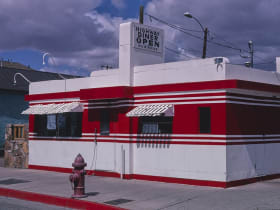
The Route 66 alignment east of Flagstaff passes through Winona (you need to know it) and ends at the famous Standin' on the Corner park in Winslow.
Red Rock Scenic Byway
28 miles away
Red Rock Scenic Byway follows AZ-179 for about seven miles between the Village of Oak Creek and Sedona, threading past some of the most photographed red rock in the Southwest.

Grand Canyon National Park
70 miles away
A mile deep and up to 18 miles wide, revealing nearly two billion years of Earth's history in its walls.