
The Oldest Store Museum area on St. George Street
38 Cathedral Pl
St. Augustine, FL
A restored old-time general store at the head of a narrow colonial street that has been the heart of the nation's oldest city for centuries.
St. George Street is the narrow, car-free colonial heart of St. Augustine, the oldest continuously occupied European settlement in the United States, founded by the Spanish in 1565. Running through the old town between the city gates and the plaza, it has been a main street of this coastal city for more than four centuries, and today it carries visitors past coquina-walled shops, historic homes, and living-history sites.
The Oldest Store Museum recreates a turn-of-the-twentieth-century general store, the kind of place where a small town bought everything from plows and patent medicine to corsets and canned goods. It is one of several attractions that use the label oldest in a city where that word means something, and it anchors a stretch of street where costumed interpreters bring the daily life of early Florida to life among genuinely old buildings.
What Travelers Love
- Stepping into a general store packed with the goods and gadgets of a century ago
- Strolling a narrow, car-free colonial street lined with old coquina and clapboard buildings
- Costumed interpreters demonstrating the trades and daily life of early St. Augustine
- The tight cluster of historic sites, so much within a few blocks' walk
Worth Knowing
- St. George Street is walking only, so park nearby and explore on foot
- It is the busiest part of a busy tourist city; early mornings and off-season are calmer
- Coquina, the local shell stone, is soft, so be gentle with the historic walls
- The colonial quarter sits low near the water, and summer afternoons bring heat and sudden storms
Learn about The Oldest Store Museum area on St. George Street
The oldest city in the country
St. Augustine was founded in 1565 by the Spanish admiral Pedro Menendez de Aviles, decades before the English settled Jamestown or Plymouth, making it the oldest continuously occupied European-established settlement in what became the United States. The land was long home to the Timucua, the Native people who lived along this coast for millennia before the Spanish arrived and whose world was transformed by contact and disease.
For two centuries the city passed between Spanish and, briefly, British rule, weathering pirate raids, sieges, and fires. Its colonial grid, its coquina architecture, and the narrow lanes like St. George Street survive from that era. Walking the street today, you are moving through a plan laid down when Florida was a distant frontier of the Spanish empire.
The Oldest Store Museum
The Oldest Store Museum recreates the C. F. Hamblen general store, an emporium that served St. Augustine around the turn of the twentieth century. In an age before specialized shops and mail-order dominance, the general store was where a community bought nearly everything, and the museum crams its shelves and rafters with thousands of period goods: farm tools, hardware, tonics and remedies, clothing, foods, and the strange contraptions of early consumer life.
Living-history interpreters in period dress help tell the store's story, demonstrating old products and sharing how ordinary people shopped and lived a hundred years ago. It is a small, densely packed window into everyday commerce of the era, a counterpoint to the grand Spanish and Flagler-era history that dominates the rest of the city.
Living history on St. George Street
St. George Street and the blocks around it form St. Augustine's living-history district. The Colonial Quarter and other sites station costumed interpreters who fire muskets, work at a blacksmith's forge, tend colonial gardens, and explain the daily rhythms of a Spanish garrison town. It is history you can hear, smell, and sometimes taste rather than simply read on a plaque.
The street itself is the connective tissue. Closed to cars, lined with a mix of restored colonial structures, reconstructed buildings, shops, and cafes, it lets visitors wander freely between attractions. The famous city gates and the reconstructed oldest wooden schoolhouse sit at one end, and the plaza and cathedral at the other, so a single walk strings together the layers of four centuries.
Coquina, the city's own stone
Much of old St. Augustine, including the mighty Castillo de San Marcos a few blocks away, was built from coquina, a soft local stone made of countless tiny shells cemented together over time. Quarried from Anastasia Island, coquina was easy to cut when fresh and hardened as it dried in the air. Its most famous property is that it is spongy rather than brittle, so cannonballs sank into the fort's walls instead of shattering them.
You can see coquina throughout the historic district, in walls, foundations, and buildings along and near St. George Street. Understanding the stone helps explain why so much of this colonial city has survived sieges, storms, and centuries. It is a distinctly Florida material, born of the same shell beaches that line the coast, quite literally the ground the old city was built from.
Closest Boutels
The closest Boutel™ stays, so you can turn this stop into an overnight. Each is a place we chose through independent editorial review, never a paid placement.
Details
St. Augustine, FL
Frequently asked questions
What is the Oldest Store Museum area on St. George Street?
The Oldest Store Museum area on St. George Street, in historic St. Augustine, Florida, centers on a charming living-history museum recreating an early-twentieth-century general store, located along the city's beloved historic pedestrian street. St. George Street is the heart of old St. Augustine, a lively brick-paved pedestrian way lined with historic buildings, shops, restaurants, and attractions, and the Oldest Store Museum recreates a old-time general store packed with thousands of authentic period goods, with costumed interpreters bringing the era to life. Together they offer history, shopping, and charm in the nation's oldest city. With its historic store museum and pedestrian street, the area offers a delightful destination in Florida.
What can you do at the Oldest Store Museum area on St. George Street?
You can tour the Oldest Store Museum to see a recreated early-twentieth-century general store packed with authentic period goods and meet costumed interpreters, then explore the historic St. George Street pedestrian way lined with shops, restaurants, historic buildings, and attractions in the heart of old St. Augustine. The old-time store museum, the historic street, and the shopping and dining are the draws, offering a delightful blend of history and browsing. It is a lively, walkable area. With its store museum and historic pedestrian street, the area offers an enjoyable experience in St. Augustine, Florida.
What is St. George Street?
St. George Street is the historic heart of old St. Augustine, Florida, a charming brick-paved pedestrian street closed to cars and lined with centuries-old buildings, shops, restaurants, museums, and attractions, running through the oldest part of the nation's oldest continuously occupied European-founded city. Strolling the lively street, browsing shops, sampling food, and taking in the colonial architecture and history is a quintessential St. Augustine experience. The Oldest Store Museum and other attractions sit along or near it. This atmospheric pedestrian street is central to the charm of exploring historic St. Augustine, Florida.
When is the best time to visit the Oldest Store Museum area on St. George Street?
Fall through spring offers the most comfortable weather for strolling the pedestrian street and enjoying the area, with mild temperatures far more pleasant than the hot, humid summer, when mornings and evenings are best. St. George Street is lively year-round, and St. Augustine's mild winters make it a pleasant off-season stop, especially festive during the holiday lights. Checking current museum hours is wise. For the most comfortable weather to explore the historic street and store museum, aim for fall through spring in St. Augustine, Florida.
What is near the Oldest Store Museum area on St. George Street?
The Oldest Store Museum area on St. George Street is in historic St. Augustine, Florida, near the Castillo de San Marcos, the Lightner Museum and Villa Zorayda Museum, the Bridge of Lions, and the historic downtown. That makes the Oldest Store Museum area a delightful stop to combine with the Castillo de San Marcos, the Bridge of Lions, and the other attractions of historic St. Augustine on a visit to Florida.
Nearby
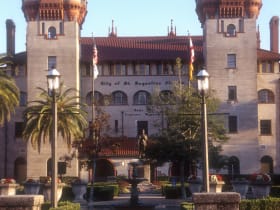
Lightner Museum
0.1 miles away
Everyone photographs Flagler College across the street; fewer step into its sister building.

Villa Zorayda Museum
0.2 miles away
Most visitors walk right past this one on their way to the fort.

Bridge of Lions
0.3 miles away
St. Augustine's most photographed crossing, a graceful 1920s Mediterranean Revival drawbridge over Matanzas Bay, guarded at its downtown end by two marble lions named Faithful and Firm.

Castillo de San Marcos
0.3 miles away
A real fort with a moat, a drawbridge, and cannon is an easy sell. The Castillo de San Marcos on the St.
St. Augustine Alligator Farm Zoological Park
1.5 miles away
Kids remember this one. The Alligator Farm at 999 Anastasia Blvd has been running since 1893 and holds every kind of crocodilian on earth, including a giant saltwater croc named Maximo.
St. Augustine Lighthouse and Maritime Museum
1.5 miles away
A black-and-white spiral brick tower first lit in 1874, rising 165 feet over the nation's oldest port on Anastasia Island.

Vilano Beach
1.9 miles away
Vilano Beach is a wide, easygoing Atlantic beach and retro fishing pier just across the inlet from downtown St. Augustine, one of the finest sunset perches on the coast.

Anastasia State Park
2.8 miles away
Just across the Bridge of Lions from downtown St. Augustine, this barrier-island state park protects four miles of white quartz-sand beach, tall dunes, and the calm Salt Run lagoon for kayaking.