
St. Augustine Alligator Farm Zoological Park
999 Anastasia Blvd
St. Augustine, FL
One of Florida's oldest attractions, the only place on earth where you can see every living species of crocodilian in one visit.
The St. Augustine Alligator Farm opened in 1893 and is one of Florida's oldest continuously operating attractions, born in the era when the railroad first brought northern tourists down to the ancient Spanish city on the coast. What began as a small collection of alligators on Anastasia Island has grown into a serious zoological park, accredited by the Association of Zoos and Aquariums, with a mission built around crocodilian conservation.
Its signature boast is real: this is the only place in the world where you can see all living species of crocodilian, the alligators, crocodiles, caimans, and gharials, in a single visit. Layered over that is one of the great wildlife surprises of the Southeast, a wild wading-bird rookery where herons, egrets, and spoonbills choose to nest directly above the gator swamp, using the reptiles below as a living wall of protection against raccoons and snakes.
What Travelers Love
- Seeing every living species of crocodilian gathered in one park, a claim no other place can make
- The spring wading-bird rookery, when herons, egrets, and roseate spoonbills nest in the trees right above the alligators
- Boardwalks that carry you over swamp full of basking gators
- Maximo, and the legacy of the giant saltwater crocodiles the park has kept over the years
Worth Knowing
- Spring is the peak of the wild rookery, when nesting birds fill the branches over the swamp
- The boardwalks put you close to the water, so keep a firm hand on small children and cameras
- It is a working zoological park with conservation programs, not just a roadside stop, so give yourself time
- Summer days on the island are hot and humid, and afternoon storms are common, so morning visits tend to be more comfortable
Learn about St. Augustine Alligator Farm Zoological Park
How the Alligator Farm began
The park traces its roots to 1893, when its founders set up a small alligator exhibit on Anastasia Island at a time when the Florida East Coast Railway was funneling wealthy visitors to Henry Flagler's grand St. Augustine hotels. Alligators had long fascinated northern travelers, and a place where you could see them up close became a natural draw. Over the following decades the collection grew, moved, and survived fires and hurricanes to become the institution it is today.
For generations the park was famous for its giant saltwater crocodiles, animals brought from the far Pacific that dwarfed anything native to Florida. Gomek, a massive crocodile from Papua New Guinea, drew crowds for years, and after his death the park continued the tradition with other giants. Along the way the farm shifted from a simple curiosity into an accredited zoological park focused on breeding, research, and the survival of crocodilian species that are endangered in the wild.
Every crocodilian on earth
The world holds a limited number of crocodilian species, split among the true crocodiles, the alligators and caimans, and the slender-snouted gharials of South Asia. Seeing them all usually means traveling across continents. The St. Augustine Alligator Farm gathers a representative of every one, from the familiar American alligator to the fish-eating gharial with its long thin jaws and, in the males, the strange bulbous growth on the snout.
Walking the park is a lesson in how varied these ancient reptiles really are. Some are giants, some are barely arm's length. Some hunt fish, some take mammals, some crush shellfish. Because the park breeds and studies them, its keepers can point out the small differences in snout shape, tooth pattern, and behavior that separate one species from the next, differences most visitors never knew existed.
The rookery above the swamp
Each spring something remarkable happens over the park's swamp exhibit. Wild wading birds, great egrets, snowy egrets, tricolored herons, wood storks, and rosy roseate spoonbills, arrive on their own to build nests in the trees directly above the resident alligators. They are not captive. They choose this spot because the gators below deter the raccoons, rat snakes, and other predators that raid nests, so the birds trade a little risk for a great deal of protection.
The result is one of the most accessible wild rookeries in the Southeast. Boardwalks let visitors stand quietly beneath a canopy loud with squabbling chicks and photograph nesting behavior that would normally require a boat and a long lens deep in a marsh. Photographers travel from across the country for it, and the park has become a favorite among naturalists for exactly this reason.
Conservation and the wider mission
Behind the boardwalks, the Alligator Farm functions as a conservation organization. It participates in breeding programs for threatened crocodilians, supports field research, and helps fund efforts to protect wild populations in places where these animals are under pressure from hunting and habitat loss. Some of the species you see here are far rarer in the wild than the abundant American alligator.
That mission gives a visit more weight than a simple photo stop. The keepers and their programs treat these reptiles as ambassadors for animals many people fear and few understand. Seeing a critically endangered gharial or a rare crocodile in good care, and learning why it matters, is part of what has kept the place relevant more than a century after it opened.
Closest Boutels
The closest Boutel™ stays, so you can turn this stop into an overnight. Each is a place we chose through independent editorial review, never a paid placement.
Details
St. Augustine, FL
Frequently asked questions
What is the St. Augustine Alligator Farm Zoological Park?
The St. Augustine Alligator Farm Zoological Park, in the historic city of St. Augustine on Florida's northeast coast, is a historic and beloved zoological park and one of Florida's oldest attractions, famous for its alligators, crocodiles, and remarkable bird rookery. Operating for well over a century, the park is home to alligators and, notably, every living species of crocodilian in the world, along with a spectacular wild wading-bird rookery, other reptiles, exotic animals, a zip line, and educational shows. A classic old-Florida attraction blending history, conservation, and fun, it delights visitors of all ages. With its crocodilians and famous rookery, the St. Augustine Alligator Farm offers a fascinating destination in Florida.
What can you see at the St. Augustine Alligator Farm?
You can see alligators and every living species of crocodilian in the world, an exceptional collection, along with a spectacular wild bird rookery where wading birds nest in the trees over the alligators, plus other reptiles, exotic animals, educational shows, and a zip line over the park. The crocodilians and the famous rookery, especially stunning in nesting season, are the highlights, offering both fun and remarkable wildlife viewing. It is a classic Florida experience. With its crocodilians, rookery, and shows, the St. Augustine Alligator Farm offers an engaging visit in St. Augustine, Florida.
Why is the bird rookery at the Alligator Farm famous?
The bird rookery at the St. Augustine Alligator Farm is famous because wild wading birds, including egrets, herons, spoonbills, and storks, nest in great numbers in the trees directly over the alligator ponds, drawn by the protection the alligators provide from predators. A boardwalk lets visitors and photographers view the nesting birds up close, making it one of the finest and most accessible wild bird rookeries in the country, especially spectacular in spring nesting season. This remarkable natural spectacle draws birdwatchers and photographers from around the world to the St. Augustine Alligator Farm in Florida.
When is the best time to visit the St. Augustine Alligator Farm?
The park is open year-round, though spring is especially rewarding when the wild bird rookery is in full nesting season with birds and chicks in the trees, a highlight for birdwatchers and photographers. Fall through spring offers the most comfortable weather for the largely outdoor park, while summer is hot and humid, so mornings are best. Checking current hours before you go is wise. For the most comfortable weather and, for the famous rookery at its peak, the spring nesting season, aim for the milder months at the St. Augustine Alligator Farm in Florida.
What is near the St. Augustine Alligator Farm?
The St. Augustine Alligator Farm is in St. Augustine on Florida's northeast coast, near St. Augustine Beach and Anastasia State Park, within reach of the historic old town of St. Augustine, the nation's oldest city, with its Spanish fort and colonial streets, and Vilano Beach nearby. That makes the St. Augustine Alligator Farm a fascinating stop to combine with historic St. Augustine, the beaches, and the other attractions of northeast Florida on a visit to the state.
Nearby
St. Augustine Lighthouse and Maritime Museum
0.1 miles away
A black-and-white spiral brick tower first lit in 1874, rising 165 feet over the nation's oldest port on Anastasia Island.
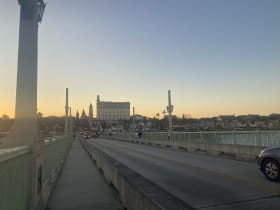
Bridge of Lions
1.2 miles away
St. Augustine's most photographed crossing, a graceful 1920s Mediterranean Revival drawbridge over Matanzas Bay, guarded at its downtown end by two marble lions named Faithful and Firm.

Anastasia State Park
1.4 miles away
Just across the Bridge of Lions from downtown St. Augustine, this barrier-island state park protects four miles of white quartz-sand beach, tall dunes, and the calm Salt Run lagoon for kayaking.
The Oldest Store Museum area on St. George Street
1.5 miles away
For a quick, free taste of the oldest city, walk St. George Street, the pedestrian lane running through the colonial old town.
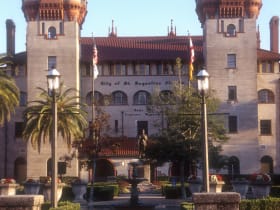
Lightner Museum
1.5 miles away
Everyone photographs Flagler College across the street; fewer step into its sister building.

Castillo de San Marcos
1.6 miles away
A real fort with a moat, a drawbridge, and cannon is an easy sell. The Castillo de San Marcos on the St.

Villa Zorayda Museum
1.6 miles away
Most visitors walk right past this one on their way to the fort.

Vilano Beach
2.1 miles away
Vilano Beach is a wide, easygoing Atlantic beach and retro fishing pier just across the inlet from downtown St. Augustine, one of the finest sunset perches on the coast.