

Lightner Museum
95 Cordova St
St. Augustine, FL
A palatial Gilded Age hotel reborn as a museum of Victorian wonders, from Tiffany glass to a mechanical orchestra.
The Lightner Museum fills the former Hotel Alcazar, a grand Spanish Renaissance resort built in the 1880s by the railroad and oil magnate Henry Flagler as part of his effort to turn St. Augustine into an American Riviera. Behind its arches and towers lies a museum of the Gilded Age, packed with the art, furnishings, and curiosities that the wealthy of that era collected.
The collection was assembled by Otto Lightner, a Chicago publisher and passionate collector who bought the shuttered hotel and filled it with his treasures. The result is a wonderfully eclectic museum, part fine art, part cabinet of curiosities, where Tiffany glass shares the building with mechanical music machines, natural history specimens, and the everyday marvels of Victorian life.
What Travelers Love
- The grand Spanish Renaissance building, once one of the finest resort hotels in the country
- A dazzling collection of Victorian art glass, including Tiffany pieces
- Rooms of curiosities, from mechanical music machines to a shrunken head and Egyptian relics
- The old indoor swimming pool, once the largest in the world, now a light-filled cafe and gallery space
Worth Knowing
- The museum is set inside a historic hotel, so part of the pleasure is the building itself
- It is an easy walk from St. Augustine's other historic sites, so plan to explore the old town too
- The collection is wide-ranging and quirky, so give yourself time to wander
- St. Augustine's narrow streets fill up in busy seasons, so consider parking once and walking
Learn about Lightner Museum
Flagler, the railroad, and the Hotel Alcazar
Henry Flagler made his fortune as a partner in Standard Oil, then turned his attention to Florida, building a railroad down the east coast and a string of luxury hotels to draw wealthy northerners south for the winter. In St. Augustine he built the opulent Hotel Ponce de Leon, now Flagler College, and across the street the Hotel Alcazar, a resort with baths, a casino, and the largest indoor swimming pool in the world at the time.
The Alcazar flourished in the resort era but fell on hard times during the Great Depression and closed its doors. It sat empty until Otto Lightner bought the building in the 1940s to house his collections, giving the grand old hotel a new life as a museum and preserving one of the finest examples of Gilded Age resort architecture in the country.
Otto Lightner and his cabinet of curiosities
Otto Lightner was a Chicago publisher who founded a magazine for hobbyists and collectors and lived by the conviction that collecting was a joy open to everyone. Over his life he amassed an enormous and delightfully varied trove, from fine European art and cut glass to mechanical instruments, natural history specimens, and oddities that defy easy category.
When he moved his collection into the Alcazar, he arranged it across the hotel's grand spaces, and the museum still reflects his wide-eyed enthusiasm. A visitor can pass from a room of shimmering Victorian art glass to a display of automatons, from Egyptian artifacts to a mummy, from fine furniture to the curious and the macabre, all under one roof.
Highlights of the collection
Among the most celebrated pieces is the collection of American art glass, including works by Louis Comfort Tiffany, whose lamps and windows glow with color. The museum also holds a remarkable array of mechanical music machines, from music boxes to a self-playing orchestra, and regular demonstrations bring these Gilded Age marvels back to life for visitors.
The old grand pool, once the largest indoor swimming pool in the world, is now drained and repurposed, with a cafe on its former floor and galleries around its edges, so guests can dine in a space where Gilded Age bathers once swam. Wandering the building, you feel the double pleasure of the architecture and the treasures it holds.
The old city around it
St. Augustine, founded by the Spanish in 1565, is the oldest continuously occupied European-founded city in the United States, and the Lightner sits at its heart. Step outside and you are within an easy walk of the coquina-stone fort, the narrow colonial streets, and centuries of layered history, from Spanish and British colonial rule to the Gilded Age resort boom that gave the museum its home.
This concentration of history makes the Lightner an ideal part of a wider day in the old city. Many visitors pair it with the fort, the historic district, and the other Flagler-era landmarks nearby, moving easily on foot through one of the most storied small cities in America.
Closest Boutels
The closest Boutel™ stays, so you can turn this stop into an overnight. Each is a place we chose through independent editorial review, never a paid placement.
Details
St. Augustine, FL
Frequently asked questions
What is the Lightner Museum?
The Lightner Museum, in historic St. Augustine, Florida, is a fascinating museum of art, antiques, and curiosities housed in a magnificent former Gilded Age hotel, the elegant Alcazar, built by railroad and hotel magnate Henry Flagler in the late nineteenth century. The stunning Spanish-Renaissance-revival building displays a remarkable and eclectic collection of Victorian-era art, decorative arts, furnishings, cut glass, mechanical musical instruments, and curiosities gathered by its founder, all set in the grand former hotel with its courtyard and former indoor pool. With its opulent building and eclectic collections, the Lightner Museum offers a fascinating destination in Florida.
What can you see at the Lightner Museum?
You can explore an eclectic and remarkable collection of Victorian-era fine and decorative arts, antiques, cut and blown glass, mechanical musical instruments, natural history curiosities, and furnishings, all displayed in the magnificent former Gilded Age Alcazar Hotel with its grand architecture, courtyard, and dramatic former indoor swimming pool. The opulent building itself, the varied collections, and the sense of stepping into the Gilded Age are highlights. It is a treat for lovers of art, antiques, and history. With its grand building and eclectic collections, the Lightner Museum offers an engaging visit in St. Augustine, Florida.
What is the history of the Lightner Museum building?
The Lightner Museum is housed in the former Hotel Alcazar, a luxurious Gilded Age resort hotel built in the late nineteenth century by the industrialist Henry Flagler, whose railroad and hotels helped transform Florida into a tourist destination. The grand Spanish-Renaissance-revival building once hosted wealthy winter visitors and featured an enormous indoor pool and elegant amenities. After the hotel closed, the building was acquired and filled with a collector's eclectic treasures, becoming the museum. This connection to Flagler and Florida's Gilded Age tourism history adds fascination to a visit to the Lightner Museum in St. Augustine, Florida.
When is the best time to visit the Lightner Museum?
As an indoor museum, the Lightner Museum is enjoyable year-round in any weather, making it an especially welcome stop during the hot, humid Florida summer or a rainy day, though checking current days and hours before you go is wise. Fall through spring offers the most pleasant weather for combining a visit with exploring historic St. Augustine on foot. Because it is climate-controlled and rich in collections, the Lightner Museum makes a reliable and rewarding stop any time of year in St. Augustine, Florida.
What is near the Lightner Museum?
The Lightner Museum is in historic St. Augustine, Florida, near the Villa Zorayda Museum, the Castillo de San Marcos, St. George Street with the Oldest Store Museum, and the Bridge of Lions. That makes the Lightner Museum a fascinating stop to combine with the Villa Zorayda Museum, the Castillo de San Marcos, and the other attractions of historic St. Augustine on a visit to Florida.
Nearby

Villa Zorayda Museum
0.1 miles away
Most visitors walk right past this one on their way to the fort.
The Oldest Store Museum area on St. George Street
0.1 miles away
For a quick, free taste of the oldest city, walk St. George Street, the pedestrian lane running through the colonial old town.
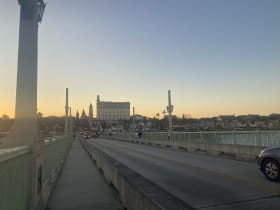
Bridge of Lions
0.3 miles away
St. Augustine's most photographed crossing, a graceful 1920s Mediterranean Revival drawbridge over Matanzas Bay, guarded at its downtown end by two marble lions named Faithful and Firm.

Castillo de San Marcos
0.4 miles away
A real fort with a moat, a drawbridge, and cannon is an easy sell. The Castillo de San Marcos on the St.
St. Augustine Alligator Farm Zoological Park
1.5 miles away
Kids remember this one. The Alligator Farm at 999 Anastasia Blvd has been running since 1893 and holds every kind of crocodilian on earth, including a giant saltwater croc named Maximo.
St. Augustine Lighthouse and Maritime Museum
1.6 miles away
A black-and-white spiral brick tower first lit in 1874, rising 165 feet over the nation's oldest port on Anastasia Island.

Vilano Beach
2.1 miles away
Vilano Beach is a wide, easygoing Atlantic beach and retro fishing pier just across the inlet from downtown St. Augustine, one of the finest sunset perches on the coast.

Anastasia State Park
2.9 miles away
Just across the Bridge of Lions from downtown St. Augustine, this barrier-island state park protects four miles of white quartz-sand beach, tall dunes, and the calm Salt Run lagoon for kayaking.