
Ed Galloway's Totem Pole Park
21300 OK-28A, Chelsea, OK
Chelsea, OK
The world's largest concrete totem pole, ninety feet of hand-mixed cement and folk art, built by one retired man over decades off Route 66.
Ed Galloway's Totem Pole Park is one of the great works of American folk art, built around a ninety-foot concrete totem pole that is the largest of its kind in the world. It rises from a quiet green field near Foyil in northeast Oklahoma, every inch of its surface carved and painted with birds, animals, faces, and Native-inspired imagery, all of it made by hand.
The astonishing thing is that it was the work of one retired man with no formal art training, who spent decades of his later life mixing cement by the bucket to build it. The park is a monument to a single person's vision and stubborn devotion, and it has become a beloved stop for travelers drawn to the roadside wonders of Route 66.
What Travelers Love
- The world's largest concrete totem pole, ninety feet tall and covered in hand-made art
- A pure labor of love, built by one man over decades with no formal training
- The intricate carved and painted images covering every surface
- A free, uncrowded folk-art stop off Route 66
Worth Knowing
- This is Native-inspired folk art by a non-Native artist, not an authentic tribal totem tradition
- The park is free and casual; a short visit is the point, though the detail rewards a lingering look
- It sits a couple of miles off Route 66 near Foyil, easy to fold into a Mother Road trip
- The Fiddle House on the grounds tells the story of Galloway and his work
Learn about Ed Galloway's Totem Pole Park
Ed Galloway and his life's work
Ed Galloway was a woodworking teacher who retired to a farm near Foyil in the late 1930s and set about building something extraordinary. Fascinated by Native American art and history, and by the totem poles of the Pacific Northwest, he decided to build his own, not in wood but in concrete, mixing and hauling the cement himself by hand.
He worked on the great totem pole and the surrounding park for roughly two decades, into the 1940s and beyond, shaping and painting the enormous structure and filling the grounds with smaller sculptures and a many-sided building he called the Fiddle House. It was a retirement project on an almost impossible scale, driven purely by his own imagination and love of the craft.
The world's largest concrete totem pole
The centerpiece rises about ninety feet, built over a base shaped like a great turtle and covered from bottom to top with carved and painted images, hundreds of them, drawn from Native American cultures across the continent. Galloway sculpted the wet concrete into faces, animals, birds, and geometric designs, then painted the whole in bold colors.
It is important to understand what it is and is not. Galloway was not Native, and this is his own folk-art tribute inspired by the totem traditions of other peoples, not an authentic tribal totem raised within a living totem-carving culture. Seen for what it is, a self-taught artist's monumental homage, it is genuinely remarkable, a triumph of vision and sheer persistence.
The Fiddle House and the park
Beyond the great pole, the grounds hold other Galloway creations, including the Fiddle House, an eleven-sided building he raised to display the hundreds of fiddles he carved, along with other artwork and mementos of his life. It now serves as a small museum and gift area telling his story.
For years after Galloway's death the park fell into disrepair, its concrete cracking and its paint fading. A local arts group and volunteers took up its restoration, repairing the totem pole and the buildings and repainting the fading images. Their care is why the park survives today as a cherished piece of the state's folk-art heritage.
Green Country and Route 66
The park sits in the green, rolling northeast corner of Oklahoma, in the historic Cherokee Nation, just a couple of miles off Route 66. Its proximity to the Mother Road has made it a favorite detour for road-trippers seeking out the offbeat and handmade landmarks that give old Route 66 its character.
Nearby Claremore and Chelsea add more to a day out, from Will Rogers history to vintage Route 66 sights, but the totem pole park stands on its own as one of the most striking pieces of folk art anywhere along the old highway, and a testament to what one determined person can build.
Closest Boutels
The closest Boutel™ stays, so you can turn this stop into an overnight. Each is a place we chose through independent editorial review, never a paid placement.
Details
Chelsea, OK
Frequently asked questions
What is Ed Galloway's Totem Pole Park?
Ed Galloway's Totem Pole Park, near Foyil in northeastern Oklahoma, is a delightful folk-art park centered on the world's largest concrete totem pole, a towering and colorful creation of the folk artist Ed Galloway. Over many years, Galloway hand-built this enormous, richly decorated concrete totem pole, covered in colorful figures and designs, along with other folk-art structures, as a labor of love and a tribute to Native American culture. A beloved example of American folk art and a landmark of Route 66-era roadside creativity, the park charms visitors with its whimsy and craftsmanship. A colorful and unique folk-art park, it delights visitors. With its giant totem pole, the park offers a fascinating destination in Oklahoma.
What is the giant totem pole at Ed Galloway's park?
The centerpiece of Ed Galloway's Totem Pole Park is the world's largest concrete totem pole, an enormous, towering structure that the folk artist Ed Galloway built by hand over many years, covering it in colorful painted figures, animals, and designs. Created as a labor of love and a tribute to Native American culture and imagery, the giant totem pole is a remarkable work of folk art and craftsmanship. Its scale and detail are astonishing. Marveling at this creation is the heart of a visit to Ed Galloway's Totem Pole Park in Oklahoma.
What can you see at Ed Galloway's Totem Pole Park?
You can marvel at the world's largest concrete totem pole with its colorful figures and designs, see other folk-art structures Galloway created, including a fiddle-shaped building, and appreciate this whimsical labor of love and tribute to Native American imagery. The giant totem pole, the folk-art structures, and the charming, creative spirit of the place are the draws, making it a delightful and unusual stop. The craftsmanship and color are highlights. With its folk art, the park offers a rewarding experience near Foyil, Oklahoma.
When is the best time to visit Ed Galloway's Totem Pole Park?
The park is an outdoor folk-art site that can be visited and admired year-round, with the mild months of spring through fall the most pleasant for strolling the grounds and enjoying the colorful creations. Because any indoor or staffed features may keep limited hours, checking current information before you go is wise. For the most pleasant visit, aim for the mild months at Ed Galloway's Totem Pole Park in Oklahoma.
What is near Ed Galloway's Totem Pole Park?
Ed Galloway's Totem Pole Park is near Foyil in northeastern Oklahoma, along the historic Route 66 corridor, within reach of Claremore, the Route 66 attractions of the region, and the routes toward Tulsa to the southwest. That makes Ed Galloway's Totem Pole Park a fascinating stop to combine with the Route 66 attractions of northeastern Oklahoma on a visit to the state.
Nearby
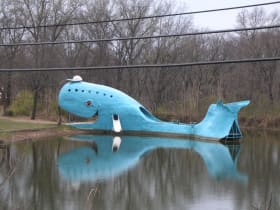
Blue Whale of Catoosa
23 miles away
Blue Whale of Catoosa: on Route 66 just east of Catoosa, northeast of Tulsa.
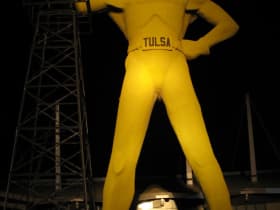
The Golden Driller
34 miles away
The Golden Driller: outside the Tulsa Expo Center on the fairgrounds, east of downtown. Free, always accessible outdoors.
Price Tower
36 miles away
Price Tower: 510 Dewey Ave, Bartlesville. Lobby and gallery free to enter during business hours. Architectural tours available (check schedule and admission).