

Blue Whale of Catoosa
2600 OK-66, Catoosa, OK
Catoosa, OK
A grinning blue concrete whale built by hand as a family swimming hole, now one of the most photographed stops on all of Route 66.
The Blue Whale of Catoosa is exactly what it sounds like: an eighty-foot, grinning, sky-blue concrete whale sitting in a pond beside old Route 66. It began as a private family swimming hole and grew into one of the most beloved and photographed roadside landmarks on the entire Mother Road, a piece of pure American folk art built by one man's hands.
There is nothing slick about it, and that is the whole appeal. The Blue Whale is homemade, whimsical, and heartfelt, a monument to a family's love of a spring-fed pond and a happy place to swim. Travelers from around the world detour here to walk through the whale, sit in its shade, and take the same photo that thousands have taken before them.
What Travelers Love
- A genuinely charming, hand-built piece of Route 66 folk art
- The grinning whale you can still walk through and pose beside
- A free, easygoing photo stop with picnic tables under the trees
- The gift shop and the affectionate story of the family who built it
Worth Knowing
- Swimming in the pond ended long ago; the whale is now a walk-through landmark and photo stop
- It is a roadside attraction, so a short visit is the point; pair it with other Route 66 stops nearby
- Restoration is ongoing and volunteer-driven, so the paint and setting change over the years
- Parking and access are simple and casual, right off the old highway
Learn about Blue Whale of Catoosa
A gift built by hand
The whale was the work of Hugh Davis, a longtime zoo director in the Tulsa area, who built it in the early 1970s as an anniversary surprise for his wife Zelta, who collected whale figurines. Over a couple of years he mixed the concrete and shaped the great smiling creature by hand along the edge of the family's spring-fed pond, complete with a slide off its tail and a ladder up its side.
What started as a private spot for the grandchildren became a magnet for the neighborhood and then for travelers on Route 66. Word spread, and the Davis family eventually opened the pond to the public as a swimming hole, with the whale as its grinning centerpiece. For years it was a favorite summer stop for local families and passing road-trippers alike.
From swimming hole to landmark
As the interstate pulled traffic off Route 66 and the family grew older, the swimming hole eventually closed and the whale fell into disrepair, its paint fading and its structure weathering by the pond. For a time it looked as though it might be lost, one more casualty of the Mother Road's long decline.
Then came the Route 66 revival. Volunteers, the town of Catoosa, and admirers of roadside Americana rallied to repaint and restore the whale, and it has been lovingly maintained ever since. Today it is a free, cheerful stop, its blue paint kept bright and its smile intact, a symbol of the nostalgia and community spirit that keeps old Route 66 alive.
Green Country and the Mother Road
Catoosa sits at the edge of what Oklahomans call Green Country, the wetter, greener northeast corner of the state, and just outside Tulsa, one of Route 66's great cities. This stretch of the old highway is thick with landmarks, from neon signs and vintage motels to other beloved roadside oddities, and the Blue Whale is one of its brightest stars.
The region is the historic home of the Cherokee Nation and other tribes removed to Indian Territory, and Catoosa itself grew as a railroad and river-port town. Today it is best known to travelers as the home of the whale, an easy and joyful stop on a longer Route 66 or Green Country ramble.
What to expect on a visit
A stop at the Blue Whale is a short and happy one. You park beside the old highway, walk down to the pond, and can still climb into and through the whale itself, posing on its fins or peering out of its mouth. Picnic tables sit under the shade trees, and a small gift shop tells the story and sells the requisite souvenirs.
It is the kind of place that rewards a little lingering. Read the plaques about Hugh and Zelta Davis, watch the turtles and fish in the pond, and take the photo everyone takes. Then roll on down Route 66 to the next roadside marvel, of which this corner of Oklahoma has plenty.
Closest Boutels
The closest Boutel™ stays, so you can turn this stop into an overnight. Each is a place we chose through independent editorial review, never a paid placement.
Details
Catoosa, OK
Frequently asked questions
What is the Blue Whale of Catoosa?
The Blue Whale of Catoosa, in Catoosa near Tulsa, Oklahoma, is a beloved and iconic Route 66 roadside attraction, a giant, friendly blue whale sculpture beside a pond. Built decades ago as a labor of love and once part of a swimming hole, the enormous smiling blue whale has become one of the most cherished and photographed landmarks along the historic Route 66, charming travelers with its whimsy and nostalgia. Lovingly preserved, it is a delightful symbol of the golden age of the great road. A charming and nostalgic roadside icon, it delights visitors. With its whimsical charm, the Blue Whale of Catoosa offers a fun destination in Oklahoma.
What is the history of the Blue Whale of Catoosa?
The Blue Whale of Catoosa was built decades ago by a local man as a labor of love, originally as part of a swimming hole and picnic spot for his family and the community along Route 66. Over time it became a beloved landmark, and though the swimming days passed, the giant blue whale was lovingly preserved and restored, enduring as one of the most cherished icons of the historic road. Its heartfelt origins add to its charm. Understanding this history enriches a visit to the Blue Whale of Catoosa in Oklahoma.
What can you do at the Blue Whale of Catoosa?
You can admire and photograph the giant, friendly blue whale sculpture beside its pond, stroll the grounds, enjoy the nostalgic Route 66 atmosphere, and take in this whimsical, beloved roadside landmark. The charming blue whale, the photo opportunities, and the nostalgic history are the draws, making it a delightful quick stop on a Route 66 journey. Its cheerful whimsy is exactly the appeal. With its charm, the Blue Whale of Catoosa offers a rewarding stop in Oklahoma.
When is the best time to visit the Blue Whale of Catoosa?
The Blue Whale is an outdoor roadside attraction that can be visited and photographed year-round, with the mild months of spring through fall the most pleasant for strolling the grounds beside the pond. Because it is a quick outdoor stop, comfortable weather makes it most enjoyable. For the most pleasant visit, aim for the mild months at the Blue Whale of Catoosa in Oklahoma.
What is near the Blue Whale of Catoosa?
The Blue Whale of Catoosa is in Catoosa near Tulsa, Oklahoma, along historic Route 66, within reach of Tulsa and its attractions, the Route 66 corridor, and Ed Galloway's Totem Pole Park to the northeast. That makes the Blue Whale of Catoosa a fun stop to combine with the attractions of Tulsa and the Route 66 corridor on a visit to Oklahoma.
Nearby
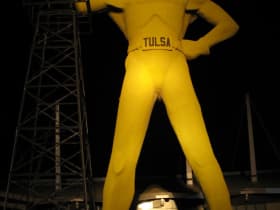
The Golden Driller
12 miles away
The Golden Driller: outside the Tulsa Expo Center on the fairgrounds, east of downtown. Free, always accessible outdoors.

Philbrook Museum of Art
15 miles away
Philbrook Museum: 2727 S Rockford Rd, Tulsa. Open Tuesday-Sunday, with an extended Thursday evening. Admission is charged. Gardens included with admission.
Oklahoma Aquarium
17 miles away
Oklahoma Aquarium: 300 Aquarium Dr, Jenks (south Tulsa suburb). Open daily. Admission is charged. Allow 2-3 hours. Best for ages 3+. The bull shark tunnel is the signature experience.