

The Golden Driller
4103 E 21st Pl, Tulsa, OK
Tulsa, OK
A seventy-six-foot golden oil worker standing guard over Tulsa, one of the tallest statues in the country and a monument to the city that oil built.
The Golden Driller is Tulsa's most beloved landmark, a seventy-six-foot statue of an oil-field worker in a hard hat, one hand resting on an oil derrick, standing outside the city's Expo Center. Painted golden and built to withstand tornado-force winds, it is among the tallest freestanding statues in the United States and a proud monument to the industry that made Tulsa.
The figure has become a symbol of the city itself, once billed as the Oil Capital of the World. It was created for the International Petroleum Exposition, the great oil-industry trade show Tulsa hosted for decades, and it now stands as a permanent tribute to the roughnecks and wildcatters whose work built the wealth, the buildings, and the character of northeast Oklahoma.
What Travelers Love
- Standing at the feet of one of the tallest statues in the United States
- The bold, cheerful symbol of Tulsa's oil-boom heritage
- A classic roadside photo stop, free and always in view
- Its place among Tulsa's larger story of Art Deco wealth and design
Worth Knowing
- It stands outside on the fairgrounds and can be viewed any time
- The area is busiest and access can change during the state fair and expo events
- It pairs well with Tulsa's Art Deco downtown and Route 66 landmarks
- There is no admission to see the statue itself from the grounds
Learn about The Golden Driller
Oil Capital of the World
Tulsa rose on oil. When major fields came in nearby in the early 1900s, the town boomed into a center of the petroleum industry, and for a time it called itself the Oil Capital of the World. The fortunes made here built the city's remarkable stock of Art Deco skyscrapers, mansions, and civic buildings, a golden age written into brick and stone.
To celebrate and promote that industry, Tulsa hosted the International Petroleum Exposition, a huge trade show that drew oil people from around the globe. The Golden Driller was created for that exposition, first appearing in the 1950s and taking its permanent, larger form in 1966 as a lasting emblem of the show and the industry it honored.
Building a giant
The statue as it stands today was erected in 1966, built to endure. Its frame is steel and concrete, engineered to withstand the high winds that sweep the Oklahoma plains, and its surface is finished in the golden color that gives it its name. The figure rests one hand on an oil derrick relocated from a nearby field, a real piece of the industry incorporated into the monument.
At seventy-six feet the Golden Driller towers over its surroundings and ranks among the tallest freestanding statues in the country. The State of Oklahoma later designated it an official state monument, cementing its status not just as a Tulsa curiosity but as a recognized symbol of the state's oil heritage.
A beloved roadside icon
For generations of Tulsans and travelers, the Golden Driller has been a landmark and a photo stop, its friendly, oversized figure impossible to miss on the fairgrounds. It has become a canvas for civic celebration too, occasionally dressed up for local sports teams and events, and it holds a warm place in the city's affection as a homegrown giant.
As a piece of roadside Americana, it fits Tulsa's location on Route 66, the Mother Road that runs through the city. Alongside the neon signs, vintage motels, and classic diners of the old highway, the Golden Driller is a must-see for road-trippers, a bold monument that captures the optimism and swagger of the oil age.
Tulsa beyond the statue
The Golden Driller is a fitting introduction to a city full of oil-era treasures. Downtown Tulsa holds one of the finest collections of Art Deco architecture in the country, from ornate churches to sleek skyscrapers, all funded by the wealth the statue celebrates. The Philbrook and Gilcrease museums, both born of oil fortunes, hold world-class art collections.
Tulsa's story is also a complex and important one. The Greenwood district, once known as Black Wall Street, was a thriving Black community devastated in the 1921 Tulsa Race Massacre, a history the city now works to remember and honor. A visit to see the Golden Driller opens onto a city with far more depth than its cheerful giant first suggests.
Closest Boutels
The closest Boutel™ stays, so you can turn this stop into an overnight. Each is a place we chose through independent editorial review, never a paid placement.
Details
Tulsa, OK
Frequently asked questions
What is the Golden Driller?
The Golden Driller, in Tulsa, Oklahoma, is a colossal and iconic statue of an oil worker, one of the tallest statues in the country and a beloved symbol of Tulsa's oil heritage. Standing many stories tall, this enormous golden figure of a driller, hand resting on an oil derrick, celebrates the oil industry that shaped Tulsa and Oklahoma, and it has become a cherished and photogenic landmark. A tribute to the roughnecks and the oil boom that built the city, the towering statue is a favorite roadside attraction. A giant and iconic landmark, it delights visitors. With its enormous scale and history, the Golden Driller offers a fun destination in Oklahoma.
Why was the Golden Driller built?
The Golden Driller was built to celebrate Tulsa's identity as a center of the oil industry, honoring the oil workers and the petroleum boom that made Tulsa a wealthy and important city, once known as a capital of the oil world. The towering statue of a driller stands as a proud symbol of that heritage and of the roughnecks who worked the derricks. Its scale reflects the outsized role oil played in the region. Understanding this history adds meaning to a visit to the Golden Driller in Oklahoma.
What can you do at the Golden Driller?
You can admire and photograph the colossal statue, marvel at its enormous scale, and enjoy this iconic roadside landmark celebrating Tulsa's oil heritage, a quick but memorable stop. The giant statue, the photo opportunities, and the connection to Tulsa's oil history are the draws, making it a fun and quintessentially Oklahoma stop. Standing at the feet of the towering driller is a favorite for photos. With its scale, the Golden Driller offers a rewarding stop in Tulsa, Oklahoma.
When is the best time to visit the Golden Driller?
The Golden Driller is an outdoor landmark that can be visited and photographed year-round, with clear days and good light making for the best photos, and it pairs naturally with other Tulsa attractions on a visit to the city. Because it is a quick outdoor stop, comfortable weather makes it most pleasant. For the best photos and comfort, aim for a pleasant, clear day at the Golden Driller in Oklahoma.
What is near the Golden Driller?
The Golden Driller is in Tulsa, Oklahoma, at the fairgrounds, within reach of the Philbrook Museum of Art, downtown Tulsa, the Oklahoma Aquarium in nearby Jenks, and the other attractions of the Tulsa area. That makes the Golden Driller a fun stop to combine with the Philbrook Museum of Art and the other attractions of Tulsa on a visit to Oklahoma.
Nearby

Philbrook Museum of Art
2.8 miles away
Philbrook Museum: 2727 S Rockford Rd, Tulsa. Open Tuesday-Sunday, with an extended Thursday evening. Admission is charged. Gardens included with admission.
Oklahoma Aquarium
7.6 miles away
Oklahoma Aquarium: 300 Aquarium Dr, Jenks (south Tulsa suburb). Open daily. Admission is charged. Allow 2-3 hours. Best for ages 3+. The bull shark tunnel is the signature experience.
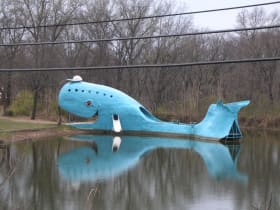
Blue Whale of Catoosa
12 miles away
Blue Whale of Catoosa: on Route 66 just east of Catoosa, northeast of Tulsa.