
Bluff Point State Park
Depot Rd
Groton, CT
The last large piece of wild, undeveloped coast in Connecticut, an 800-acre peninsula of forest, bluff, and beach reaching into Long Island Sound.
Bluff Point is the last significant piece of undeveloped land along the entire Connecticut coast, an 800-acre peninsula of oak woods, rocky bluff, salt marsh, and beach reaching south into Long Island Sound. Set aside as a coastal reserve, it has been deliberately left wild, with no roads to the water and no development, a striking exception on a shoreline otherwise lined with towns and homes.
A gravel loop of roughly four miles carries walkers and cyclists out through the forest to the namesake bluff, where the land drops to the Sound, and back along the shore past a sand and cobble beach. Along the way the trail passes the stone foundations of a colonial homestead and skirts coves rich with birdlife, making Bluff Point feel like a piece of the coast the modern world simply passed by.
What Travelers Love
- A wild, roadless coastline that feels rare on Connecticut's built-up shore
- The roughly four-mile loop out to the bluff and back along the water
- A quiet natural beach reached only on foot or by bike
- Ospreys, herons, and migrating birds along the river and coves
Worth Knowing
- There are no facilities to speak of, so bring water and plan for a real walk or bike ride
- The gravel loop is popular with walkers, runners, and cyclists, so share the trail
- The beach and spit are fragile; stay on established paths to protect nesting birds and dunes
- It is designated a coastal reserve, which is why it remains undeveloped and undeveloped it will stay
Learn about Bluff Point State Park
A coast left wild
What sets Bluff Point apart is what is not there. On a shoreline that has been settled, subdivided, and built up for centuries, this peninsula remained open, and the state protected it as a coastal reserve to keep it that way. It is the largest undeveloped stretch left on the Connecticut coast, a genuine rarity in one of the most densely populated corners of the country.
That protection means the land is managed for its natural values rather than for recreation facilities. There are no concessions, no paved lots at the water, and no buildings out on the point. The reward is a walk that feels genuinely removed, where the loudest sounds are wind, waves, and birds.
The peninsula loop
The main trail is a gravel loop of about four miles that most people walk, run, or ride by bike. From the trailhead near the old railroad line, it heads out through mixed oak forest along the Poquonnock River, opening now and then to water views before reaching the bluff itself at the peninsula's tip.
At the bluff, the wooded land gives way to an open headland above the Sound, with wide views across the water toward Fishers Island and, on clear days, the Long Island shore beyond. From there the loop returns along the eastern side above Mumford Cove.
A sandy spit and natural beach extend from the point, reachable only on foot or by bike. Because they are undeveloped, they offer a quieter, wilder version of a shoreline day than the region's managed beaches.
The Winthrop homestead ruins
Along the loop, hikers pass the stone foundation of an early colonial house that once belonged to the Winthrop family, prominent figures in Connecticut's colonial history. Governor John Winthrop the Younger, a founder of New London, was connected to this land, and a homestead stood on the peninsula in the 1600s and 1700s.
Little remains today beyond the outline of the foundation among the trees, but it is a quiet reminder that this now-wild point was once farmed and lived on. The land has since returned to forest, so completely that the ruins can be easy to miss.
Birds, water, and the seasons
The mix of forest, salt marsh, coves, and open water makes Bluff Point excellent for birdwatching. Ospreys nest and fish the river and coves, herons and egrets work the marsh edges, and the peninsula is a notable spot to watch migrating hawks and songbirds move along the coast in fall.
Every season has its appeal. Spring and fall bring migration and mild walking weather, summer offers the wild beach and cooling sea breezes, and winter strips the woods bare for long water views and a stark, empty coastline. Because the park is unshaded in places along the shore, sun and wind can both be strong, so dress for the water's edge.
Closest Boutels
The closest Boutel™ stays, so you can turn this stop into an overnight. Each is a place we chose through independent editorial review, never a paid placement.
Details
Groton, CT
Frequently asked questions
What is Bluff Point State Park?
Bluff Point State Park, in Groton, Connecticut, is a beautiful coastal reserve on a peninsula reaching into Long Island Sound, one of the last significant stretches of undeveloped coastline in the state, a lovely natural escape. The park protects woodlands, meadows, a rugged shoreline, and a bluff overlooking the Sound, with trails for hiking and biking through the coastal forest and along the water, a beach, and abundant birds and wildlife. Its unspoiled natural beauty and shoreline make it a cherished destination for outdoor lovers. A scenic and unspoiled coastal park, it delights visitors. With its shoreline and trails, Bluff Point State Park offers a compelling destination in Connecticut.
What can you do at Bluff Point State Park?
You can hike and bike the trails through the coastal woodlands and along the shore, walk out to the bluff overlooking Long Island Sound, explore the rugged shoreline and beach, watch for birds and wildlife, and enjoy the unspoiled natural beauty. The coastal trails, the bluff and Sound views, the shoreline, and the birdwatching are the draws, making it a lovely natural escape. The undeveloped coast and the views are highlights. With its shoreline and trails, Bluff Point State Park offers a rewarding experience in Connecticut.
When is the best time to visit Bluff Point State Park?
The mild months of spring through fall are the most pleasant for hiking, biking, and enjoying the coast, with spring and fall especially lovely for birdwatching and comfortable weather and summer good for the beach, while the undeveloped shoreline is beautiful year-round. Because conditions vary, checking current information before you go is wise. For the loveliest weather and best hiking, aim for spring through fall at Bluff Point State Park in Connecticut.
What should I know before visiting Bluff Point State Park?
Bluff Point is a natural coastal reserve, so bringing water and sun protection, wearing suitable footwear for the trails, and being prepared for the coastal weather help, and staying on the trails protects the natural areas. If you visit the shoreline or beach, being mindful of tides and conditions matters, and there are limited facilities in this undeveloped park. Coming prepared and staying on the trails ensure an enjoyable visit to Bluff Point State Park in Connecticut.
What is near Bluff Point State Park?
Bluff Point State Park is in Groton, Connecticut, on Long Island Sound, within reach of Mystic with its aquarium and seaport museum, New London across the river, and the other attractions of the Connecticut shoreline. That makes Bluff Point State Park a compelling stop to combine with the attractions of Mystic and the Connecticut shoreline on a visit to the state.
Outside the Park
Custom House Maritime Museum
3.8 miles away
Most visitors to New London walk right past it, but this is the oldest custom house still working in the country.
Mystic Seaport Museum
4.5 miles away
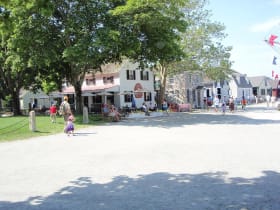
People come to Mystic for the village and miss that its museum is the largest maritime museum in the country.
Mystic Aquarium
5.5 miles away
This is the stop kids ask for in Mystic. The aquarium keeps beluga whales in one of the largest outdoor beluga habitats in the country, and you can watch them glide past the underwater viewing windows...
Napatree Point Conservation Area
9.0 miles away
A wild, undeveloped mile-long sand spit curving off Watch Hill, with open Atlantic on one side and calm bay on the other, the ruins of turn-of-the-century Fort Mansfield at the tip, and some of the be...
Flying Horse Carousel
9.2 miles away
Most visitors to Watch Hill notice the beach before they notice the little carousel on Bay Street, but it is the real treasure here.

Misquamicut State Beach
9.6 miles away
Rhode Island's largest state beach spreads a wide half-mile of warm, gentle Atlantic surf in Westerly, with a lively strip of vintage carousel, mini-golf, and water slides just behind the sand.

Slater Memorial Museum
14 miles away
Hardly anyone outside Norwich knows this hall exists, and it is genuinely rare.

Florence Griswold Museum
15 miles away
Art travelers know it, but many people passing Old Lyme miss that American Impressionism had its home here.
Orient Beach State Park
18 miles away
A National Natural Landmark at the very tip of Long Island's North Fork, with a rare maritime forest of red cedar and even wild prickly-pear cactus.
Essex Steam Train and Riverboat
19 miles away
Real steam, real coal smoke, and a boat in the middle: this is an easy hit with kids.
Montauk Point and the Bluffs
20 miles away
Montauk Point is where Long Island runs out, a headland of glacial rubble left by the ice sheet and now slowly given back to the sea.
Montauk Point Lighthouse
20 miles away
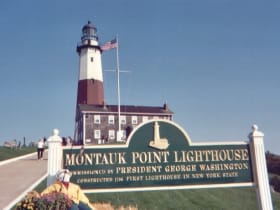
New York's oldest lighthouse, authorized by George Washington and built in 1796 at the very tip of Long Island.
Kirk Park Beach
20 miles away
Montauk's walk-to public Atlantic beach, a wide, easygoing sweep of soft sand at the western edge of the village.