
Custom House Maritime Museum
150 Bank St
New London, CT
A granite custom house from 1833, the oldest still in service in the country, telling the story of New London's whaling wealth and the Amistad captives who landed here.
The Custom House Maritime Museum occupies a dignified granite building on New London's Bank Street that has been collecting the nation's customs duties since 1833, making it the oldest continuously operating custom house in the United States. Designed by Robert Mills, the architect of the Washington Monument, it was built when New London was one of the busiest whaling ports on earth, and it stands as a monument to that era of sail, oil, and global trade.
Run by the New London Maritime Society, the museum inside tells the story of the city's maritime life, from the whaleships that made its fortune to the extraordinary episode of the Amistad, whose captive Africans were brought to New London in 1839. The building's front door is said to be built from oak taken from the USS Constitution, a fitting entrance to a place so steeped in seafaring history.
What Travelers Love
- Standing in the oldest continuously operating custom house in the United States
- The building's grand front door, said to be made from timber of the USS Constitution
- New London's deep whaling history told right on the working waterfront
- The museum's connection to the Amistad captives who came ashore here
Worth Knowing
- The museum is compact, so it pairs well with a walk along the New London waterfront
- Hours are limited and seasonal, so check ahead before visiting
- The building itself, designed by architect Robert Mills, is part of the attraction
- New London was once one of the world's great whaling ports, second in Connecticut only to nearby rivals
Learn about Custom House Maritime Museum
A working custom house since 1833
The building was completed in 1833 to serve the busy port of New London, collecting the tariffs and customs duties that were a major source of federal revenue in the early republic. It was designed by Robert Mills, one of the first American-born professional architects, best known for the Washington Monument, and it reflects the solid, classical style of federal buildings of its day.
Remarkably, the custom house has never stopped functioning in that role, which makes it the oldest continuously operating custom house in the country. That continuity is part of what gives the museum its authority: this is not a reconstruction but the actual building where New London's maritime commerce was recorded for nearly two centuries.
New London and the whaling age
In the 19th century, New London ranked among the most important whaling ports in the world, sending fleets of ships on multi-year voyages after the whales whose oil lit the lamps and lubricated the machines of the industrial age. The wealth that flowed back built the city's fine homes and filled its wharves, and the custom house was at the center of that trade.
The museum's collections and exhibits carry that history, from the tools and logbooks of the whalemen to the broader story of a small Connecticut city with global reach. Standing on the waterfront, it is easy to imagine the forest of masts that once crowded the harbor below.
The Amistad connection
One of the most significant chapters in New London's history is its link to the Amistad. In 1839, a group of Africans who had been illegally seized and sold into slavery seized control of the schooner carrying them and were eventually brought ashore near New London. Their fight for freedom became a landmark legal case that reached the U.S. Supreme Court, which ruled that they had been taken illegally and were free.
The custom house museum interprets this history and honors the Amistad captives, whose arrival in these waters ties New London to one of the defining struggles over slavery and freedom in American history. It is a sobering counterweight to the romance of the whaling era, and an essential part of the story the museum tells.
The building and the waterfront
Details make the custom house memorable. Its front door is traditionally said to be built from oak salvaged from the USS Constitution, Old Ironsides, connecting the modest Connecticut building to the most famous ship in the U.S. Navy. The granite walls and classical proportions reward a slow look before you even step inside.
Because the museum is small, it fits naturally into a walk along New London's revived waterfront, near the ferry terminals that carry passengers to Long Island, Block Island, and Fishers Island. Together they make for an easy, history-rich stop on a tour of the southeastern Connecticut coast.
Closest Boutels
The closest Boutel™ stays, so you can turn this stop into an overnight. Each is a place we chose through independent editorial review, never a paid placement.
Details
New London, CT
Frequently asked questions
What is the Custom House Maritime Museum?
The Custom House Maritime Museum, in New London, Connecticut, is a maritime museum housed in a historic custom house, preserving the rich seafaring heritage of New London and the Connecticut coast. Set in the oldest continuously operating custom house in the country, the museum features exhibits on the region's maritime history, including whaling, shipping, the sea, and the famous connection to the Amistad, the ship at the center of a landmark case involving Africans who revolted against their captors and won their freedom. Its historic building and maritime exhibits make it a fascinating destination. A historic and fascinating maritime museum, it educates visitors. With its heritage, the Custom House Maritime Museum offers a compelling destination in Connecticut.
What can you see at the Custom House Maritime Museum?
You can explore the historic custom house building, view exhibits on New London's maritime history including whaling and shipping, and learn about the region's seafaring heritage and its connection to the Amistad, the ship whose captives' fight for freedom became a landmark in the struggle against slavery. The historic building, the maritime exhibits, and the Amistad history are the draws, offering a rich and thoughtful experience. The Amistad connection is a notable highlight. With its exhibits, the museum offers a rewarding visit in New London, Connecticut.
What is the Amistad connection to the Custom House Maritime Museum?
The Custom House Maritime Museum has a connection to the Amistad, the ship on which a group of captive Africans rose up against those holding them and, after being brought to Connecticut, won their freedom in a landmark legal case, a significant moment in the struggle against slavery. New London and the region are tied to this history, which the museum interprets, honoring the Africans' courage and the fight for freedom and justice. This history is approached with respect for its gravity. Understanding this history deepens a visit to the Custom House Maritime Museum in Connecticut.
When is the best time to visit the Custom House Maritime Museum?
As a mostly indoor museum, the Custom House Maritime Museum can be enjoyed in various seasons, and it keeps its own hours, which can be seasonal, so checking the current schedule before you go is wise. It pairs well with the New London waterfront and the other coastal attractions. For a visit, check current hours at the Custom House Maritime Museum in New London, Connecticut.
What is near the Custom House Maritime Museum?
The Custom House Maritime Museum is in New London, Connecticut, on the waterfront, within reach of the New London waterfront, Mystic with its aquarium and seaport museum to the east, and the other attractions of the Connecticut shoreline. That makes the Custom House Maritime Museum a compelling stop to combine with the attractions of Mystic and the Connecticut shoreline on a visit to the state.
Nearby
Bluff Point State Park
3.8 miles away
This is the last big piece of wild coast in Connecticut, and it feels like it.
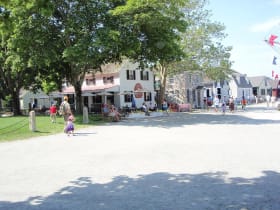
Mystic Seaport Museum
6.8 miles away
People come to Mystic for the village and miss that its museum is the largest maritime museum in the country.
Mystic Aquarium
7.6 miles away
This is the stop kids ask for in Mystic. The aquarium keeps beluga whales in one of the largest outdoor beluga habitats in the country, and you can watch them glide past the underwater viewing windows...

Slater Memorial Museum
12 miles away
Hardly anyone outside Norwich knows this hall exists, and it is genuinely rare.
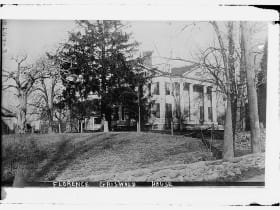
Florence Griswold Museum
12 miles away
Art travelers know it, but many people passing Old Lyme miss that American Impressionism had its home here.
Napatree Point Conservation Area
12 miles away
A wild, undeveloped mile-long sand spit curving off Watch Hill, with open Atlantic on one side and calm bay on the other, the ruins of turn-of-the-century Fort Mansfield at the tip, and some of the be...
Flying Horse Carousel
13 miles away
Most visitors to Watch Hill notice the beach before they notice the little carousel on Bay Street, but it is the real treasure here.
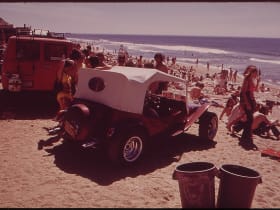
Misquamicut State Beach
13 miles away
Rhode Island's largest state beach spreads a wide half-mile of warm, gentle Atlantic surf in Westerly, with a lively strip of vintage carousel, mini-golf, and water slides just behind the sand.
Essex Steam Train and Riverboat
16 miles away
Real steam, real coal smoke, and a boat in the middle: this is an easy hit with kids.
Orient Beach State Park
17 miles away
A National Natural Landmark at the very tip of Long Island's North Fork, with a rare maritime forest of red cedar and even wild prickly-pear cactus.

Gillette Castle State Park
18 miles away
This is one of the most dramatic settings on the lower Connecticut River.