
Slater Memorial Museum
108 Crescent Street
Norwich, CT
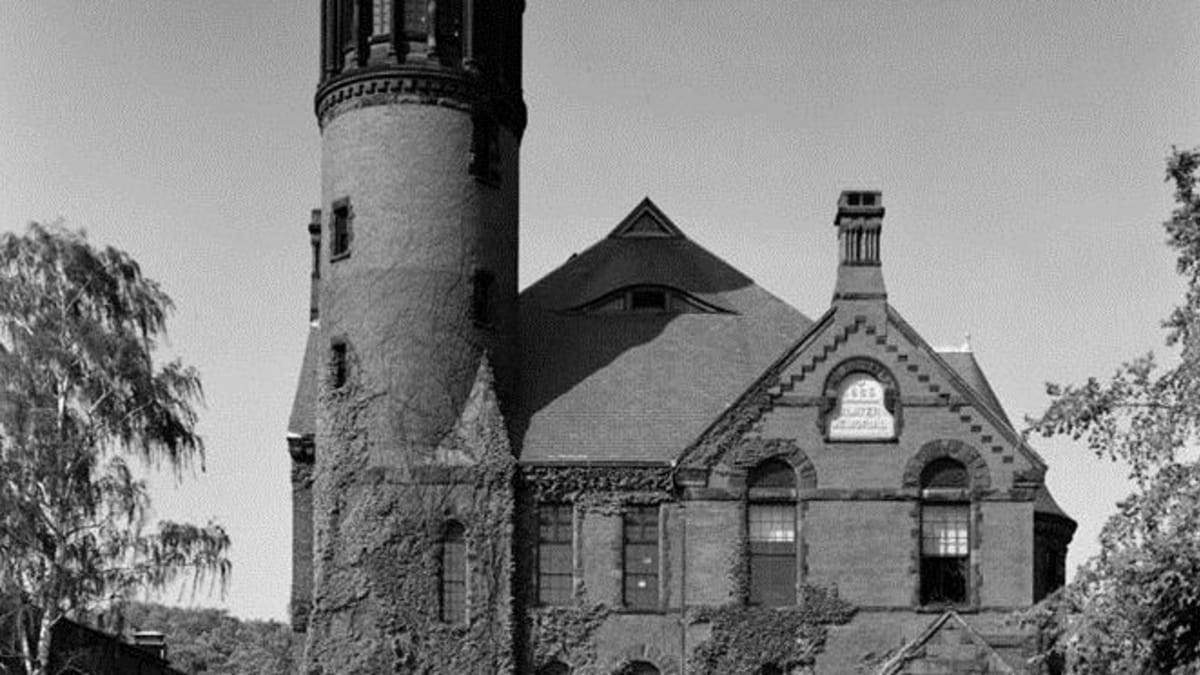
A brownstone castle on a prep-school hill in Norwich, holding a soaring hall of full-size plaster casts of the world's most famous sculptures, one of only a handful left anywhere.
The Slater Memorial Museum is one of those places that rewards anyone who wanders in not quite knowing what to expect. From the outside it is a handsome brownstone pile in the heavy, round-arched Romanesque style of the 1880s, standing on the hilltop campus of the Norwich Free Academy. Inside is something almost no other American museum still has: a great hall filled with full-size plaster casts of the most celebrated sculptures in Western art, from the Venus de Milo to Michelangelo's figures, gathered so that students and townspeople could stand before the masterpieces of the world without leaving Connecticut.
The museum was a gift to the city, built in 1886 in memory of the industrialist William A. Slater's father, and it opened its cast gallery in 1888 at the very height of a national craze for such collections. That craze faded, and one museum after another threw its casts away as tastes changed. Norwich kept its own, and today the Slater's hall is treasured precisely because it is a survivor, a window into how Americans of the Gilded Age taught themselves to see.
What Travelers Love
- The Converse Art Gallery's soaring hall lined with life-size casts of classical and Renaissance sculpture
- A rare survivor: most museums discarded their cast collections a century ago
- The Richardsonian Romanesque building itself, a brownstone landmark from 1886
- A genuinely local, uncrowded museum with real depth for its size
Worth Knowing
- It sits on a working high-school campus, so hours follow the academic calendar and school schedule
- The casts are plaster reproductions by design, made when that was the only way most Americans could study the great works
- Collections range well beyond the casts, into American art, Asian art, and regional history
- Parking and entry are easy, and admission has long been modest or free depending on the day
Learn about Slater Memorial Museum
A gift to a mill city
Norwich in the 1880s was a prosperous manufacturing city at the head of the Thames, and William A. Slater, heir to a textile fortune, built the museum as a memorial to his father, John Fox Slater. He gave it to the Norwich Free Academy, the city's storied secondary school, so that art would be woven into the education of local young people.
The building, designed by the Boston firm of Stephen Earle, is a textbook example of Richardsonian Romanesque, the muscular, round-arched style named for architect Henry Hobson Richardson: rough brownstone, deep arches, and a solid, castle-like weight. More than a century later it remains one of the finest works of architecture in the city.
The great hall of casts
The heart of the museum is the Converse Art Gallery, a tall, top-lit hall lined with more than 150 plaster casts of Greek, Roman, Renaissance, and later sculpture, assembled in the late 1880s from the leading cast-makers of Europe. Standing among them, you can compare the Venus de Milo, the Winged Victory, the Laocoon, and Michelangelo's figures at their true scale, all in a single room.
In the 1880s casts like these were considered the proper foundation of an art education, the only way most people would ever encounter such works. When photography and travel made the originals more accessible, fashion turned against plaster copies as somehow second-rate, and collection after collection was broken up and thrown out.
Norwich never did, and the result is that the Slater now holds one of the last intact great cast collections in the United States. What once looked ordinary has become extraordinary through simple, stubborn survival, and scholars come to study casts here that no longer exist anywhere else.
Beyond the plaster
The Slater is far more than its casts. Its permanent collection reaches into American paintings and furniture, Asian art, African and Pacific works, and the history of the Norwich region, and it mounts changing exhibitions drawn from all of it.
Because the museum lives on a school campus, it has always kept a teaching mission at its center, and student work and community programs share its galleries with the historic collections. The effect is a museum that feels rooted in its place rather than borrowed from a bigger city.
Visiting the hilltop
The Slater sits atop the Norwich Free Academy campus on a rise above the old downtown, and the approach up the hill, past the school's other historic buildings, is part of the visit. Parking is straightforward and admission has long been modest, making it an easy, low-key stop.
Hours track the academic calendar, so it is worth checking before you go, especially outside the school year. A visit pairs naturally with a walk through Norwich's Victorian-era streets below the hill, or with a short drive down the Thames toward the Mystic seaport towns and the Connecticut shoreline.
Closest Boutels
The closest Boutel™ stays, so you can turn this stop into an overnight. Each is a place we chose through independent editorial review, never a paid placement.
Details
Norwich, CT
Frequently asked questions
What is the Slater Memorial Museum?
The Slater Memorial Museum, in Norwich, Connecticut, is a distinguished art and history museum on the campus of a historic academy, renowned for its remarkable collection of plaster casts of classical sculptures and its wide-ranging art holdings. The museum is especially famous for its extraordinary collection of full-size plaster casts of ancient Greek, Roman, and Renaissance sculptures, one of the finest such collections in the country, along with American and Asian art, Native American and historical artifacts, and more, all in a handsome historic building. Its unique cast collection and varied holdings make it a fascinating destination. A distinctive and historic art museum, it delights visitors. With its collections, the Slater Memorial Museum offers a compelling destination in Connecticut.
What can you see at the Slater Memorial Museum?
You can see the remarkable collection of full-size plaster casts of ancient Greek, Roman, and Renaissance sculptures, along with American and Asian art, Native American and historical artifacts, and other collections, all in a handsome historic building. The extraordinary cast collection, the wide-ranging art, and the historical artifacts are the draws, making it a fascinating and unusual visit. The classical sculpture casts are the signature highlight. With its collections, the Slater Memorial Museum offers a rewarding visit in Norwich, Connecticut.
What is special about the Slater Memorial Museum's cast collection?
The Slater Memorial Museum is famous for its extraordinary collection of full-size plaster casts of ancient Greek, Roman, and Renaissance sculptures, one of the finest and most complete such collections in the country, created long ago to let students and the public experience great works of classical sculpture. These casts allow visitors to see faithful reproductions of masterpieces they might otherwise never encounter, making the collection a treasured and unusual resource. Its cast collection sets the museum apart. Appreciating this collection enriches a visit to the Slater Memorial Museum in Connecticut.
When is the best time to visit the Slater Memorial Museum?
As an indoor museum, the Slater Memorial Museum is enjoyable year-round in any weather, and it keeps its own hours on the historic academy campus, so checking the current schedule before you go is wise. It makes a rewarding cultural stop in any season. For a visit, check current hours at the Slater Memorial Museum in Norwich, Connecticut.
What is near the Slater Memorial Museum?
The Slater Memorial Museum is in Norwich, Connecticut, within reach of the historic city of Norwich, the routes toward Mystic and New London on the shoreline to the south, and the other attractions of southeastern Connecticut. That makes the Slater Memorial Museum a compelling stop to combine with the attractions of the Mystic and New London area on a visit to Connecticut.
Nearby
Custom House Maritime Museum
11 miles away
Most visitors to New London walk right past it, but this is the oldest custom house still working in the country.
Mystic Aquarium
12 miles away
This is the stop kids ask for in Mystic. The aquarium keeps beluga whales in one of the largest outdoor beluga habitats in the country, and you can watch them glide past the underwater viewing windows...
Mystic Seaport Museum
12 miles away
People come to Mystic for the village and miss that its museum is the largest maritime museum in the country.
Bluff Point State Park
14 miles away
This is the last big piece of wild coast in Connecticut, and it feels like it.
Misquamicut State Beach
18 miles away
Rhode Island's largest state beach spreads a wide half-mile of warm, gentle Atlantic surf in Westerly, with a lively strip of vintage carousel, mini-golf, and water slides just behind the sand.
Napatree Point Conservation Area
18 miles away
A wild, undeveloped mile-long sand spit curving off Watch Hill, with open Atlantic on one side and calm bay on the other, the ruins of turn-of-the-century Fort Mansfield at the tip, and some of the be...
Flying Horse Carousel
18 miles away
Most visitors to Watch Hill notice the beach before they notice the little carousel on Bay Street, but it is the real treasure here.

Gillette Castle State Park
20 miles away
This is one of the most dramatic settings on the lower Connecticut River.