

Wupatki National Monument
Forest Service Rd 782, Flagstaff, AZ
Flagstaff, AZ
Great red-walled pueblos rising from the open desert below the San Francisco Peaks, ancient villages that flourished on land renewed by a volcano's eruption.
Wupatki National Monument preserves a remarkable set of ancestral pueblos scattered across the high desert northeast of Flagstaff, red sandstone villages that rose from the open country in the twelfth century. The largest, Wupatki itself, is a multistory great house built of blocks of red rock, with a rare ballcourt and a circular community room beside it, all set against a sweeping backdrop of desert, cinder fields, and the distant San Francisco Peaks.
The story of Wupatki is bound up with a volcano. Around the year 1085, the nearby Sunset Crater erupted, covering the surrounding country in cinder and ash. Rather than ruining the land, the ash acted as a mulch that held moisture in the soil, and in the decades that followed, people moved into the area in growing numbers and built these pueblos, farming the newly fertile ground. For a time this was a busy crossroads, a place where different ancestral peoples met, lived, and traded.
What Travelers Love
- The striking red sandstone great house of Wupatki rising from the desert
- The ancient ballcourt, a rare feature this far north, and the community room
- The natural blowhole that draws air in and out of a hidden cave below
- The wide, quiet landscape with sweeping views to the San Francisco Peaks
Worth Knowing
- These are ancestral sites sacred to living tribes; do not touch or climb the walls, and stay on the trails
- The open high desert is hot and exposed in summer, so bring water, sun protection, and a hat
- Winter can bring cold and snow to the higher ground, so check conditions in the cold months
- Pair it with Sunset Crater along the connecting loop road for a fuller day
Learn about Wupatki National Monument
The people of Wupatki
The builders of Wupatki were ancestral Puebloan peoples, a blending of the cultures archaeologists call the Sinagua, the Kayenta, the Cohonina, and others, who came together in this country in the wake of the Sunset Crater eruption. They farmed corn, beans, and squash in the ash-enriched soil, gathered wild foods, and traded widely, and their pueblos became gathering places where these different groups met. Their descendants live on today, connected to the Hopi, the Zuni, and other Puebloan peoples, and the surrounding land is the homeland of the Navajo, or Diné.
For the Hopi in particular, Wupatki is not a ruin but a living ancestral place, one of the villages their clans passed through and dwelt in on the long migrations that shaped Hopi history and identity. The people of the monument regard these sites with reverence, and visitors are asked to treat them with the same respect, staying on trails and leaving the walls and any artifacts untouched. By around 1250 the pueblos had been left, part of the broad regional movements of the era, but the ties of the living peoples to this land endure.
The great house and the ballcourt
The centerpiece is the Wupatki pueblo itself, a great house of red sandstone that once rose several stories and held around a hundred rooms, home to a substantial community. A short trail loops around and through the site, past the standing walls and into the heart of the village, giving a vivid sense of the scale and skill of its builders. The red rock glows warmly in the low light of morning and evening, set off by the tan and black of the surrounding land.
Beside the great house lie two features that make Wupatki especially intriguing. One is a ballcourt, an oval, walled arena of a kind common far to the south in the cultures of Mexico and the Hohokam of southern Arizona, but rare this far north, hinting at the wide connections of the people here. The other is a large circular community room, likely a gathering place. And nearby is the natural blowhole, a vent that breathes air in and out from a vast hidden cave system below, a feature that surely held meaning for the people who lived beside it.
A landscape shaped by fire
Wupatki is linked to Sunset Crater Volcano to the south by a scenic loop road, and the two monuments tell one connected story of eruption and renewal. The drive passes from the black cinder cones and lava flows of the volcanic country into the open red-rock and grassland of Wupatki, a striking transition across a landscape that fire remade. Along the way, several other pueblos and ruins can be visited, each with its own character and setting.
The country here is a meeting of worlds, where the volcanic highlands around the San Francisco Peaks give way to the painted desert and the canyon of the Little Colorado River to the north. It is open, windswept, and quiet, with long views in every direction and enormous skies. This wide-openness is part of what makes standing among the ancient walls so powerful, a sense of deep human presence in an immense and elemental land.
Wildlife, seasons, and the sky
Despite the sparse look of the high desert, the monument holds a fair range of life. Pronghorn cross the grasslands, mule deer move through the brush, and jackrabbits, rock squirrels, and lizards are common. Ravens, hawks, and the occasional eagle patrol the skies, and songbirds work the sagebrush and washes. The open country and dark skies also make the monument a fine place to take in the stars once the sun goes down.
Spring and fall are the most comfortable seasons, mild and clear, ideal for walking the pueblo trails and lingering in the quiet. Summer is hot and exposed on the flats, so early hours and plenty of water are essential, with monsoon thunderstorms building on summer afternoons. Winter is cold and can be snowy, with crisp days and a stark beauty to the red walls under a dusting of white. In any season, the pairing of ancient architecture and sweeping desert makes Wupatki one of the most evocative stops in northern Arizona.
Closest Boutels
The closest Boutel™ stays, so you can turn this stop into an overnight. Each is a place we chose through independent editorial review, never a paid placement.
Lantern Light Inn & Wedding Gardens
Boutel+3085 W State Rte 89A, Sedona, AZ
51 miles away|Learn More ›
Details
Flagstaff, AZ
Frequently asked questions
What is Wupatki National Monument?
Wupatki National Monument, north of Flagstaff in northern Arizona, preserves striking ancestral Puebloan pueblos built from red sandstone that dot the high desert landscape. Centuries ago, after the nearby Sunset Crater volcano erupted, people flourished here, constructing multistory dwellings, a community room, and even a ceremonial ballcourt. The largest, Wupatki Pueblo, once rose several stories and housed a thriving community. With well-preserved ruins, interpretive trails, sweeping desert views, and a mysterious natural blowhole, the monument offers a rich and evocative look at the region's deep Native history.
What can you see at Wupatki National Monument?
You can walk trails to several impressive pueblo sites, most notably Wupatki Pueblo with its red sandstone rooms, a circular community room, and a rare ballcourt, along with other dwellings like Wukoki and Lomaki set dramatically in the landscape. Interpretive signs and a visitor center explain the ancestral Puebloan people and their connections to today's tribes. The site also features a fascinating natural blowhole. The combination of well-preserved architecture, cultural history, and expansive desert scenery makes for a memorable, contemplative visit.
Can you enter or touch the pueblo ruins at Wupatki?
Visitors should stay on designated trails and refrain from climbing on, entering, or touching the fragile ancient walls, since these centuries-old sites are both delicate and sacred to the descendant tribes who trace their heritage here. Removing artifacts or pottery shards is illegal and deeply disrespectful. Admiring the ruins from the trails, taking photos, and reading the interpretive signs let you appreciate the pueblos while helping preserve them. Treating these ancestral places with care honors the living Native communities connected to Wupatki.
When is the best time to visit Wupatki National Monument?
Spring and fall bring the most comfortable temperatures for walking the trails among the pueblos, while summer is hot at this lower elevation than Flagstaff and can bring monsoon storms, so early morning visits are best then. Winter is cold but quiet and can be beautiful. The high-desert sun is strong, so carry water and sun protection year-round. Combining Wupatki with neighboring Sunset Crater on the scenic loop road works well in the milder months for a full, comfortable outing.
What is near Wupatki National Monument?
Wupatki is connected by a scenic loop road to Sunset Crater Volcano National Monument, and lies near Flagstaff with its Lowell Observatory, historic downtown, and Walnut Canyon's cliff dwellings, with the Grand Canyon and the Painted Desert within reach. That makes Wupatki National Monument an easy and enriching stop to combine with Sunset Crater on the loop drive and the other natural and cultural attractions of the Flagstaff region on a northern Arizona road trip.
Nearby
Wupatki Blowhole
3.1 miles away
At Wupatki Pueblo, a concrete grate near the amphitheater leads to a crack that connects to an underground cave system.
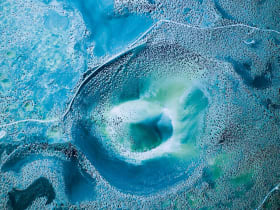
Sunset Crater Volcano National Monument
12 miles away
Sunset Crater erupted around 1085 CE, blanketing the surrounding ponderosa forest in volcanic ash.

Walnut Canyon National Monument
25 miles away
Walnut Canyon contains over 25 cliff dwelling "rooms" built by the Sinagua people around 1100-1250 CE under natural overhanging ledges in the canyon walls.
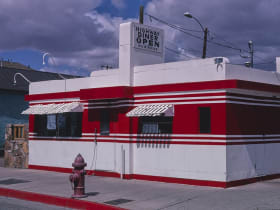
Historic Route 66, Flagstaff to Winslow
32 miles away
The Route 66 alignment east of Flagstaff passes through Winona (you need to know it) and ends at the famous Standin' on the Corner park in Winslow.

Grand Canyon National Park
55 miles away
A mile deep and up to 18 miles wide, revealing nearly two billion years of Earth's history in its walls.