
Wupatki Blowhole
Cameron, AZ
Cameron, AZ
A small hole in the desert ground beside an ancient pueblo that breathes, drawing air in and blowing it out with the changing pressure of a huge unseen cave below.
The Wupatki Blowhole is one of the stranger natural wonders in Arizona, a small hole in the desert ground that appears to breathe. Air rushes in or out of the opening with real force, and the reason is a vast system of cracks and caverns hidden in the rock below. As the air pressure of the atmosphere rises and falls, the underground void either draws air down into itself or pushes it back out, so the vent alternately inhales and exhales.
The blowhole lies within Wupatki National Monument, beside the great ancestral pueblo of Wupatki, and it was surely known to the people who built and lived at that pueblo centuries ago. Standing over the small opening and feeling the ground breathe against your hand or hearing the rush of air is an experience that stays with visitors, a reminder of the enormous, unseen spaces that riddle the earth beneath the quiet desert surface.
What Travelers Love
- Feeling the ground itself breathe, air rushing in or out of the small vent
- The uncanny sense of a vast hidden cave system beneath your feet
- Its setting beside the impressive ancient pueblo of Wupatki
- The wide, quiet high-desert landscape with the San Francisco Peaks on the horizon
Worth Knowing
- The blowhole is a natural feature within Wupatki National Monument, reached along the Wupatki pueblo trail
- Whether it inhales or exhales depends on air pressure, so its behavior changes with the weather and time of day
- Do not drop anything into the vent or block it; it is a protected natural feature
- The high desert is hot and exposed in summer and cold in winter, so dress for the season and bring water
Learn about Wupatki Blowhole
How the earth breathes
The blowhole connects the surface to a large hidden network of cracks, passages, and caverns in the layered rock below, a void of surprising size. Air moves in and out of that void in response to changes in atmospheric pressure. When the pressure outside rises, air is pushed down into the opening and the hole inhales; when the pressure falls, the air trapped below expands and rushes back out, and the hole exhales. The effect can be strong enough to feel plainly and even to hear.
Because the behavior depends on the weather and the daily cycle of temperature and pressure, the blowhole is not always doing the same thing. On some visits it draws air in, on others it blows air out, and at moments of balance it may be nearly still. Scientists have used the flow to estimate the enormous volume of the underground space, far larger than the modest opening would suggest, though the full extent of the cave system remains unexplored and unknown.
The ancient people of Wupatki
The blowhole sits beside the largest of the pueblos in Wupatki National Monument, a substantial ancestral village built of red sandstone in the twelfth century. The people who lived here were part of the ancestral Puebloan world, a blending of the cultures archaeologists call the Sinagua, the Kayenta, and others, who farmed this dry country and traded across the wider Southwest. Their descendants live on today among the Hopi, the Zuni, and other Puebloan peoples, and the surrounding land is the homeland of the Navajo, or Diné.
It is easy to imagine that the breathing hole held meaning for the people of the pueblo, who lived right beside it. To many Puebloan cultures, openings in the earth carry deep significance, connections to the world below and to the forces of wind and breath. Whatever the ancient people made of it, the pairing of a great stone village and a hole that breathes gives this corner of the monument a particular sense of mystery and depth.
The wider monument and its landscape
Wupatki National Monument protects a scattering of ancestral pueblos across a striking high-desert landscape of red and tan sandstone, black volcanic cinder, and open grassland, with the San Francisco Peaks rising on the southern horizon. The blowhole is one stop among several ancient sites, and a visit typically pairs it with the great Wupatki pueblo, a ballcourt, and other ruins reached by short trails.
The land here is a transition zone, where the volcanic country around Sunset Crater to the south gives way to the painted desert and the canyon of the Little Colorado River to the north. It is open, quiet, and often windswept, with long views in every direction. The combination of ancient architecture, dramatic geology, and the uncanny breathing hole makes this a place that rewards slowing down and paying attention to both the human and the natural history layered together here.
Season by season
Spring and fall are the most pleasant times to visit, with mild days ideal for walking the pueblo trails and lingering at the blowhole. The high desert light is clear and the crowds are thin, and the wide landscape is at its most inviting.
Summer is hot and exposed on the open flats, so an early start, sun protection, and plenty of water are essential, and afternoon thunderstorms can build during the monsoon. Winter is cold and can bring snow to the higher ground, with crisp, clear days and a stark beauty to the red rock under a dusting of white. In any season, the blowhole's breathing continues, shifting with the pressure of the passing weather, an ever-changing wonder in an ancient place.
Closest Boutels
The closest Boutel™ stays, so you can turn this stop into an overnight. Each is a place we chose through independent editorial review, never a paid placement.
Lantern Light Inn & Wedding Gardens
Boutel+3085 W State Rte 89A, Sedona, AZ
54 miles away|Learn More ›
Details
Cameron, AZ
Frequently asked questions
What is the Wupatki Blowhole?
The Wupatki Blowhole is a fascinating natural geologic feature within Wupatki National Monument north of Flagstaff, where a small opening in the earth connects to a vast underground system of cracks and cavities. Depending on air pressure conditions, the blowhole dramatically exhales air outward or draws it inward, sometimes with a noticeable rush of wind you can feel with your hand. Located near the Wupatki Pueblo ballcourt, this intriguing phenomenon adds a touch of geologic wonder to the monument's ancestral Puebloan sites and desert scenery.
How does the Wupatki Blowhole work?
The blowhole is connected to an enormous underground network of cracks and open spaces in the earth, and as the outside air pressure changes with weather and temperature, air is either pushed out of or pulled into this hidden system to equalize the pressure. When the underground pressure is higher than outside, air blows out; when lower, air rushes in. The volume of the underground space is so large that the airflow can be surprisingly strong, making it a memorable natural curiosity to experience firsthand.
Can you feel air coming from the Wupatki Blowhole?
Yes, under the right conditions you can feel air actively blowing out of or being drawn into the blowhole, sometimes strongly enough to be quite noticeable when you hold your hand near the opening, which delights visitors. However, the direction and strength vary with air pressure and weather, so it is not always dramatic and may be calm at times. Approaching it as a fun natural wonder to check out, while respecting any protective grating or signage, makes it a fascinating quick stop.
When is the best time to visit the Wupatki Blowhole?
Since the blowhole is within Wupatki National Monument, spring and fall offer the most comfortable weather for exploring the pueblos and the blowhole together, while summer is hot and winter cold at this high-desert elevation. The airflow depends on pressure and weather rather than time of day, so its behavior varies with conditions. Combining a visit to the blowhole with the nearby Wupatki Pueblo and ballcourt on a mild day makes for an enjoyable, well-rounded stop.
What is near the Wupatki Blowhole?
The blowhole is located near the Wupatki Pueblo and its ballcourt within Wupatki National Monument, which is linked by a scenic loop road to Sunset Crater Volcano National Monument, near Flagstaff with its Lowell Observatory and Walnut Canyon. The Grand Canyon and Painted Desert are within reach. That makes the Wupatki Blowhole an intriguing bonus while touring the monument's ancestral pueblos, easily combined with Sunset Crater and the other attractions of the Flagstaff region.
Nearby

Wupatki National Monument
3.1 miles away
Wupatki was built by ancestral Puebloan people around 1100 CE following the eruption of Sunset Crater volcano around 1085 CE.
Sunset Crater Volcano National Monument
16 miles away
Sunset Crater erupted around 1085 CE, blanketing the surrounding ponderosa forest in volcanic ash.

Walnut Canyon National Monument
28 miles away
Walnut Canyon contains over 25 cliff dwelling "rooms" built by the Sinagua people around 1100-1250 CE under natural overhanging ledges in the canyon walls.
Historic Route 66, Flagstaff to Winslow
34 miles away
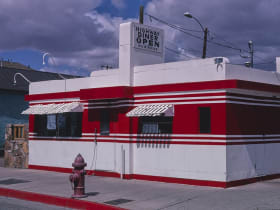
The Route 66 alignment east of Flagstaff passes through Winona (you need to know it) and ends at the famous Standin' on the Corner park in Winslow.

Grand Canyon National Park
54 miles away
A mile deep and up to 18 miles wide, revealing nearly two billion years of Earth's history in its walls.