
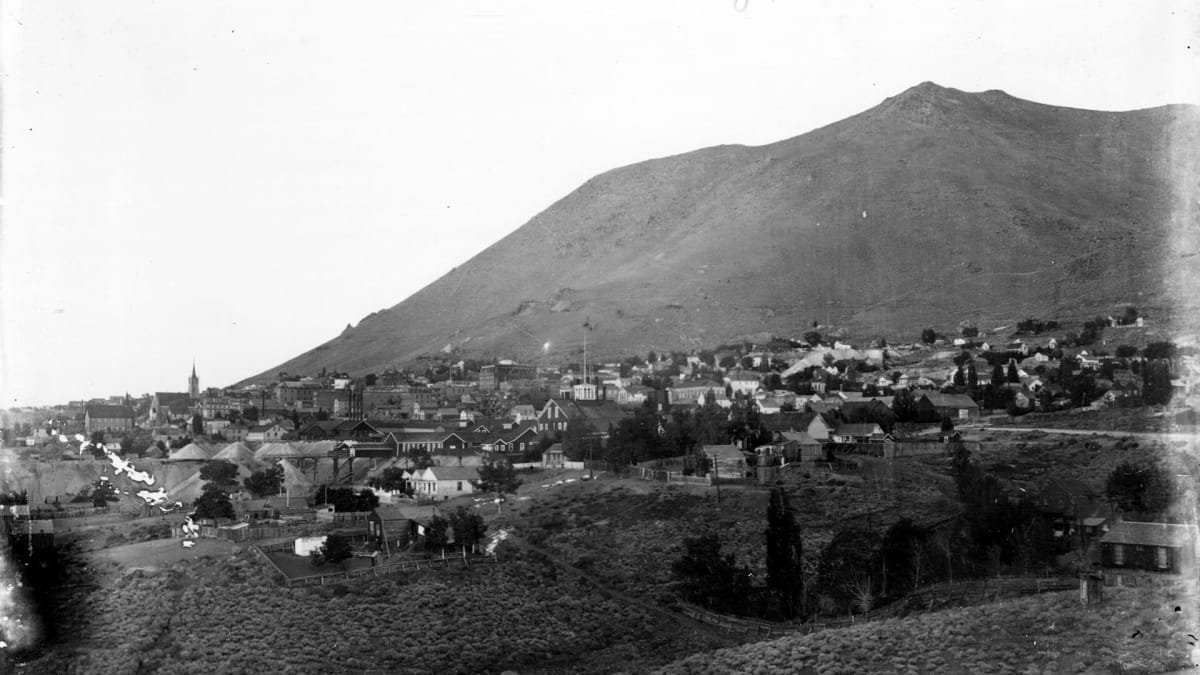
Virginia City
C Street
Virginia City, NV
The silver city that helped bankroll the Union, gave Mark Twain his pen name, and never quite let go of its boomtown swagger.
Virginia City was born in 1859, when miners working Six-Mile Canyon hit the Comstock Lode, one of the richest silver strikes in history. Within a few years a raw camp on a barren mountainside had become the largest, wealthiest city between Chicago and San Francisco, with an opera house, dozens of saloons, and mine shafts plunging thousands of feet into the mountain.
The silver and gold pulled from the Comstock between 1859 and the early 1900s ran into the hundreds of millions of dollars, money that helped build San Francisco and, some argue, helped fund the Union in the Civil War. A young reporter named Samuel Clemens worked here for the Territorial Enterprise and first signed a story Mark Twain. The bonanza faded, but the town survived, and today it is one of the best preserved mining towns in the West.
What Travelers Love
- Walking the wooden boardwalks of C Street past saloons, the old Territorial Enterprise office, and 1870s storefronts
- Going underground on a mine tour to feel how the silver actually came out
- The Virginia and Truckee Railroad steam train down toward Gold Hill
- The sweeping high-desert views from a mountainside town at over 6,000 feet
Worth Knowing
- It sits above 6,000 feet, so it is cooler and thinner-aired than the valleys, and winter brings real snow
- The main street leans into its Wild West tourism, which some love and some find kitschy; the deeper history is right underneath it
- The mountain road up from either direction is steep and winding, so take your time
- Many shops and tours run on a seasonal schedule, busiest in summer and quiet in the cold months
Learn about Virginia City
The Comstock Lode
In 1859, prospectors Pat McLaughlin and Peter O'Reilly found gold at the head of Six-Mile Canyon, but it was the heavy blue-gray mud clogging their sluices, cursed by the gold miners, that turned out to be nearly pure silver ore. The Comstock Lode, named for a miner who talked his way onto the claim, set off one of the great rushes of the American West.
The ore did not lie in easy surface veins. It ran deep and hot, which forced the Comstock's engineers to invent new ways to mine, including the square-set timbering that let them hollow out huge underground chambers without collapse. By the mid-1870s Virginia City ran around the clock, with a population commonly cited near 25,000, an opera house, churches, a red-light district, and mansions built on silver.
Where Mark Twain got his name
Samuel Clemens came to Virginia City in 1862 to write for the Territorial Enterprise, then one of the most widely read papers in the West. In its pages he first signed the pen name Mark Twain, a riverboat term for safe water, and honed the deadpan humor and tall-tale style that would make him famous.
The Enterprise was the heart of what later got called the Sagebrush School of frontier writers, a rowdy mix of real journalism, parody, and outright hoax. You can still find the paper's old office on C Street, part of a downtown that has changed remarkably little in silhouette since Twain walked it.
Underground and downhill
The story of Virginia City is really the story of what is under it: miles of tunnels, shafts, and stopes worked by crews from Cornwall, Ireland, China, Mexico, and beyond. Several mines offer tours today that take you into the rock and explain the timbering, the flooding, and the brutal heat that miners faced deep in the mountain.
The Virginia and Truckee Railroad, once the richest short line in the country for hauling ore and bullion, runs a heritage steam train on part of its old grade down toward Gold Hill. Riding it, or just walking the grade, is the easiest way to feel how this whole mountainside was once one great machine for pulling silver out of the ground.
Visiting the Comstock
The core of the visit is C Street, the boardwalked main drag, plus the side streets of churches, the old Fourth Ward School, and the cemetery terraces stepping up the hillside. Give yourself time to look past the saloon fronts to the 1860s and 1870s buildings underneath, and consider a mine tour and the railroad to round out the picture.
At over 6,000 feet, Virginia City is cooler than Reno or Carson City below, with warm summer days, crisp nights, and snowy winters. Summer and the fall events are the busiest and liveliest times; in the cold months many businesses run limited hours and the town goes quiet, which has its own windblown, end-of-the-boom charm.
Closest Boutels
The closest Boutel™ stays, so you can turn this stop into an overnight. Each is a place we chose through independent editorial review, never a paid placement.
Details
Virginia City, NV
Frequently asked questions
What is Virginia City?
Virginia City, in the hills of western Nevada, is one of the most famous and best-preserved historic mining towns in the American West, born of the legendary Comstock Lode silver strike that made it a booming, world-famous city in the nineteenth century. At its height one of the richest and liveliest places in the country, Virginia City today is a National Historic Landmark district where visitors can walk board sidewalks past preserved Victorian buildings, saloons, shops, museums, and mines, experiencing the Old West and the silver-rush era. A vivid, atmospheric journey into frontier history, it delights visitors. With its preserved boomtown and mining heritage, Virginia City offers a fascinating destination in Nevada.
What can you do in Virginia City?
You can stroll the historic board sidewalks past preserved Victorian buildings, saloons, and shops, tour historic mines and museums, ride a scenic historic railroad, visit historic sites like Piper's Opera House and the Fourth Ward School Museum, and soak up the Old West atmosphere. The preserved boomtown streets, the mine and museum tours, the historic saloons, and the silver-rush heritage are the draws, offering a rich and lively immersion in frontier history. Costumed reenactments and events add to the fun. With its historic streets and attractions, Virginia City offers a rewarding experience in Nevada.
What was the Comstock Lode?
The Comstock Lode was an enormously rich deposit of silver ore discovered beneath Virginia City in the mid-nineteenth century, one of the greatest silver strikes in history, which brought a flood of miners and wealth and made Virginia City a booming, world-famous city almost overnight. The fortunes made from the Comstock helped build San Francisco and even influenced national events, and the mining transformed the region. The riches and their eventual decline shaped Virginia City's rise and preservation as a historic town. Understanding the Comstock Lode enriches a visit to Virginia City in Nevada.
When is the best time to visit Virginia City?
The milder months of spring through fall offer the most pleasant weather for strolling the hilly historic streets and enjoying outdoor attractions, with the town hosting lively festivals and events, especially in the warm season, while summer is busiest and winter can bring cold and snow to the high elevation. Fall is especially pleasant. For the most pleasant weather and liveliest events, aim for spring through fall, timing a visit to a festival if you like, at Virginia City in Nevada.
What is near Virginia City?
Virginia City is in the hills of western Nevada, within reach of Carson City with the Nevada State Railroad Museum, Reno, Lake Tahoe, the Genoa Bar and Saloon, and Washoe Lake State Park. That makes Virginia City a fascinating destination to combine with Carson City, the historic Genoa Bar and Saloon, and the other attractions of western Nevada on a visit to the state.
Nearby

Piper's Opera House
0.0 miles away
The grand 1885 music hall of the silver-boom Comstock, where Mark Twain lectured and Lily Langtry sang, with a springy old stage still standing.
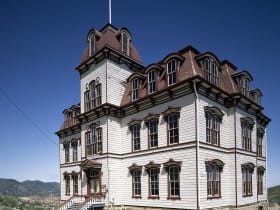
Fourth Ward School Museum
0.5 miles away
The last four-story wooden schoolhouse of its kind standing in America, built in 1876 at the height of the Comstock silver boom, anchors the south end of Virginia City's historic C Street.
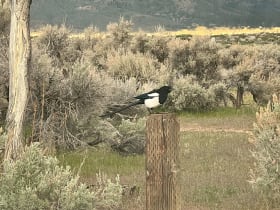
Washoe Lake State Park
7.3 miles away
Washoe Lake State Park sits in Washoe Valley just off US-395, roughly 5 miles north of Carson City and about 18 miles south of Reno.
Nevada State Railroad Museum
13 miles away
The Nevada State Railroad Museum preserves the history of Nevada's railroads with a focus on the Virginia and Truckee Railroad, the narrow-gauge line that connected the Comstock Lode mines to the Cars...
Lake Tahoe East Shore Trail
16 miles away
A paved, easy three-mile path along Lake Tahoe's stunning northeast shore, running from Incline Village down to the granite coves of Sand Harbor.

Lake Tahoe Nevada State Park
17 miles away
Lake Tahoe is the largest alpine lake in North America by volume, holding enough water to flood the entire state of California to a depth of 14 inches.

Sand Harbor State Park
17 miles away
Lake Tahoe's most beloved beach, a cove of pale sand, glass-clear turquoise water, and rounded granite boulders you can swim out to and climb.
National Automobile Museum
17 miles away
The National Automobile Museum sits along the Truckee River in downtown Reno and grew out of the enormous private collection assembled by casino owner Bill Harrah, who at one point owned well over a t...
Fleischmann Planetarium
19 miles away
The Fleischmann Planetarium sits on the University of Nevada, Reno campus, a short drive north of downtown.