

Piper's Opera House
12 N B St
Virginia City, NV
The grand music hall of the silver-boom Comstock, where Mark Twain lectured and Lily Langtry sang, its 1885 stage still standing in Virginia City.
Piper's Opera House is the grand old music hall of the Comstock Lode, the fabulous Nevada silver strike that in the 1860s and 1870s made Virginia City one of the richest and rowdiest towns in the American West. When silver money was pouring out of the mountain, the miners and millionaires of the Comstock wanted culture to match their sudden fortunes, and this is where they found it.
The theater that stands on B Street today, built in 1885, is actually the third opera house to carry the Piper name; the first two burned in the fires that swept the wooden boomtown. Inside its walls the greatest performers and speakers of the age took the stage, and the building has survived, boards and all, as one of the most evocative places in the whole preserved silver city.
What Travelers Love
- Standing in a genuine 1880s theater that hosted some of the most famous names of the era
- The springy, raked wooden stage floor, built to bounce for dancers and give actors a lift
- The atmosphere of a real Comstock silver-boom landmark, not a reproduction
- The chance to catch a live performance, tour, or event in the same hall Mark Twain once addressed
Worth Knowing
- This is the third Piper's; the first two burned, so the building you see dates to 1885
- It is a historic working venue, so hours and events vary, and a tour or a show is the best way to see the inside
- It sits right on the walkable main streets of Virginia City, easy to combine with the rest of the old town
- Virginia City is at a high elevation, so it can be cool and windy even when the valleys below are warm
Learn about Piper's Opera House
John Piper and the Comstock stage
The story begins with John Piper, a German immigrant who came west in the great 1860 rush to the Comstock after years running a fruit and liquor stand near the theaters of San Francisco. He knew that a boomtown flush with silver money needed entertainment, and in 1867 he took over an existing theater, Maguire's Opera House, and renamed it after himself.
That first Piper's burned in the Great Fire of Virginia City in 1875, which destroyed much of the town. Piper rebuilt, only to watch his second opera house burn in 1883 as well. Undaunted, he built a third time, and it is that 1885 building, rising from the ashes of two fires, that still stands today. Its survival through fire, silver bust, and more than a century of neglect and rescue is a story in itself.
The greatest names of the age
In its heyday Piper's could seat close to a thousand people, and, like most so-called opera houses of the 19th century, it almost never staged an actual opera. It was really a music hall and civic gathering place, open to just about anything that drew a crowd: touring plays and vaudeville acts, society dances and political debates, revival meetings, boxing matches, and even the occasional staged bear fight.
The roster of people who appeared here reads like a who's who of the era. The beauty Lily Langtry and the singer Lillian Russell performed on its stage, and the great tragedian Edwin Booth played it. Mark Twain, who had cut his teeth as a young reporter on Virginia City's newspaper, returned to lecture at both Maguire's and Piper's. The preacher Henry Ward Beecher and the suffragist Susan B. Anthony addressed enormous crowds here as well, giving the hall a place in the nation's cultural and political life, not just its entertainment.
A stage built to bounce
One of the delights of Piper's is how much of the real theater survives. The most famous detail is the stage itself: a raked wooden floor that slopes gently toward the audience, built with a spring to it so that it flexed underfoot, giving dancers extra bounce and helping actors' voices carry. To stand on those boards is to feel the same give that performers felt a century and a half ago.
The building was placed on the National Register of Historic Places, and with help from the state of Nevada and the National Park Service it has been stabilized and kept alive as a working venue. Rather than being frozen behind glass, the old hall still hosts performances, tours, and community events, so the boards go on being trod, exactly as John Piper intended when he rebuilt for the third time.
Visiting Piper's Opera House
Piper's stands on B Street in the heart of Virginia City, within an easy walk of the town's boardwalks, old saloons, and mine-tour sites, so it slots naturally into a day exploring the preserved Comstock. Because it is a historic working theater rather than a full-time attraction, the best way to see the interior is on a tour or by catching one of its performances or events, so it is worth checking what is on before you go.
Virginia City sits high on the mountainside, so bring a layer against the wind even on a warm day in the valleys below. Whether you come for a show or simply to stand in the hushed old hall and imagine Mark Twain at the lectern, Piper's Opera House offers something rare: a chance to step directly into the golden, gaudy world the silver of the Comstock built.
Closest Boutels
The closest Boutel™ stays, so you can turn this stop into an overnight. Each is a place we chose through independent editorial review, never a paid placement.
Details
Virginia City, NV
Frequently asked questions
What is Piper's Opera House?
Piper's Opera House, in the historic mining town of Virginia City, Nevada, is a beautifully preserved nineteenth-century theater that was one of the most famous performance venues in the American West during the Comstock silver boom. In its heyday, the opera house hosted celebrated actors, performers, lecturers, and entertainers who traveled to the booming, wealthy town, and its historic stage, seating, and interior survive today as a treasured landmark. Preserved as a historic site, Piper's Opera House offers tours and continues to host performances and events, connecting visitors to the cultural life of the frontier boomtown. With its historic theater and heritage, Piper's Opera House offers a fascinating destination in Nevada.
What can you do at Piper's Opera House?
You can tour the historic opera house to see its preserved nineteenth-century stage, seating, and interior, learn about the famous performers and cultural life of Comstock-era Virginia City, and, at times, attend performances and events still held in the historic venue. The beautifully preserved theater, the rich performance history, and the connection to the boomtown's cultural heyday are the draws, offering an engaging glimpse into frontier entertainment. Attending an event brings the historic stage to life. With its historic theater and heritage, Piper's Opera House offers an engaging experience in Virginia City, Nevada.
When is the best time to visit Piper's Opera House?
As an indoor historic site, Piper's Opera House can be visited in various weather when open for tours, which typically run on a seasonal schedule, so checking current tour hours before you go is wise, and attending a scheduled performance or event offers a special experience. The milder months are pleasant for combining a visit with exploring Virginia City. For a tour or a performance, plan around the current schedule at Piper's Opera House in Virginia City, Nevada, pairing it with the town's other historic attractions.
Why was Piper's Opera House important?
Piper's Opera House was important as one of the premier performance venues in the American West during the Comstock silver boom, when the enormous wealth of Virginia City drew famous actors, singers, lecturers, and entertainers to perform on its stage. It reflected the surprising cultural sophistication of the booming frontier town, where fortunes from the silver mines supported a lively arts and entertainment scene. Its survival preserves that cultural heritage. Understanding this history enriches a visit to Piper's Opera House in Virginia City, Nevada.
What is near Piper's Opera House?
Piper's Opera House is in Virginia City, Nevada, near the Fourth Ward School Museum and the town's historic streets, mines, and saloons, within reach of Carson City with the Nevada State Railroad Museum, the Genoa Bar and Saloon, Reno, and Lake Tahoe. That makes Piper's Opera House a fascinating stop to combine with the Fourth Ward School Museum, historic Virginia City, and the other attractions of western Nevada on a visit to the state.
Nearby

Virginia City
0.0 miles away
The silver city that helped bankroll the Union, gave Mark Twain his pen name, and never quite let go of its boomtown swagger.
Fourth Ward School Museum
0.5 miles away
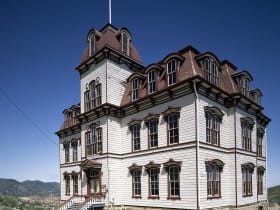
The last four-story wooden schoolhouse of its kind standing in America, built in 1876 at the height of the Comstock silver boom, anchors the south end of Virginia City's historic C Street.
Washoe Lake State Park
7.3 miles away
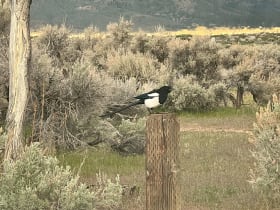
Washoe Lake State Park sits in Washoe Valley just off US-395, roughly 5 miles north of Carson City and about 18 miles south of Reno.
Nevada State Railroad Museum
13 miles away
The Nevada State Railroad Museum preserves the history of Nevada's railroads with a focus on the Virginia and Truckee Railroad, the narrow-gauge line that connected the Comstock Lode mines to the Cars...
Lake Tahoe East Shore Trail
16 miles away
A paved, easy three-mile path along Lake Tahoe's stunning northeast shore, running from Incline Village down to the granite coves of Sand Harbor.

Lake Tahoe Nevada State Park
17 miles away
Lake Tahoe is the largest alpine lake in North America by volume, holding enough water to flood the entire state of California to a depth of 14 inches.

Sand Harbor State Park
17 miles away
Lake Tahoe's most beloved beach, a cove of pale sand, glass-clear turquoise water, and rounded granite boulders you can swim out to and climb.
National Automobile Museum
17 miles away
The National Automobile Museum sits along the Truckee River in downtown Reno and grew out of the enormous private collection assembled by casino owner Bill Harrah, who at one point owned well over a t...
Fleischmann Planetarium
19 miles away
The Fleischmann Planetarium sits on the University of Nevada, Reno campus, a short drive north of downtown.