
Red Rocks Amphitheatre
2901 Ship Rock Rd, Golden, CO
Morrison, CO
A concert bowl cradled between two great tilted slabs of red sandstone, where the acoustics are natural and the stars are the ceiling.
Red Rocks Amphitheatre is one of the most extraordinary concert venues in the world, a natural bowl cradled between two enormous tilted slabs of red sandstone in the foothills west of Denver. The stage sits at the base, the stone benches climb the slope between the rocks, and the towering formations, taller than the tallest buildings, form the walls, giving the venue acoustics and a setting that no engineered hall can match.
But Red Rocks is far more than a concert hall. The surrounding park is a striking geological landscape of red-rock monoliths, and even when no show is on, visitors come to hike the trails, climb the amphitheater's stairs, and take in the sweeping views over the city and plains. It is a place where geology, history, and music meet in one unforgettable spot.
What Travelers Love
- A concert set between towering natural red-rock monoliths
- Legendary acoustics shaped by the rock itself
- Sweeping views out over Denver and the plains
- Hiking and stair-climbing the park when no show is on
Worth Knowing
- The venue sits high in the foothills, so evenings can turn cold, and layers help
- The seating is steep stone benches, so wear good shoes and pace the climb
- On non-show days you can explore the park and trails for free
- Mountain weather can shift fast, so check the forecast before a show
Learn about Red Rocks Amphitheatre
How the rocks formed
The towering red slabs that flank the amphitheater are made of sandstone laid down roughly 300 million years ago from the sediments of ancient mountains, then buried, hardened, and later tilted on end as the modern Rocky Mountains rose. What were once flat layers of sand now stand angled steeply toward the sky, forming the great fins and monoliths of the park.
The rich red color comes from iron in the rock, rusted over the ages. The two giant formations that frame the stage, often called Ship Rock and Creation Rock, along with a monolith behind the stage, create the natural bowl and the acoustics that make the venue so remarkable. The same tilted red rock appears in famous formations up and down the Front Range, but nowhere is it arranged quite so perfectly for music.
The land and its people
This dramatic red-rock country is part of the ancestral homeland of the Ute people, whose homeland this region is, along with other Native peoples who moved through the foothills where the plains meet the mountains. The natural amphitheater and its striking rocks were a landmark long before any stage was built here.
The site drew visitors and performers well before the modern venue existed, and in the 1930s the amphitheater was developed into a formal concert space, with the Civilian Conservation Corps doing much of the work during the Great Depression, carefully building the seating and stage into the natural bowl. Their care to preserve the setting is a big part of why the venue feels so seamlessly at one with the rocks.
A legendary stage
Red Rocks has become one of the most beloved and storied venues in music, a place artists dream of playing and fans travel across the country to experience. Generations of legendary performances have unfolded here, from rock and folk to symphony and beyond, and playing Red Rocks is considered a milestone in a musician's career.
Part of the magic is the setting itself: as the sun goes down, the red rocks glow, the lights of Denver spread across the plains below, and the stars come out overhead. The combination of natural acoustics, dramatic scenery, and that open sky creates an atmosphere that no indoor venue can rival, and it stays with everyone who sees a show here.
The park, trails, and seasons
Beyond the amphitheater, Red Rocks Park offers trails that wind among the formations, and on days without concerts the venue is open for people to walk the seating and climb the stairs, a workout many locals swear by. A visitor center and a small hall of fame tell the story of the venue and its performers, and the park is a rewarding stop even without a ticket.
The venue and park are open across the seasons, though the outdoor setting means weather matters. Summer is the heart of the concert season, warm days giving way to cool mountain evenings. Spring and fall bring milder crowds and pleasant hiking, and even winter has its charms, with the red rocks striking against snow and the trails quiet under crisp Front Range skies.
Closest Boutels
The closest Boutel™ stays, so you can turn this stop into an overnight. Each is a place we chose through independent editorial review, never a paid placement.
Details
Morrison, CO
Frequently asked questions
What is Red Rocks Amphitheatre?
Red Rocks Amphitheatre, near Morrison just west of Denver, Colorado, is a world-famous outdoor concert venue set dramatically amid towering red sandstone rock formations. Renowned for its stunning natural beauty and exceptional acoustics, the amphitheater is naturally formed between two enormous red rock monoliths, creating one of the most spectacular and beloved music venues on Earth, where countless legendary artists have performed. Beyond concerts, the park is open to visitors for hiking, fitness, and sightseeing when no events are scheduled. With its breathtaking setting, acoustics, and history, Red Rocks Amphitheatre is an iconic Colorado destination for music lovers and sightseers alike.
Can you visit Red Rocks Amphitheatre for free when there is no concert?
Yes, when no events are scheduled, Red Rocks Park and Amphitheatre is open to the public for free, allowing visitors to walk into the amphitheater, climb the seating rows, admire the dramatic red rock formations and views, hike the surrounding trails, and even do the popular fitness workouts on the steps that many locals enjoy. There is also a visitor center with exhibits on the venue's history and music legacy. Checking the event schedule before you go is wise, since the amphitheater is closed to general visitors on concert days, but on non-event days it is a wonderful free attraction.
What can you do at Red Rocks Amphitheatre?
You can attend a concert or event in the spectacular setting, or on non-event days visit for free to explore the amphitheater and its stunning red rock surroundings, climb the seating steps, take in panoramic views toward Denver and the plains, hike the trails through the red rocks, do a fitness workout on the stairs, and visit the visitor center with its exhibits and a hall of fame honoring performers. Photography is superb. With its iconic concerts, dramatic scenery, hiking, and free daytime access, Red Rocks Amphitheatre offers a memorable experience for music fans and outdoor lovers alike.
When is the best time to visit Red Rocks Amphitheatre?
For concerts, the season runs mainly from spring through fall when the outdoor venue hosts most events, so checking the schedule and booking tickets ahead is key. For free daytime visits to explore and hike, the milder months from spring through fall are most pleasant, with early mornings especially nice for cooler weather, smaller crowds, and beautiful light on the red rocks, though the park is open year-round. Bring layers, as evenings and higher elevation can be cool. For sightseeing, aim for a non-event day, ideally a morning, in the milder seasons.
What is near Red Rocks Amphitheatre?
Red Rocks is near the town of Morrison just west of Denver, close to the Front Range foothills, Dinosaur Ridge with its dinosaur tracks and fossils, the town of Golden with its history and brewery, and Lookout Mountain, with downtown Denver a short drive east. That makes Red Rocks Amphitheatre a spectacular stop to combine with Dinosaur Ridge, Golden, Lookout Mountain, and the attractions of Denver and the Front Range on a visit to Colorado.
Nearby
Dinosaur Ridge
2.1 miles away
Dinosaur Ridge in Morrison, 15 miles west of Denver, has actual dinosaur footprints and bones exposed in the roadcut along a 1-mile paved road - not a museum exhibit, but the actual formation where th...
Tiny Town and Railroad
4.4 miles away
In a canyon southwest of Morrison sits a whole village built at one-sixth scale, more than a hundred miniature buildings a small child can peer into at eye level, with a real steam-and-diesel train yo...

Lookout Mountain
5.2 miles away
Buffalo Bill Cody's grave and museum sit at 7,370 feet on Lookout Mountain above Golden, 20 miles west of Denver via I-70 and the Lariat Loop (CO-26).

Mount Blue Sky Scenic Byway
8.6 miles away
Mount Blue Sky Scenic Byway is the highest paved road in North America, climbing from Idaho Springs to above 14,000 feet in about 28 miles.

Casa Bonita
8.9 miles away
Behind a pink stucco tower on West Colfax hides a cavernous Mexican restaurant where cliff divers plunge from a 30-foot indoor waterfall while you eat.
South Platte River Corridor
10 miles away
The South Platte River Greenway runs 30 miles through Denver on both banks, a reclaimed industrial waterway that was restored from a sewage-contaminated ditch in the 1970s into a functioning urban riv...
Denver RiNo Arts District
14 miles away
The River North (RiNo) Arts District in Denver is a warehouse neighborhood that converted into a concentrated arts and food destination between 2010 and 2020.
Denver Museum of Nature and Science
15 miles away
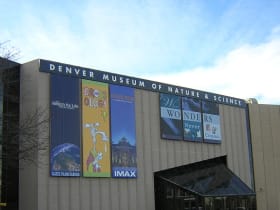
The Denver Museum of Nature and Science in City Park has one of the most comprehensive dinosaur halls in the country, with full-scale mounted skeletons of Diplodocus, Stegosaurus, and Triceratops from...

Clear Creek Canyon
17 miles away
The steep granite gorge US-6 threads from Golden up to Idaho Springs, where Colorado's gold rush began in 1859.
Roxborough State Park
18 miles away
Half an hour south of Denver, slabs of brick-red sandstone tilt out of the ground at a steep angle, the same Fountain Formation rock as Red Rocks and Garden of the Gods but far quieter and with no cro...

Rocky Mountain National Park
52 miles away
Tundra, alpine lakes, and elk-filled meadows along Trail Ridge Road, the highest paved road in the country.