
Dinosaur Ridge
Zorro Trail, Morrison, CO
Morrison, CO
A ridge just west of Denver where dinosaur footprints and the bones that started the great western fossil rush are exposed right in the rock beside the road.
Dinosaur Ridge is a long, tilted spine of rock at the edge of the foothills west of Denver, and it is one of the most important dinosaur sites in the world hiding in plain sight beside a road. On one side of the ridge, hundreds of dinosaur footprints are pressed into a slab of ancient shoreline. On the other, the actual quarries where enormous Jurassic skeletons were pulled out of the ground in the 1870s are still visible in the rock.
What makes it remarkable is how accessible it all is. You do not need to hike into the backcountry or peer through museum glass. The tracks and bones are right there in the outcrop, at the level of the trail, exposed by the same forces that lifted the whole ridge on end when the Rocky Mountains rose. It is a place where the deep history of the planet is written into the roadside stone.
What Travelers Love
- Standing beside real dinosaur footprints pressed into the sandstone
- The famous ripple-marked slab covered in hundreds of trackways
- Seeing the 1877 quarry that helped launch American paleontology
- A short, walkable ridge with big Front Range views
Worth Knowing
- The road along the ridge is closed to cars at times, so walking or the shuttle is the way to see it
- It is exposed and can be hot and sunny, so bring water and a hat
- The visitor center explains what to look for before you head up
- Combine it easily with Red Rocks and the town of Morrison
Learn about Dinosaur Ridge
The bones that started a fossil rush
In 1877 a schoolteacher named Arthur Lakes was walking the ridge near Morrison when he spotted enormous bones weathering out of the sandstone. His discovery, and others made the same year, set off one of the most famous rivalries in the history of science, the so-called Bone Wars between paleontologists Othniel Charles Marsh and Edward Drinker Cope, who raced to name new dinosaurs from the western quarries.
The Morrison quarries produced some of the first well-known American dinosaurs, including Apatosaurus, Stegosaurus, and Allosaurus, and gave their name to the Morrison Formation, the great band of Jurassic rock that runs across much of the West and holds fossils from Colorado to Utah and beyond. The very rock unit paleontologists still study by that name was defined here at the ridge.
Footprints on an ancient shore
The far side of the ridge exposes a younger chapter. About 100 million years ago, in the Cretaceous, a shallow inland sea covered much of the continent, and its western shoreline ran right through here. Along that muddy coast, dinosaurs left footprints that dried and were buried and eventually turned to stone. Today one famous slab, tilted up nearly vertical, shows hundreds of tracks crossing in different directions, a place scientists call the Dinosaur Ridge trackway.
You can see the difference between the round, elephant-like prints of plant-eating ornithopods and the three-toed tracks of meat-eaters, and read the direction a herd was moving across the old shore. Ripple marks preserved in the same rock record the gentle waves of that vanished sea, so the slab captures not just the animals but the beach they walked on.
A ridge stood on end
Dinosaur Ridge is part of a hogback, a narrow ridge of hard, resistant rock left standing after the softer layers around it wore away. The layers here were laid down flat, on floodplains and along a seashore, then tilted steeply when the modern Rocky Mountains pushed up along the Front Range tens of millions of years ago. That tilting is what stood the ancient ground surfaces up on edge so we can walk past them.
Because the rock is tipped, a short walk along the ridge is a walk through millions of years of time, from the Jurassic bone beds on one side to the Cretaceous shoreline and its tracks on the other. Signs along the road point out each layer, so the whole ridge reads like an open book of the region's deep past.
Morrison and the foothills
The ridge sits at the mouth of Morrison, a small, historic foothills town of stone buildings and creekside cafes where the Great Plains give way to the mountains. The town has long been a gateway to the high country, and its old buildings are built from the same golden sandstone that shows up in the ridge itself.
Just to the west rises Red Rocks, the famous natural amphitheater set among towering slabs of red sandstone, part of the same tilted geology on a grander scale. Between the tracks, the quarries, the town, and Red Rocks, the corner around Dinosaur Ridge packs a lot of Colorado into a small area an easy drive from Denver.
Closest Boutels
The closest Boutel™ stays, so you can turn this stop into an overnight. Each is a place we chose through independent editorial review, never a paid placement.
Details
Morrison, CO
Frequently asked questions
What is Dinosaur Ridge?
Dinosaur Ridge, near Morrison just west of Denver, Colorado, is a world-famous paleontological site where visitors can see genuine dinosaur footprints and fossil bones preserved in the rock right along a historic ridge. One of the best-known dinosaur track sites in the world, it features hundreds of footprints, bones exposed in the rock face, and ripple marks and other geological features, all interpreted through guided tours, a visitor center, and exhibits. Offering an accessible and fascinating look at prehistoric life and the famous Morrison Formation, Dinosaur Ridge is a beloved and educational destination for dinosaur enthusiasts and families in the Front Range foothills.
What can you see at Dinosaur Ridge?
You can see real dinosaur footprints preserved in the rock, fossil dinosaur bones exposed in the ridge, ancient ripple marks and geological features, and interpretive exhibits explaining the prehistoric world and the famous fossil discoveries made here. You can explore on a self-guided walk along the road or take a guided bus tour with a knowledgeable interpreter, and the visitor center offers displays and fossils. The chance to see actual dinosaur tracks and bones in place makes it especially memorable. With its authentic fossils, tracks, and educational tours, Dinosaur Ridge offers a fascinating outing for all ages.
How do you visit Dinosaur Ridge?
You can visit Dinosaur Ridge by taking a guided bus tour along the ridge road with an interpreter who explains the tracks, bones, and geology, or by walking or biking the road yourself on a self-guided visit using signs and exhibits, though the road can have vehicle traffic, so caution is needed. The visitor center provides information, exhibits, and tour details. Guided tours offer the fullest experience and are popular, so checking current tour options, times, and any reservations before you go is wise. Choosing between a guided tour and a self-guided walk lets you tailor your visit.
When is the best time to visit Dinosaur Ridge?
Spring through fall offers the most pleasant weather for the outdoor site, with mild temperatures for walking or touring the ridge, while summer can be warm and sunny on the exposed rock, so sun protection and water are wise, and winter is cooler with possible snow or ice. Mornings are pleasant and less crowded. Checking current tour schedules and hours before you go helps you plan. For the most comfortable experience exploring the tracks and bones, aim for the milder months from spring through fall, ideally on a clear day.
What is near Dinosaur Ridge?
Dinosaur Ridge is near Morrison just west of Denver, close to the iconic Red Rocks Amphitheatre, the town of Golden with its history and brewery, Lookout Mountain, and the Front Range foothills, with downtown Denver a short drive east. That makes Dinosaur Ridge a fascinating stop to combine with Red Rocks, Golden, Lookout Mountain, and the many other attractions of the Denver area and Front Range on a visit to Colorado.
Nearby
Red Rocks Amphitheatre
2.1 miles away
Red Rocks Park is free to enter when no concert is scheduled - the park opens at 5 AM and closes at 11 PM.

Lookout Mountain
3.6 miles away
Buffalo Bill Cody's grave and museum sit at 7,370 feet on Lookout Mountain above Golden, 20 miles west of Denver via I-70 and the Lariat Loop (CO-26).
Tiny Town and Railroad
6.5 miles away
In a canyon southwest of Morrison sits a whole village built at one-sixth scale, more than a hundred miniature buildings a small child can peer into at eye level, with a real steam-and-diesel train yo...

Casa Bonita
7.5 miles away
Behind a pink stucco tower on West Colfax hides a cavernous Mexican restaurant where cliff divers plunge from a 30-foot indoor waterfall while you eat.

Mount Blue Sky Scenic Byway
9.0 miles away
Mount Blue Sky Scenic Byway is the highest paved road in North America, climbing from Idaho Springs to above 14,000 feet in about 28 miles.
South Platte River Corridor
9.5 miles away
The South Platte River Greenway runs 30 miles through Denver on both banks, a reclaimed industrial waterway that was restored from a sewage-contaminated ditch in the 1970s into a functioning urban riv...
Denver RiNo Arts District
12 miles away
The River North (RiNo) Arts District in Denver is a warehouse neighborhood that converted into a concentrated arts and food destination between 2010 and 2020.
Denver Museum of Nature and Science
14 miles away
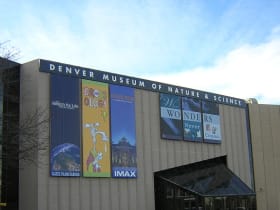
The Denver Museum of Nature and Science in City Park has one of the most comprehensive dinosaur halls in the country, with full-scale mounted skeletons of Diplodocus, Stegosaurus, and Triceratops from...

Clear Creek Canyon
17 miles away
The steep granite gorge US-6 threads from Golden up to Idaho Springs, where Colorado's gold rush began in 1859.
Roxborough State Park
20 miles away
Half an hour south of Denver, slabs of brick-red sandstone tilt out of the ground at a steep angle, the same Fountain Formation rock as Red Rocks and Garden of the Gods but far quieter and with no cro...

Rocky Mountain National Park
50 miles away
Tundra, alpine lakes, and elk-filled meadows along Trail Ridge Road, the highest paved road in the country.