
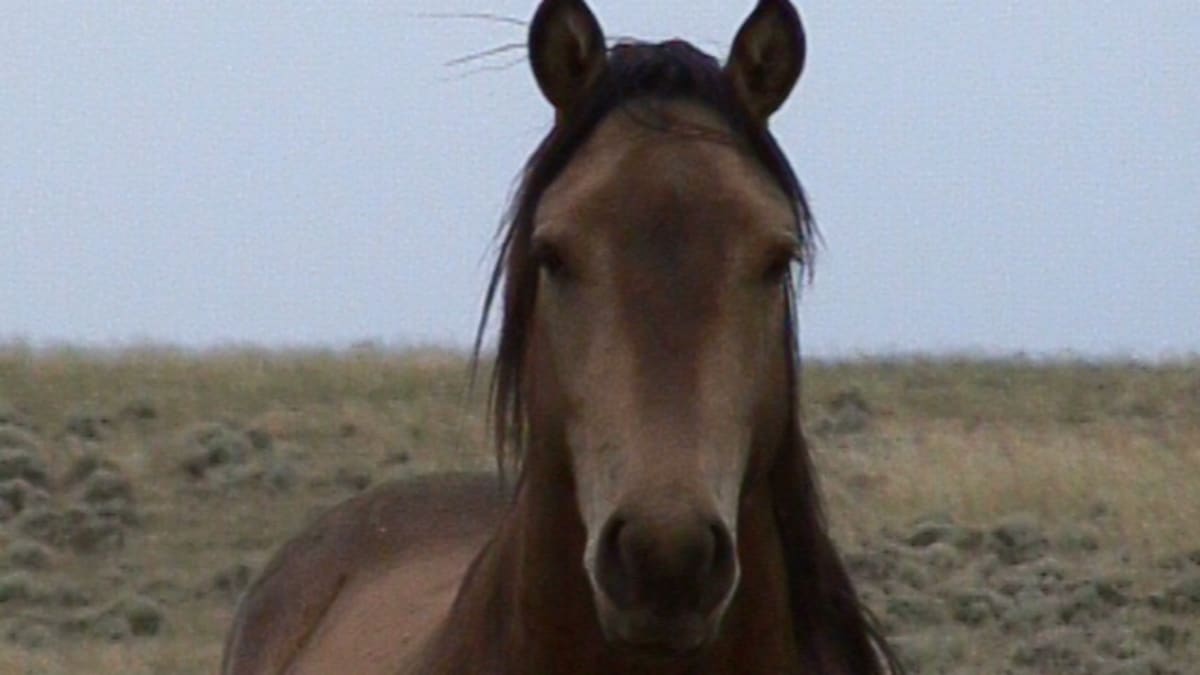
Pryor Mountain Wild Horse Range
WY Highway 37, north of Lovell
Lovell, WY
The first wild horse range America ever set aside, where a rare herd of Spanish-descended mustangs still runs free across the Wyoming and Montana line.
In September 1968 the federal government set aside a stretch of the Pryor Mountains on the Wyoming and Montana border as a home for wild horses, the first public wild horse range in the United States. That happened three years before there was any national law protecting wild horses at all, which makes this quiet corner of the Bighorn Basin the place where the whole American effort to save its wild herds really began.
The horses here are not just any strays turned loose. The Pryor herd descends from Spanish colonial horses brought to the Americas in the 1500s, and DNA testing has confirmed a rare Spanish genetic influence that led one leading equine geneticist to call it one of the most significant wild horse herds left in the country. Today a few dozen bands range across the mountains, and a road-tripper who plans it right can watch them graze the high meadows and canyon rims, living exactly as their ancestors did.
What Travelers Love
- Seeing genuinely wild horses, a rare Spanish-descended herd, running free on public land rather than behind a fence
- The story of Cloud, the pale stallion followed from birth in famous nature documentaries filmed on this range
- Starting at the Mustang Center in Lovell, where knowledgeable volunteers share maps, recent sightings, and a roster of the named horses
- The dramatic drive up WY Highway 37 through Bighorn Canyon toward the range, red rock and river all the way
Worth Knowing
- Sightings are never guaranteed, since these are wild animals on tens of thousands of acres; stop at the Mustang Center in Lovell first for current scouting reports before you head out
- The lower range along Highway 37 is reachable by any car, but the high country where the herd summers is up rough roads like Burnt Timber Ridge and Sykes Ridge that need a high-clearance or four-wheel-drive vehicle
- The range is remote with no services; carry water, fuel up in Lovell, and check weather, since mountain roads can turn impassable
- Keep your distance from any horses you find and never feed or approach them; they are wild, protected animals and staying back keeps both you and the herd safe
Learn about Pryor Mountain Wild Horse Range
The herd that came from Spain
The Pryor Mountain mustangs trace their line back to the Spanish Barb and other Spanish colonial horses that reached the Americas five centuries ago. Over generations, horses spread north through Native nations and across the West, and the isolated Pryor herd held onto a distinctive Spanish inheritance. Many of the horses carry old-world markings: dun coloring, a dark stripe down the spine, faint zebra striping on the legs. Genetic study by researchers has confirmed a higher-than-average Spanish component in the herd, one reason it is considered so important.
It is worth being honest about the science: the testing shows a herd of mixed ancestry with a strong, DNA-confirmed Spanish influence, not a perfectly pure Spanish bloodline. That does not make it any less remarkable. Of all the wild herds scattered across the West, few carry as much of that original Spanish heritage as the horses running these mountains, which is exactly why so much effort has gone into protecting them.
How a town saved its wild horses
By the mid-1960s the future of the Pryor herd was in real doubt, and the fight to save it came largely from Lovell itself. Local citizens, the chamber of commerce, and a newly formed wild horse association pressed the government to protect the horses. A local Lutheran minister, the Reverend Floyd Schwieger, became a tireless advocate, choosing patient cooperation with the federal land managers over conflict. Their campaign led to the 1968 designation of the range, well ahead of the rest of the country.
That local effort fed into a national movement. The advocate Velma Johnston, known across the country as Wild Horse Annie, helped push Congress toward the Wild and Free-Roaming Horses and Burros Act of 1971, which protected wild horses and burros nationwide as living symbols of the historic and pioneer spirit of the West. Lovell's horses, and the people who fought for them, were part of the story that made that law happen.
Cloud, and the range on film
If the Pryor herd is famous beyond Wyoming, it is largely because of one horse. A pale palomino stallion named Cloud was followed from the day of his birth by the filmmaker Ginger Kathrens, whose nature documentaries brought this range and its horses to a national audience over the course of years. Watching Cloud grow from a wobbly foal into a band stallion put a face on the whole idea of wild horses, and visitors still come hoping to spot his descendants on the ridges.
The films did something the range itself does in person: they made the horses individuals rather than a distant symbol. That is the spirit of a good visit here. The animals are not props in a paddock. They are wild families with histories, and the more you learn before you go, the more a chance sighting on a canyon rim means when it finally happens.
Planning a visit
The right first stop is the Pryor Mountain Wild Mustang Center in Lovell, a small nonprofit run by people who know this herd intimately. They keep maps, recent sightings, and a roster of the named horses, and they can tell you where the bands have been seen lately and which roads are passable. Hours are seasonal and limited, so it helps to check before you build a day around it, but the knowledge you pick up there is what turns a hopeful drive into a real chance of finding horses.
From Lovell, the drive north on Highway 37 into Bighorn Canyon is a spectacular trip in its own right, and the lower part of the range is reachable by any car. The high meadows where the herd spends the warm months, though, lie up genuinely rough mountain roads that call for a high-clearance or four-wheel-drive vehicle, along with water, fuel, and a close eye on the weather. Whatever you find, keep well back and let the horses be. The whole point of this place, the first range America ever set aside for them, is that they get to stay wild.
Closest Boutels
The closest Boutel™ stays, so you can turn this stop into an overnight. Each is a place we chose through independent editorial review, never a paid placement.
Details
Lovell, WY
Frequently asked questions
What is the Pryor Mountain Wild Horse Range?
The Pryor Mountain Wild Horse Range, in the rugged Pryor Mountains along the border of north-central Wyoming and southern Montana near Lovell, is a protected home to a famous herd of wild mustangs, free-roaming horses believed to descend from Spanish colonial stock and prized for their distinctive markings and history. Set amid dramatic canyons, high desert, and mountain terrain near Bighorn Canyon, the range lets visitors, with patience and luck, glimpse these wild horses in their natural setting. It is one of the West's storied wild-horse areas. With its free-roaming mustangs and dramatic scenery, the Pryor Mountain Wild Horse Range offers a memorable destination near Lovell in north-central Wyoming and southern Montana.
Can you see wild horses at the Pryor Mountain Wild Horse Range?
Yes, with patience and luck you can see the wild mustangs roaming the range, though they are wild animals in a large, rugged area, so sightings are never guaranteed and often require driving the backcountry roads and watching carefully, sometimes in the higher country where the horses range in the warmer months. Bringing binoculars greatly helps. Always keep a respectful distance and never approach, feed, or disturb the horses, as they are wild and both they and you can be harmed. Observing the mustangs respectfully from a distance is the reward of a visit to the Pryor Mountain Wild Horse Range.
What should I know before visiting the Pryor Mountain Wild Horse Range?
The range is rugged and remote, with much of the horse country reached by rough, unpaved, and sometimes four-wheel-drive backcountry roads that can be impassable when wet, so a suitable high-clearance vehicle, a full tank of gas, plenty of water, and supplies are important, as services and cell coverage are minimal. The high desert brings heat, sun, and sudden weather. Tell someone your plans and check conditions before you go. Keep a respectful distance from the wild horses. Coming prepared and self-sufficient ensures a safe visit to this remote and beautiful wild-horse country near Lovell.
When is the best time to visit the Pryor Mountain Wild Horse Range?
Late spring through early fall is the best time to look for the horses and explore, when the backcountry roads are most likely passable and the horses may be seen across the range, with summer offering the fullest access to the higher country where the mustangs often range, though heat and sun are strong, so bring water. Avoid the roads when wet. Foals are often seen in spring and early summer. For the best combination of passable roads and horse viewing, aim for late spring through early fall, checking conditions, at the Pryor Mountain Wild Horse Range near Lovell.
What is near the Pryor Mountain Wild Horse Range?
The Pryor Mountain Wild Horse Range is near Lovell in north-central Wyoming and southern Montana, right beside Bighorn Canyon National Recreation Area, near the Bighorn Mountains with the Medicine Wheel and Bighorn National Forest, and within reach of Cody to the west. That makes the wild-horse range a memorable stop to combine with Bighorn Canyon, the Medicine Wheel, and the other attractions of north-central Wyoming for well-prepared travelers visiting the state.
Nearby

Bighorn Canyon National Recreation Area
18 miles away
Bighorn Canyon cuts 2,500 feet deep through the Pryor Mountains on the Montana-Wyoming border, creating sheer red canyon walls accessible only by boat or a single dead-end road from Lovell.

Medicine Wheel National Historic Landmark
25 miles away
Medicine Wheel is a prehistoric stone circle 80 feet in diameter on a wind-scoured ridge at 9,642 feet in the Bighorn Mountains, reached by a 1.5-mile walk from a locked gate.

Beartooth Highway
46 miles away
This is one of the great mountain drives on the continent. The Beartooth Highway leaves Red Lodge and climbs in tight switchbacks onto the Beartooth Plateau, cresting close to 11,000 feet at Beartooth...
Pictograph Cave State Park
46 miles away
On the edge of a city most people just pass through sits a site that helped write the archaeology of the Northern Plains.

Chief Joseph Scenic Highway
49 miles away
Chief Joseph Scenic Highway (WY-296) runs 47 miles from Cody to Cooke City, Montana through the Absaroka Range country that Nez Perce Chief Joseph led his people through in 1877 during the epic 1,170-...