

Medicine Wheel National Historic Landmark
Medicine Wheel Passage, Bighorn National Forest, near Lovell, WY
Lovell, WY
A great circle of stones near the crest of the Bighorn Mountains, sacred to many Native peoples and centuries in the making.
The Medicine Wheel is one of the most powerful and enigmatic sacred sites in North America, a great circle of stones laid out near the crest of Wyoming's Bighorn Mountains. Roughly eighty feet across, it is formed of a central cairn with lines of rock radiating outward like the spokes of a wheel to a surrounding rim, with additional cairns spaced around it. Built by Native peoples over a long span of time, it has been used and revered for centuries.
The wheel sits high on an open ridge at nearly ten thousand feet, with the whole sweep of the Bighorn country falling away below. For the many Native nations who hold it sacred, it remains a living place of prayer and ceremony, and the offerings tied to the fence that now protects it show that its meaning has never faded. Visitors come to a site that is at once ancient and very much alive.
What Travelers Love
- Standing at a sacred site still honored by many Native nations
- The immense high country views from the ridge top
- The walk in along the ridge that builds anticipation
- The offerings tied to the surrounding fence that show the site is living
Worth Knowing
- The site is reached by a walk of about a mile and a half each way from the parking area
- This is an active sacred site, so be respectful and do not disturb offerings or stones
- At nearly ten thousand feet the weather is cold and changeable even in summer, so dress warmly
- The site may be closed at times for ceremonial use, so check ahead
Learn about Medicine Wheel National Historic Landmark
A wheel of stone
The Medicine Wheel is a circle of stones roughly eighty feet in diameter, with a cairn at its center and lines of rock running outward to the rim like spokes. Around the circle sit several more stone cairns, spaced at points along and beyond the rim. The whole arrangement was built simply from the loose stones of the mountain, gathered and placed by hand.
It is one of the best known of many such stone wheels found across the northern plains and mountains, and among the most elaborate. Built and used over a long period, it represents the work and devotion of generations rather than a single moment of construction.
Aligned with the sky
Researchers have noted that some of the cairns and spokes of the Medicine Wheel appear to align with the rising and setting of the sun at the summer solstice, and with the rising points of certain bright stars. These alignments suggest the wheel served, among its purposes, as a way of marking the turning of the seasons and the movement of the heavens.
The precise meanings are held by the Native peoples connected to the site rather than fully explained by outside study. What is clear is that the builders had a deep knowledge of the sky and the horizon, and that the wheel ties the ground of this high ridge to the movements of the sun and stars overhead.
A living sacred site
The Medicine Wheel remains sacred to many Native nations of the plains and mountains, who continue to come here to pray, to seek visions, and to hold ceremony. It is not a ruin or an abandoned relic but a place of ongoing spiritual life, cared for jointly by the tribes and the land managers who protect it.
Visitors will see cloth, tobacco ties, and other offerings fastened to the rope fence that surrounds the wheel. These are prayers left by people who hold the site sacred, and they are to be left undisturbed. Approaching quietly and respectfully is the way to honor a place that still means so much to living communities.
The high country setting
Part of what makes the Medicine Wheel so moving is its setting near the top of the Bighorn Mountains. The site sits on an open, treeless ridge at nearly ten thousand feet, with immense views across the ranges and basins of north central Wyoming. The walk in along the ridge, exposed to the wind and the wide sky, is part of the experience.
At this elevation the weather can be cold and stormy even in the height of summer, and snow can linger late and arrive early. That high, austere setting, so far above the ordinary world, is inseparable from the sense of reverence the place inspires.
Closest Boutels
The closest Boutel™ stays, so you can turn this stop into an overnight. Each is a place we chose through independent editorial review, never a paid placement.
Details
Lovell, WY
Frequently asked questions
What is the Medicine Wheel National Historic Landmark?
The Medicine Wheel National Historic Landmark, high in the Bighorn Mountains of north-central Wyoming, is an ancient stone circle built by Native peoples, a large wheel-shaped arrangement of stones with a central cairn and radiating spokes, constructed centuries ago near the top of a mountain. A sacred site still revered and used by many Native American nations today, the Medicine Wheel is associated with ceremony, astronomy, and spiritual practice, and its alignments are thought to relate to the sun and stars. Set in a spectacular high-country setting, it offers a profound connection to Indigenous heritage. The Medicine Wheel is a deeply significant sacred and historic site in the Bighorn Mountains of Wyoming.
Why is the Medicine Wheel sacred?
The Medicine Wheel is sacred because it is a place of deep spiritual and ceremonial importance to many Native American nations, built by Indigenous peoples centuries ago and still used today for prayer, ceremony, and connection to ancestors and the land. Its stone spokes and alignments are associated with the sun, stars, and the cycles of the seasons, reflecting profound knowledge and belief. Because it remains an active sacred place, visitors are asked to be especially respectful. Honoring its sacredness is central to any visit. The Medicine Wheel stands as a revered spiritual landmark of Native heritage in the Bighorn Mountains of Wyoming.
How should I visit the Medicine Wheel respectfully?
Please visit the Medicine Wheel with great reverence, as it is a living sacred site: stay on the designated path around the wheel behind the protective fence, do not enter or touch the stone circle, and treat any prayer offerings or cloth ties left by Native visitors with respect, never touching or removing them. Ceremonies may sometimes close the site, which should be honored. A walk of a few miles on a gravel road usually leads to the wheel. Approaching the Medicine Wheel quietly and respectfully, as the sacred place it is, ensures a meaningful visit in the Bighorn Mountains of Wyoming.
When is the best time to visit the Medicine Wheel?
The Medicine Wheel is at very high elevation and is generally accessible only in the warmer months, roughly summer into early fall, as the mountain road and site are snowbound much of the year, so summer is the time to visit, though even then the weather can be cold, windy, and stormy at that altitude, so bring warm layers. The site may occasionally close for Native ceremonies, which should be respected. Checking current access and conditions before you go is wise. For accessible weather and an open road, aim for summer at the Medicine Wheel in the Bighorn Mountains of Wyoming.
What is near the Medicine Wheel National Historic Landmark?
The Medicine Wheel is high in the Bighorn Mountains of north-central Wyoming within Bighorn National Forest, near the town of Lovell, Bighorn Canyon National Recreation Area, the Pryor Mountain Wild Horse Range, and within reach of Shell Canyon and the scenic byways crossing the range. That makes the Medicine Wheel a profound cultural stop to combine with Bighorn National Forest, Bighorn Canyon, and the other attractions of north-central Wyoming on a visit to the state.
Nearby

Bighorn Canyon National Recreation Area
20 miles away
Bighorn Canyon cuts 2,500 feet deep through the Pryor Mountains on the Montana-Wyoming border, creating sheer red canyon walls accessible only by boat or a single dead-end road from Lovell.
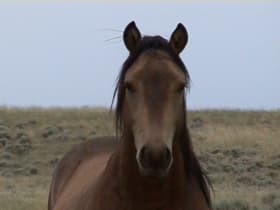
Pryor Mountain Wild Horse Range
25 miles away
The first public wild horse range in the United States, set aside in 1968 and home to a rare Spanish-descended mustang herd, including the descendants of the famous stallion Cloud.
Shell Canyon and Shell Falls
26 miles away
Shell Canyon on US-14 east of Greybull is a 10-mile slot through Precambrian granite and limestone where Shell Creek drops 120 feet over a hard granite ledge at Shell Falls.