
Park City Historic Main Street
631 Park Ave, Park City, UT
Park City, UT
A steep Victorian street of old mining-era buildings that became one of the West's great ski towns and the home of the Sundance Film Festival.
Park City's Historic Main Street is one of the most charming town centers in the Mountain West, a steep street lined with brightly painted Victorian buildings that climb a hillside in the high country east of Salt Lake City. Behind the galleries, restaurants, and shops lies a rich past: this was a booming silver-mining town long before it became a ski destination, and the old storefronts are the real thing.
Today Main Street is the heart of a town famous for its skiing and for the Sundance Film Festival, which fills the street with filmmakers and crowds each winter. But strip away the resorts and the festival and you still have a beautifully preserved mining-era street, a place where you can feel the layers of Park City's history stacked one on top of another as you walk uphill.
What Travelers Love
- A steep, walkable street of preserved Victorian buildings full of galleries, shops, and restaurants
- The silver-mining history behind the storefronts, from the boom days to the ski era
- The Sundance Film Festival, which fills the street with films and crowds each winter
- World-class skiing and mountain trails rising right from the edge of town
Worth Knowing
- Main Street is steep and sits at high elevation, so take it slow and expect cool mountain air
- It is busiest during ski season and especially during the Sundance festival in winter
- Parking downtown is limited, so use the free transit or park at the edges and walk in
- It is an easy trip over the mountains from Salt Lake City, though the passes can be snowy in winter
Learn about Park City Historic Main Street
A silver-mining boomtown
Park City was born from silver. In the 1860s and 1870s prospectors struck rich veins of silver in the surrounding mountains, and a mining town grew up along the gulch, becoming one of the most productive silver districts in the country. Fortunes were made in its mines, and the town swelled with miners from around the world, its Main Street lined with the shops, saloons, and lodges that served them.
The boom left its scars and its landmarks. A devastating fire swept through in 1898 and destroyed much of the town, which was quickly rebuilt in the brick and frame buildings that still stand. As silver prices fell through the twentieth century the mines faded, and by the mid-1900s Park City had dwindled toward a ghost town, its grand era seemingly over. This was homeland to the Ute people, who lived and traveled through these mountains long before the miners arrived, and who remain part of Utah today.
From ghost town to ski town
Park City's second life came from snow. In the 1960s, with the mines closing, the town turned to skiing, opening lifts on the slopes above Main Street, some of which used old mine workings and infrastructure to carry skiers up the mountain. The gamble paid off, and over the following decades Park City grew into one of the premier ski destinations in the United States.
The 2002 Winter Olympics, hosted by nearby Salt Lake City, put the area on the world stage, with several events held at Park City venues. Today the town anchors a cluster of major resorts, and its old mining buildings house the shops, restaurants, and galleries of a thriving mountain resort town, the industrial past and the resort present woven together throughout.
Sundance and the arts
Each January, Main Street becomes the center of the film world. The Sundance Film Festival, one of the most important independent film festivals anywhere, takes over Park City's theaters and venues, filling the street with filmmakers, actors, and audiences and premiering films that go on to wide acclaim. For a few weeks the mining-era street hums with a very different kind of energy.
Beyond the festival, Park City has grown into a real arts town, its Main Street rich with galleries, public art, and a lively year-round calendar of events. The mix of a preserved historic street, a strong gallery scene, and a steady flow of visitors gives the town a cultural life larger than its size, layered over the skiing and the history.
The mountains and the seasons
Park City's setting is as much a draw as its street. The town sits high in the Wasatch Back, ringed by ski resorts and laced with mountain-bike and hiking trails that climb straight from the edges of town. In summer those same slopes turn green and open to riders and hikers, and the historic mining trails wind through the hills above Main Street.
Winter is the headline season, when snow blankets the peaks, the resorts fill, and Sundance descends on the town. Spring and fall are quieter and beautiful, with wildflowers giving way to golden aspen on the mountainsides, and summer brings warm days, cool nights, and festivals along Main Street. At this elevation the air is thin and the weather changeable, so a warm layer is wise in any season.
Closest Boutels
The closest Boutel™ stays, so you can turn this stop into an overnight. Each is a place we chose through independent editorial review, never a paid placement.
Details
Park City, UT
Frequently asked questions
What is Park City Historic Main Street?
Historic Main Street is the vibrant heart of Park City, a former silver-mining boomtown high in the Wasatch Mountains. Its beautifully preserved nineteenth-century buildings now house an inviting mix of shops, art galleries, restaurants, and bars, all set against a backdrop of ski slopes. Rich in history yet lively and upscale, the street is the social center of town, famous worldwide as the main hub of the Sundance Film Festival each January.
What can you do on Park City's Main Street?
You can stroll and shop the boutiques and galleries, dine at excellent restaurants, enjoy the bar and après-ski scene, and soak up the historic mining-town atmosphere. The Park City Museum, housed in the old city hall and jail, tells the town's colorful story. A free trolley runs the length of the street, and in winter a nearby town lift connects Main Street directly to the ski mountain, making it easy to ski right into town.
When is the best time to visit Park City's Main Street?
Winter is peak season, buzzing with skiers and, in January, the star-studded Sundance Film Festival, though that is also the busiest and priciest time. Summer and fall are wonderful too, with pleasant weather for strolling, outdoor dining, festivals, and events, and generally smaller crowds and lower prices. The street is lively year-round, so the best time really depends on whether you want ski-season energy or a relaxed, warm-weather visit.
What should I know about visiting Park City's Main Street?
The street is very walkable, but parking nearby can be tight, especially in ski season and during festivals, so it is easiest to use the free trolley and area shuttles or park in a structure and walk in. Main Street is on a hill, so wear comfortable shoes. Wandering the shops, galleries, and eateries is free, and checking the local events calendar can help you catch a festival or happening during your visit.
What is near Park City's Historic Main Street?
Main Street sits at the center of Park City, moments from the town's world-class ski resorts and close to the Utah Olympic Park, with its bobsled track and ski jumps. The surrounding mountains offer hiking and biking in summer. Only about forty minutes from Salt Lake City, Park City makes an easy getaway, and Main Street is the natural hub for dining, shopping, and nightlife whatever the season.
Nearby

Utah Olympic Park
4.7 miles away
Utah Olympic Park hosted the bobsled, luge, skeleton, ski jumping, and Nordic combined events of the 2002 Salt Lake City Olympics.
Little Cottonwood Canyon, Alta and Snowbird
8.4 miles away
Little Cottonwood Canyon narrows to a slot at its base and climbs to 11,000 feet at Alta and Snowbird ski resorts.
Big Cottonwood Canyon
10 miles away
Big Cottonwood Canyon (UT-190) is the most accessible canyon in the Wasatch Range for Salt Lake residents.

Heber Valley and Deer Creek Reservoir
12 miles away
Heber Valley is a wide agricultural valley at 5,600 feet, ringed by mountain ranges. Deer Creek Reservoir has windsurfing and sailing.
Cascade Springs, Uinta-Wasatch-Cache National Forest
13 miles away
Cascade Springs is a set of travertine pools fed by water that surfaces from deep underground, stepping down the hillside in clear terraced basins.
Wheeler Historic Farm
17 miles away
Wheeler Historic Farm operates as a living history site and working farm on the edge of Salt Lake Valley.
Sundance Mountain Resort
18 miles away
Sundance is the mountain resort Robert Redford bought in 1969 to keep it out of commercial development.
Timpanogos Cave National Monument
18 miles away
Timpanogos Cave is a series of three connected caverns reached by a 1.5-mile trail that climbs 1,000 feet above American Fork Canyon.
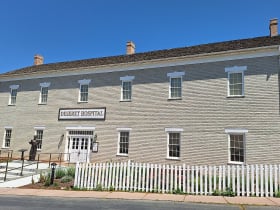
This Is The Place Heritage Park
18 miles away
This Is the Place is where Brigham Young reportedly said "This is the right place" upon first seeing the Salt Lake Valley in 1847 after leading 2,000 pioneers west.

Natural History Museum of Utah
19 miles away
The Natural History Museum of Utah has one of the most comprehensive Utah dinosaur collections in the world, including allosaurus, stegosaurus, and a full-skeleton ceratopsian display.

Mount Timpanogos
19 miles away
Mount Timpanogos is the second highest peak in the Wasatch Range and the most visually dominant mountain above the Utah Valley.