
Haena Wet and Dry Caves
Kuhio Highway near Haena, before the road's end
Haena, HI
Caves the ocean cut into the cliffs long ago, one a dark dry cavern, the others still holding cold, clear water, near the very end of Kauai's northern road.
Near the end of the road on Kauai's North Shore, where the highway runs out against the base of the Napali cliffs, the ancient sea carved a set of caves into the rock at Haena. One is a vast dry cavern you can walk into, its ceiling arching high overhead and cool air drifting out of the darkness. The others are wet caves, deep pockets that still hold pools of cold, clear water long after the ocean that cut them retreated.
The caves are a favorite stop on the drive to the end of the road, quick to reach and unforgettable to stand inside, but they are far more than a photo pull-off. Each carries a Hawaiian name and a place in the traditions of this coast, and together they form a threshold to the wild, road-less Napali country that begins just beyond.
What Travelers Love
- Standing at the mouth of the great dry cave and feeling the cool air pour out of the dark
- The still, glassy water of the wet caves reflecting the ferns and rock above
- How the caves mark the dramatic end-of-the-road country before the Napali cliffs
- The layers of Hawaiian tradition and legend carried in the names of each cave
Worth Knowing
- The wet caves are not safe or sanctioned for swimming; the water is cold, the caves are deep, and conditions inside are unpredictable
- This whole stretch is sacred and storied ground, so treat the caves with respect and leave everything as you find it
- Access to the nearby Haena State Park and Napali trailhead requires an advance reservation, so check current rules before you go
- Parking along the highway is very limited, and the North Shore road can flood and close after heavy rain
Learn about Haena Wet and Dry Caves
The great dry cave
The dry cave at Haena is known as Maniniholo. It opens as a broad, tall mouth right beside the highway and runs back deep into the hillside, wide enough to walk into and high enough at the entrance to feel cathedral-like before the ceiling lowers and the passage darkens.
In Hawaiian tradition, Maniniholo is remembered as the name of a head fisherman whose party once camped here. The story tells of supernatural beings that stole their catch, and of the people digging into the hill in pursuit, which is offered as an account of how the cave came to be. It is a reminder that these are named, storied places, not just geologic curiosities.
Geologically, the cave was cut by the pounding surf at a time when the sea stood higher against this coast. As the land and sea levels shifted over the ages, the ocean withdrew and left the hollow high and dry, so that a cave the waves once filled now sits back from the shoreline.
The wet caves
A short way farther along the road are the two wet caves, Waikanaloa and Waikapalae. Where the dry cave sits open to the air, these hold deep, still pools of startlingly clear water, fed by fresh groundwater seeping through the rock. The surface can glow an eerie blue-green in the right light, framed by ferns and dripping stone.
In tradition the wet caves are associated with the fire goddess Pele, said to have dug in search of a home before moving on. Their beauty is undeniable, but they are also cold, deep, and unpredictable inside, and they are not a safe or sanctioned place to swim. The right way to experience them is to look, and to leave them undisturbed.
Together the wet and dry caves record the same story from different angles: an old, higher sea working at soft rock, and the fresh water and legend that filled the hollows it left behind.
The end of the road and the Napali Coast
The caves sit in the last stretch of drivable coast on Kauai's north side. Just beyond, the road simply ends, and the towering, fluted green cliffs of the Napali Coast rise straight from the sea, accessible only by foot, boat, or air. The Kalalau Trail sets off from near here into that road-less wilderness.
Because this is a place of great cultural significance and heavy visitor demand, access to the adjacent Haena State Park and the trailhead is managed by reservation, with a shuttle option, and the rules change over time. Checking the current system before you arrive saves a wasted drive out to the end of the road.
Heavy rain is a fact of life on this coast, and the single highway crosses several one-lane bridges and low spots that can flood. Conditions can shift quickly, so it is wise to watch the weather and give yourself room to turn back.
Closest Boutels
The closest Boutel™ stays, so you can turn this stop into an overnight. Each is a place we chose through independent editorial review, never a paid placement.
Details
Haena, HI
Frequently asked questions
What are the Haena wet and dry caves?
The Haena wet and dry caves, on the north shore of Kauai, Hawaii, are a set of fascinating sea and lava caves near the end of the road, unusual and atmospheric natural features along the beautiful coast. The caves include a large dry cave, believed to be an ancient sea cave carved into the mountainside, and wet caves filled with clear, cold water, all set amid the lush north-shore scenery near Haena. Steeped in Hawaiian legend and history, the caves are a striking and intriguing stop on the way to the end of the north-shore road. Their unusual beauty and cultural significance make them a fascinating destination. A striking and atmospheric natural site, it fascinates visitors. With its caves, Haena offers a compelling destination in Hawaii.
What can you do at the Haena wet and dry caves?
You can view and explore the large dry cave carved into the mountainside, see the wet caves filled with clear, cold water, learn about the Hawaiian legends and history associated with them, and take in the lush north-shore setting near Haena. The dry cave, the wet caves, the cultural legends, and the scenic surroundings are the draws, making it a fascinating and atmospheric stop. The caves and their stories are highlights. Approaching them with respect for their cultural significance, Haena offers a rewarding experience in Hawaii.
What should I know before visiting the Haena wet and dry caves?
The caves are atmospheric but the wet caves' water is cold and swimming in them is generally discouraged or unsafe due to conditions and their cultural significance, so admiring the caves rather than entering the water is best, and watching footing on wet, uneven ground matters. The caves hold cultural and spiritual significance for Native Hawaiians, so treating them with respect is important, and the north-shore area can be busy with limited parking. Respecting the caves and staying safe ensure a rewarding visit to the Haena wet and dry caves in Hawaii.
When is the best time to visit the Haena wet and dry caves?
The caves can be visited year-round, with the drier summer months generally more settled on the north shore, while the winter can bring heavy rain and rougher conditions to the area. Because north-shore weather, road access, and parking can vary, checking current conditions before you go is wise. For the most settled conditions, the drier months are often best, and checking current access, at the Haena wet and dry caves in Hawaii.
What is near the Haena wet and dry caves?
The Haena wet and dry caves are on the north shore of Kauai, Hawaii, near the end of the road, within reach of Kee Beach, the start of the Napali Coast and Kalalau Trail, the Limahuli Garden and Preserve, and the Hanalei Valley. That makes the Haena caves a compelling stop to combine with Kee Beach and the other attractions of the Kauai north shore on a visit to Hawaii.
Nearby
Limahuli Garden and Preserve
0.5 miles away
Most north-shore visitors race to Ke e Beach and never turn in at Limahuli, just before the road end. That is a mistake.
Ke e Beach
0.9 miles away
In summer this is the gentlest snorkel-and-swim on the north shore for kids.

Na Pali Coast and the Kalalau Trail
1.0 miles away
This is the landscape Kauai is famous for, and it starts right at the road end.

Waioli Mission House
4.3 miles away
In a town that is all about the bay, this is the human-history gem people walk right past.
Hanalei Valley Lookout
5.8 miles away
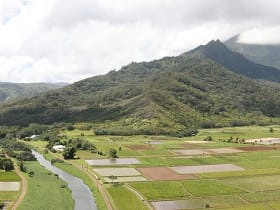
Everyone drives past the turnout, but pulling in rewards you with the north shores signature view.
Waimea Canyon State Park
12 miles away
The Grand Canyon of the Pacific, a mile-wide gorge of rust-red and green cliffs plunging over 3,000 feet into western Kauai.
Polihale State Park
16 miles away
At the far western end of Kauai, past Waimea and Kekaha, paved Highway 50 gives out and a rough dirt cane road runs several miles to Polihale, one of the longest and widest beaches in Hawaii.

Captain Cook Monument
19 miles away
A stone statue marking where Captain Cook first landed in Hawaii on January 20, 1778, the first meeting of the islands and the outside world.